
Tailored vs. Relaxed Fit: When Each One Actually Serves You Better
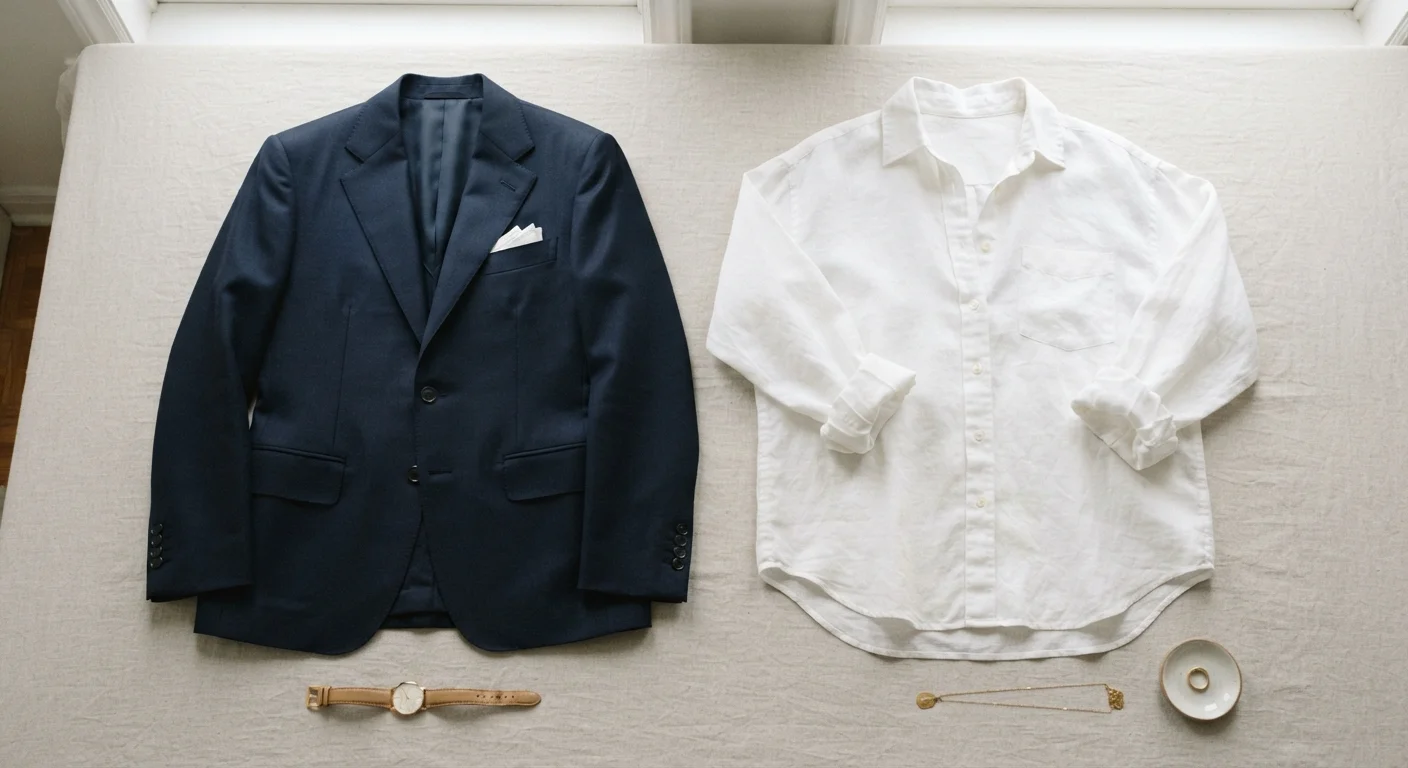
Photo credit: TheBlogZappier.com | Simple Search, Credible Results
In this article
Slim cuts and relaxed silhouettes each have a place — learn when each works better based on occasion, body proportion, and styling goals.
Key Takeaways
- Tailored fit follows the body's contours closely, projecting structure and formality.
- Relaxed fit adds ease and volume, prioritizing comfort and a more casual aesthetic.
- Occasion, fabric weight, and personal proportion all influence which silhouette works best.
- Neither fit is universally superior — context and intention determine the right choice.
- Mixing both fits within one outfit is a recognized styling technique, not a mistake.
What Each Fit Actually Means
The terms tailored fit and relaxed fit describe how much extra fabric — called ease — exists between the garment and the body. Tailored fit is cut close to the body's natural lines: shoulders sit precisely at the joint, the chest has minimal extra room, and the waist may be slightly suppressed. The result is a silhouette that reads as deliberate and structured.
Relaxed fit deliberately adds ease beyond the body's measurements. Shoulders may extend slightly past the joint, the torso has room to move freely, and the overall line is softer. This is distinct from simply wearing a size too large — well-designed relaxed garments still have intentional proportions. Understanding this difference matters because fit perception shifts depending on context, lighting, and movement.
Neither style is inherently more flattering or appropriate. The relevant question is always: what does this garment need to do, and where will I be wearing it?
When Tailored Fit Earns Its Place
Tailored fit consistently performs well in contexts where a polished, composed appearance is expected. Formal and professional settings are the clearest examples — structured blazers, fitted trousers, and close-cut dress shirts align with the visual grammar of most dress codes. If you need guidance on those codes specifically, decoding formality levels can help you calibrate how tailored your approach needs to be.
Beyond formality, tailored pieces work well when you want to create a strong visual line — for instance, elongating the torso or defining the shoulder. Because the fabric follows the body more closely, proportional effects are more pronounced. This can work in your favor, but it also means fit accuracy matters more: a tailored jacket that pulls across the back or gaps at the button reads as ill-fitting rather than just casual.
| Criterion | Tailored Fit | Relaxed Fit |
|---|---|---|
| Ease (extra fabric) | Minimal — close to body | Generous — intentional room |
| Best occasion | Formal, professional, dressy | Casual, everyday, creative |
| Movement comfort | Moderate — can restrict | High — moves freely |
| Fit precision required | High — errors show clearly | Lower — more forgiving |
| Layering flexibility | Limited under outerwear | Easier to layer over or under |
| Silhouette effect | Defines body lines | Softens or obscures lines |
| Trend longevity | Generally more classic | Varies with casual trends |
Fabric choice amplifies the effect. Tailored cuts in structured materials — wool, ponte, or a cotton-linen blend — hold their shape and reinforce that composed quality. The same cut in a soft jersey drapes differently and reads more casually, which may or may not suit your intention.
When Relaxed Fit Is the Smarter Choice
Relaxed fit excels whenever movement, comfort, or an intentionally casual register matters. Weekend dressing, travel, creative work environments, and everyday errands are natural territories for eased silhouettes. The added ease also accommodates layering more comfortably — a relaxed-fit shirt worn over a thermal, for example, doesn't pull or distort.
There's also a styling logic to relaxed fit that goes beyond comfort. Contemporary casual dressing frequently uses volume as a deliberate design element: wide-leg trousers, oversized shirts, and dropped-shoulder sweatshirts are all relaxed-fit interpretations with a clear aesthetic intention. This connects to broader wardrobe philosophies — quiet luxury and maximalist dressing both incorporate relaxed silhouettes in different ways.
~60%
Shoppers prioritize comfort in casual wear
Industry surveys consistently show comfort ranks among the top purchasing criteria for everyday and casual clothing categories.
2–3 cm
Typical ease added in relaxed-fit garments
Garment construction standards generally define relaxed fit as adding approximately 2–3 cm or more of ease beyond fitted measurements, though this varies by category.
One practical advantage of relaxed fit: it tends to be more forgiving when weight or body composition shifts, or when sizing varies across brands. Clothing fit shifts for many reasons beyond body changes, and garments with more ease built in absorb those variations more gracefully.
Mixing Both Fits: The Proportion Principle
One of the most effective and widely used styling principles involves deliberately pairing a tailored piece with a relaxed one. A fitted turtleneck with wide-leg trousers, or a structured blazer worn over an oversized T-shirt, are classic examples. The contrast in volume creates visual interest and avoids the flattening effect that can occur when every garment in an outfit carries the same amount of ease.
The underlying logic is proportion: when one part of an outfit is voluminous, anchoring it with something closer-fitting creates balance. This is why the conventional guidance — though it's worth noting that many body-type dressing rules are outdated — has long suggested pairing wide-leg trousers with a fitted top.
When mixing fits, fabric weight matters as much as silhouette. A relaxed linen shirt paired with tailored wool trousers creates a considered contrast; a very stiff, structured top with an extremely voluminous skirt may read as unresolved rather than intentional. The goal is balance, not opposition for its own sake.
If you're evaluating whether a specific piece is worth adding for its versatility across these fit categories, the broader discussion of trend piece investment trade-offs offers a useful framework.

Author
Style & Beauty Editorial Team
Style & Beauty Editorial Team is the collective byline for our editorial team and contributor network. Articles published under this byline or an editorial pen name are researched, written, and reviewed according to our editorial standards for clarity, consistency, and independence before publication.
View all articles →