
Quiet Luxury vs. Maximalism: Two Opposing Aesthetics Shaping Modern Wardrobes
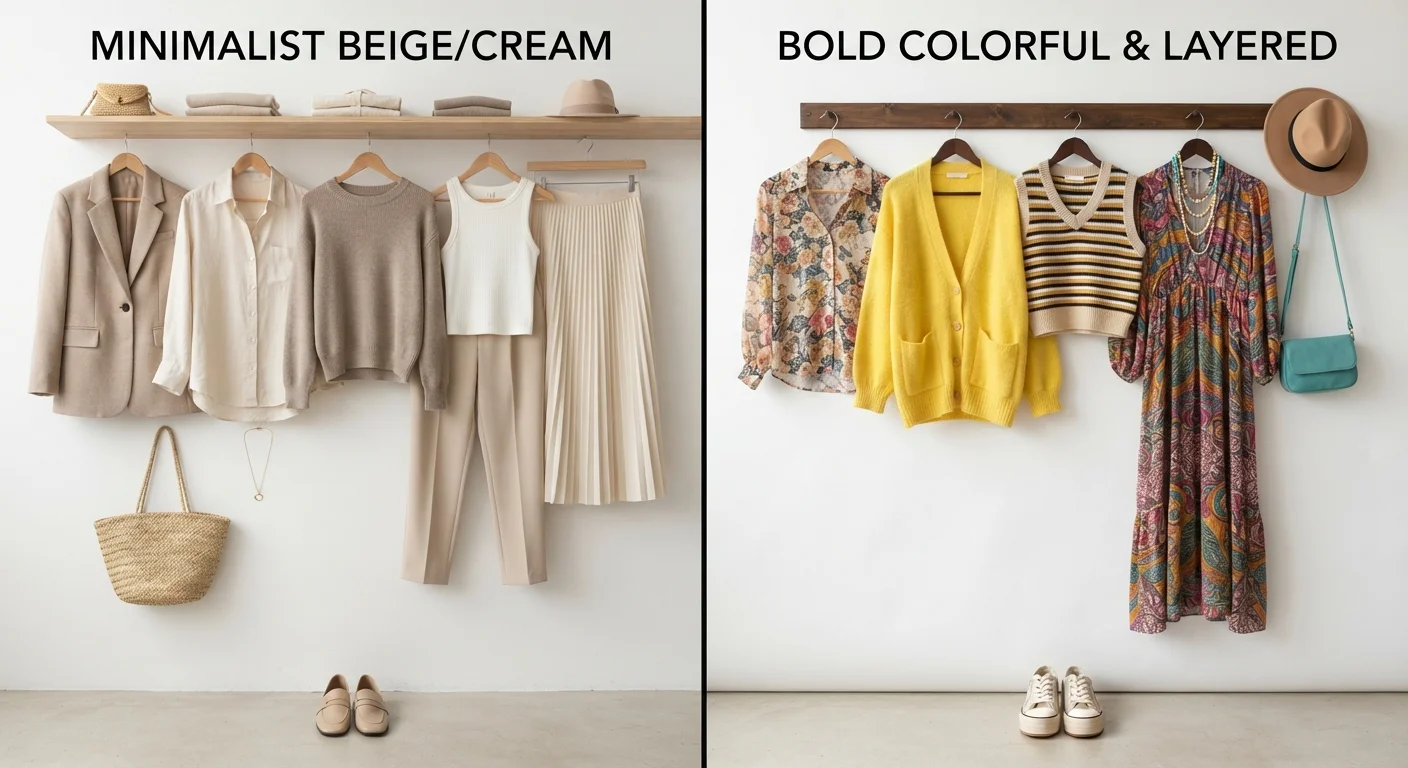
Photo credit: TheBlogZappier.com | Simple Search, Credible Results
In this article
Understated neutrals or bold layered looks? Explore the contrasting philosophies behind two dominant style movements.
Key Takeaways
- Quiet luxury centers on neutral palettes, refined fabrics, and understated silhouettes that communicate quality without obvious logos.
- Maximalism embraces layering, pattern mixing, and saturated color as deliberate tools of personal expression.
- Neither aesthetic is inherently more or less expensive — both can be practiced at a range of price points.
- The two approaches reflect deeper values about identity, visibility, and the social role of clothing.
- Many wardrobes in practice borrow from both aesthetics rather than committing exclusively to one.
What Each Aesthetic Actually Stands For
Quiet luxury — sometimes called "stealth wealth" in fashion media — is defined by what it deliberately withholds: visible logos, loud colors, and ornamental detail. Its visual vocabulary is built on precise tailoring, high-quality natural fabrics (cashmere, fine wool, silk), and a tonal palette anchored in ivory, camel, grey, and navy. The underlying philosophy is that quality speaks for itself and that restraint is its own form of sophistication.
Maximalism operates from the opposite premise: that more is more, and that clothing should be visually generous. It draws on a long tradition of decorative dressing — influenced by everything from 1970s bohemian layering to the pattern-rich visual language of various global textile traditions. In contemporary wardrobes, maximalism typically involves mixing prints, stacking jewelry, and combining textures and silhouettes in ways that create deliberate visual interest rather than quiet cohesion.
Understanding how color combinations function is useful for both aesthetics: quiet luxury relies on tonal harmony, while maximalism often pushes into deliberate contrast and complementary color pairings.
| Criterion | Quiet Luxury | Maximalism |
|---|---|---|
| Color palette | Neutral, tonal, muted | Saturated, contrasting, varied |
| Pattern use | Minimal or none | Central, often layered |
| Silhouette approach | Clean, precise, unfussy | Layered, dimensional, expressive |
| Logo/branding visibility | Deliberately absent | May be embraced as embellishment |
| Wardrobe size tendency | Smaller, curated | Larger, more varied |
| Trend sensitivity | Low — resists trend cycles | Higher — engages with trend energy |
| Expressive intent | Restraint as statement | Abundance as statement |
How These Aesthetics Differ in Practice
The practical differences between the two aesthetics show up most clearly in how a wardrobe is built and maintained. Quiet luxury tends to favor a smaller, more curated selection of pieces — a concept closely related to the capsule wardrobe model. If you've wondered whether that approach holds up in real life, the capsule wardrobe concept is worth examining closely.
Maximalism, by contrast, typically accommodates a larger and more varied wardrobe. The aesthetic actively benefits from having more options — more prints to layer, more accessories to combine. This doesn't mean maximalism requires excessive spending, but it does mean the wardrobe tends to be broader in scope. Both aesthetics intersect with how consumers think about spending: distinguishing wardrobe needs from wants becomes a relevant exercise regardless of which direction you lean.
62%
Consumers preferring versatile over trend-led pieces
A 2023 McKinsey & Company State of Fashion report noted growing consumer preference for versatile, long-lasting clothing over fast-trend purchases.
3x
Growth in 'quiet luxury' search interest
Google Trends data indicated a significant surge in searches for quiet luxury and related terms through 2023, reflecting mainstream consumer awareness of the aesthetic.
It's also worth noting that most real wardrobes exist on a spectrum. Many people anchor their basics in a quieter palette while expressing maximalist instincts through accessories, outerwear, or occasion dressing. The foundational pieces most style frameworks agree on often serve both aesthetics, just styled very differently.
Cultural Moment and Longevity
Both aesthetics have had pronounced cultural moments in recent years, amplified by social media and the visibility of celebrity dressing. Quiet luxury gained significant mainstream attention as a counterreaction to logo-heavy streetwear saturation — a form of aesthetic backlash. Maximalism, meanwhile, has been persistently championed as a response to the perceived austerity of minimalism, with proponents arguing that joy and abundance in dressing are valid and underserved values.
The question of longevity is worth considering. Trend cycles accelerate, and trend fatigue is a real phenomenon that affects how sustainable any single aesthetic commitment feels over time. Quiet luxury's deliberate timelessness is partly a hedge against trend fatigue — its pieces are designed to remain relevant across seasons. Maximalism, though more engaged with trend energy, has deeper roots than its current visibility suggests; decorative dressing has been present across cultures and centuries, which gives it a durability that purely trend-driven aesthetics lack.
For consumers actively building a personal style, understanding what each aesthetic actually values — restraint and quality versus expression and abundance — is more useful than treating either as a fixed template to replicate.
Neither Aesthetic Is Budget-Neutral by Default
Quiet luxury is sometimes conflated with high cost because it emphasizes fabric quality and craftsmanship. However, its principles — restrained color, clean cut, minimal ornamentation — can be applied at various price points. Similarly, maximalism doesn't require expensive statement pieces; thrifting and vintage sourcing are historically central to how the aesthetic has been practiced. The cost of a wardrobe is ultimately shaped by individual purchasing choices, not by aesthetic philosophy alone.

Author
Style & Beauty Editorial Team
Style & Beauty Editorial Team is the collective byline for our editorial team and contributor network. Articles published under this byline or an editorial pen name are researched, written, and reviewed according to our editorial standards for clarity, consistency, and independence before publication.
View all articles →