
Auto Insurance Coverage from Liability to Comprehensive: A Field Guide
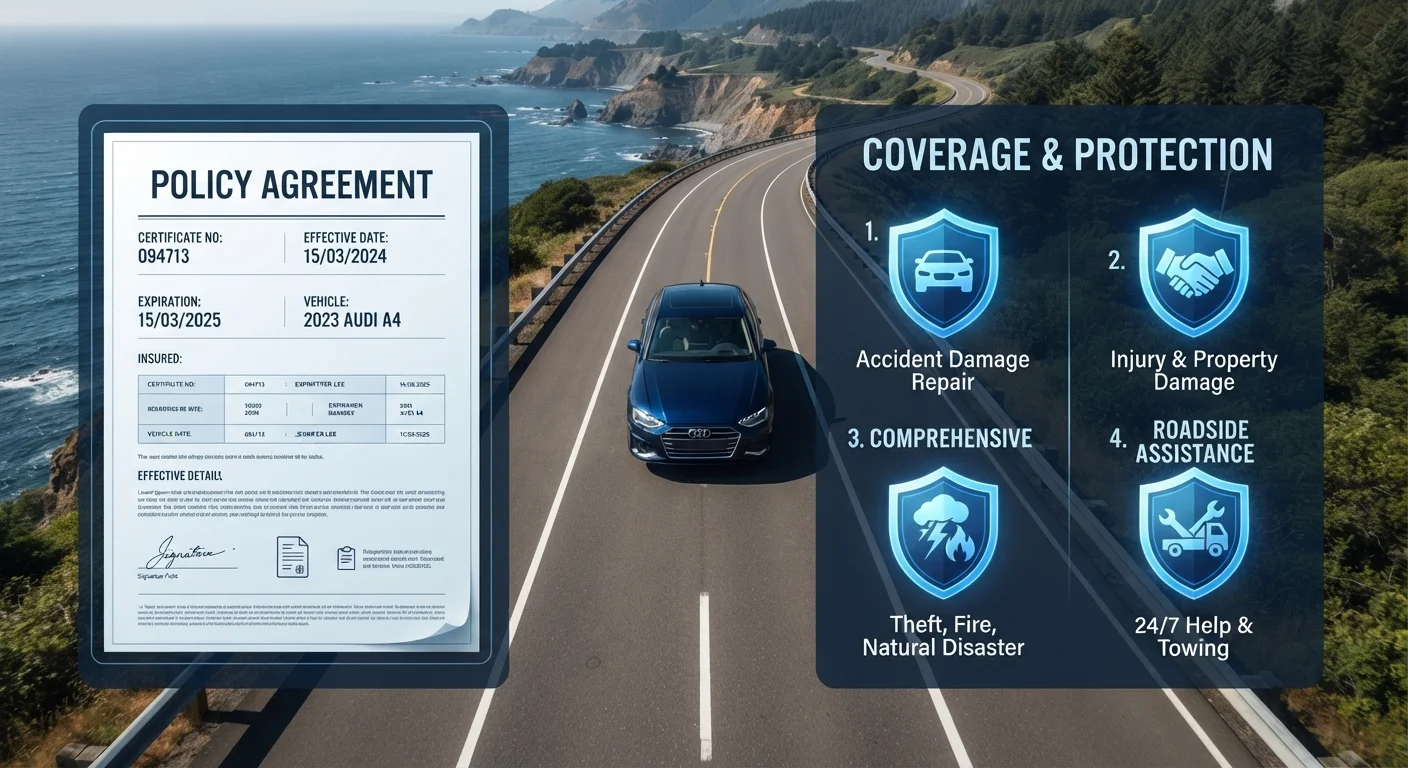
Photo credit: TheBlogZappier.com | Simple Search, Credible Results
In this article
Liability, collision, comprehensive, PIP — each auto coverage type serves a distinct purpose. Here's what each one actually protects.
Why Auto Insurance Is Sold in Layers
Most auto insurance policies are not a single blanket protection - they are a bundle of individually defined coverage types, each designed to respond to a specific kind of loss. Understanding what each layer does (and doesn't do) is essential for reading a declarations page, adjusting limits, or filing a claim with confidence.
This guide walks through the primary coverage types found in standard U.S. auto policies: what triggers each one, who it protects, and how it interacts with the others. For a broader look at how auto coverage fits within the wider insurance landscape, see The Main Insurance Coverage Categories, Explained.
| Minimum required coverage | Liability (bodily injury and property damage) (Required in nearly all U.S. states at varying minimum limits) |
| Covers your vehicle in a crash | Collision coverage |
| Covers theft and weather damage | Comprehensive coverage |
| Covers your medical costs regardless of fault | PIP or MedPay (PIP availability and requirements vary by state) |
| Protects you from uninsured drivers | UM/UIM coverage (Required in some states; optional in others) |
| Often required when vehicle is financed | Collision and comprehensive (Lender requirement to protect collateral) |
The Core Coverage Types, Defined
Liability Coverage
Liability is the foundation of virtually every auto policy and is legally required at minimum levels in nearly all U.S. states. It pays for bodily injury and property damage you cause to others in an at-fault accident - it does not cover your own injuries or vehicle. Policies express liability limits in a split format (e.g., 50/100/50), representing per-person injury, per-accident injury, and property damage limits in thousands of dollars. For a deeper look at how liability works across policy types, see Liability Coverage Across Insurance Types.
Collision Coverage
Collision pays to repair or replace your vehicle after it is damaged in a crash - whether with another car, a guardrail, or a stationary object - regardless of fault. It applies only to your vehicle, and a deductible (the amount you pay before coverage begins) applies.
Comprehensive Coverage
Comprehensive covers vehicle damage caused by events other than collisions: theft, vandalism, fire, hail, flooding, falling objects, and animal strikes are common examples. Like collision, it carries a deductible and covers your vehicle only. The exact boundary between these two types is explained in detail in Collision vs. Comprehensive Coverage.
Personal Injury Protection (PIP)
PIP - sometimes called no-fault coverage - pays for your own medical expenses, lost wages, and certain related costs after an accident, regardless of who caused it. It is required in no-fault states and optional or unavailable in others. Coverage scope and limits vary significantly by state.
Medical Payments (MedPay)
MedPay is narrower than PIP: it covers medical and funeral expenses for you and your passengers after an accident, without the wage-replacement or rehabilitation components PIP may include. It is available in most states as an optional add-on.
Uninsured and Underinsured Motorist (UM/UIM)
UM coverage pays when an at-fault driver has no liability insurance; UIM coverage responds when the at-fault driver's limits are too low to cover your damages. Both can apply to bodily injury, property damage, or both, depending on state rules and how the policy is structured.
Liability Coverage
Pays for bodily injury and property damage you cause to others in an at-fault accident. It does not cover your own vehicle or injuries.
Collision Coverage
Covers repair or replacement of your vehicle after a crash with another vehicle or object, regardless of fault. Subject to a deductible.
Comprehensive Coverage
Covers damage to your vehicle from non-collision events such as theft, weather, fire, or animal strikes. Subject to a deductible.
Personal Injury Protection (PIP)
Pays your medical costs, lost wages, and related expenses after an accident regardless of fault. Required in no-fault states; scope varies by state.
Deductible
The amount you pay out of pocket before your insurance coverage begins to pay on a claim. Higher deductibles generally lower premium costs.
Uninsured Motorist (UM) Coverage
Protects you when an at-fault driver carries no liability insurance and cannot pay for your injuries or vehicle damage.
Underinsured Motorist (UIM) Coverage
Responds when an at-fault driver's liability limits are too low to fully cover your damages, bridging the gap up to your UIM limit.
Declarations Page
The summary page of your insurance policy listing covered vehicles, policy limits, deductibles, coverages purchased, and the policy period.
How These Coverages Work Together
Coverage types are not redundant - they fill distinct gaps. Liability protects others from your mistakes; collision and comprehensive protect your own vehicle from physical damage; PIP and MedPay protect occupants' medical costs; UM/UIM protects you from gaps in other drivers' coverage.
Lenders typically require both collision and comprehensive if you finance or lease a vehicle, because the car serves as collateral. Once a vehicle is owned outright, those coverages become optional - though dropping them means assuming the full cost of vehicle repairs or replacement yourself.
Deductibles, limits, and exclusions vary by insurer and policy, and state regulations shape which coverages are mandatory, optional, or unavailable where you live. Always read your actual policy documents and consult a licensed insurance agent to understand what your specific policy covers. For guidance on reading policy language, the Policy Key Terms hub is a useful reference.
This article provides general information about auto insurance coverage types and is not personalized insurance, financial, or legal advice. Coverage terms, limits, exclusions, and availability vary by insurer, policy, and state. Consult a licensed insurance agent or adviser and review your actual policy documents for guidance specific to your situation.

Author
Insurance Basics Editorial Team
Insurance Basics Editorial Team is the collective byline for our editorial team and contributor network. Articles published under this byline or an editorial pen name are researched, written, and reviewed according to our editorial standards for clarity, consistency, and independence before publication.
View all articles →