
Dashboard Warning Lights and What Each One Is Telling You
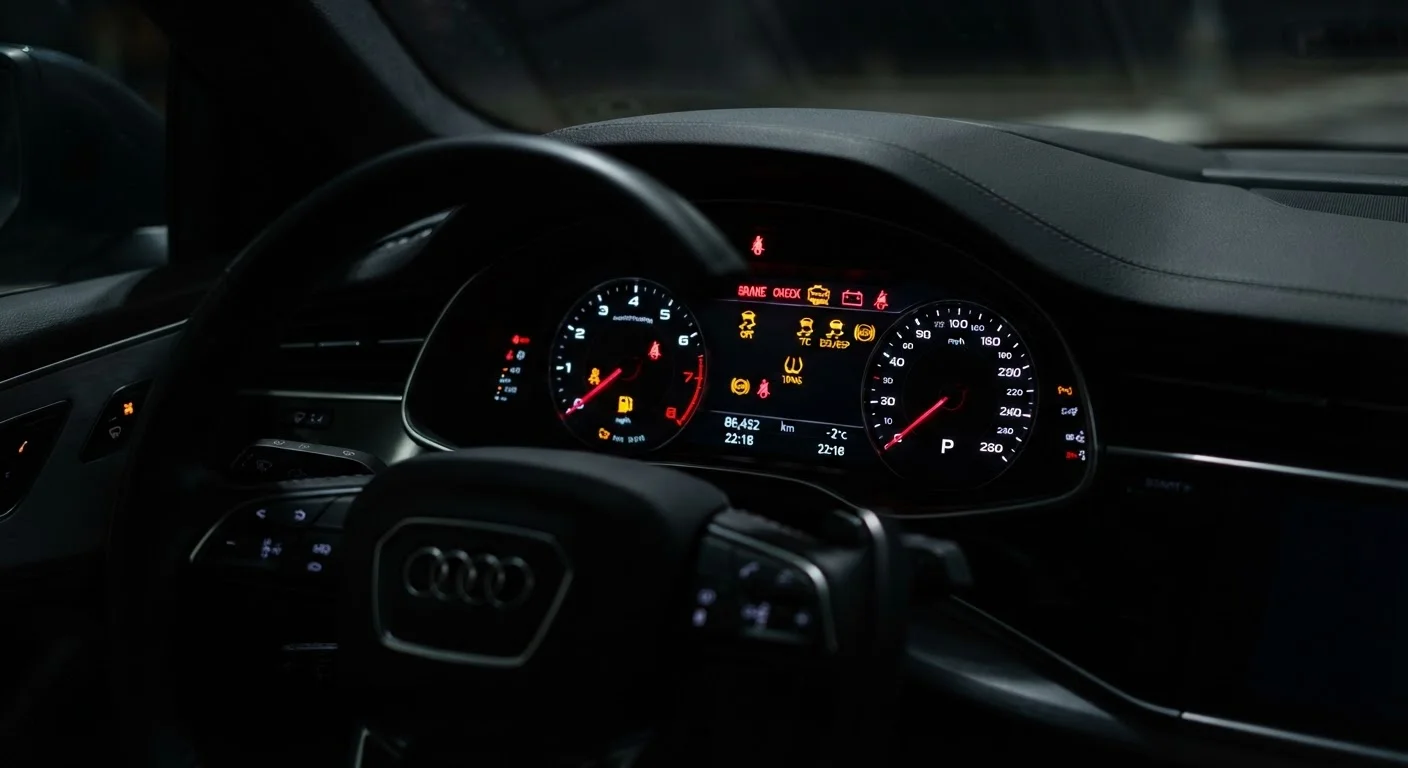
Photo credit: TheBlogZappier.com | Simple Search, Credible Results
In this article
A practical reference to the most common dashboard warning symbols, what triggers them, and when to act.
How Dashboard Warning Lights Are Organized
Modern vehicles use a standardized color-coding system to signal how urgently you need to act. Red lights indicate serious conditions - stop driving or pull over safely as soon as possible. Amber or yellow lights flag issues that need attention soon but are rarely immediate emergencies. Green and blue lights are informational, confirming that a system is active, not that something is wrong.
Most symbols are governed by the Society of Automotive Engineers (SAE) and international ISO standards, so the icons are broadly consistent across makes and models - though placement and exact shading vary. When any unfamiliar light appears, your owner's manual remains the definitive reference for your specific vehicle. See our complete car maintenance guide for broader context on keeping your vehicle in good shape.
| Color: Red | Stop or act immediately - serious system fault |
| Color: Amber / Yellow | Service needed soon - schedule an inspection |
| Color: Green / Blue | System active - informational only |
| OBD-II Standard Applies To | All US passenger vehicles from model year 1996 onward (US EPA / SAE standard) |
| TPMS Required From | Model year 2008 for all US passenger vehicles (NHTSA FMVSS 138) |
| Best Reference for Your Vehicle | Owner's manual - covers every symbol for your specific model |
The Most Common Warning Lights Explained
The lights below account for the vast majority of dashboard alerts everyday drivers encounter.
OBD-II
On-Board Diagnostics, second generation - a standardized system built into vehicles sold in the US from 1996 onward that continuously monitors engine and emissions systems. When a fault is detected, it stores a diagnostic trouble code (DTC) and may illuminate the check engine light.
MIL (Malfunction Indicator Lamp)
The official term for the check engine light. It illuminates when the OBD-II system detects a fault that could affect emissions or drivability.
TPMS (Tire Pressure Monitoring System)
A sensor-based system required on US passenger vehicles from 2008 onward that monitors tire inflation pressure and alerts the driver when a tire falls significantly below the recommended level.
SRS (Supplemental Restraint System)
The collective term for airbags and seatbelt pretensioners. The SRS warning light indicates a fault that may prevent these systems from operating correctly during a collision.
ABS (Anti-lock Braking System)
A safety system that modulates brake pressure during hard stops to prevent wheel lock-up and help the driver maintain steering control. An ABS fault does not disable standard braking but does disable this assist feature.
Diagnostic Trouble Code (DTC)
A standardized alphanumeric code stored by the OBD-II system when a fault is detected. A mechanic or OBD-II scanner retrieves these codes to identify what triggered a warning light.
Check Engine (MIL): The malfunction indicator lamp - an engine outline or the words "Check Engine" - is triggered by the vehicle's onboard diagnostics (OBD-II) system detecting a fault anywhere from a loose gas cap to a failing catalytic converter. A steady amber light warrants a diagnostic scan soon; a flashing light suggests an active misfire that can damage the catalytic converter and typically requires prompt attention from a qualified mechanic.
Oil Pressure Warning: An oil-can icon in red means engine oil pressure has dropped below safe operating levels. Stop the engine as soon as it is safe to do so and check the oil level. Continuing to drive risks severe engine damage. This is distinct from the oil-life or oil-change reminder, which is amber and advisory. Learn how to check your oil level correctly in our guide to fluid checks every driver should know.
Battery / Charging System: A battery outline in red signals the vehicle is running on battery power alone, meaning the alternator or charging circuit is not functioning properly. Electrical accessories may fail progressively. Plan to have the charging system inspected before driving long distances.
Temperature Warning: A thermometer submerged in liquid indicates the engine coolant has reached a dangerously high temperature. Pull over safely, turn off the engine, and allow it to cool before inspecting. Never open a hot radiator cap. If you notice a puddle underneath the vehicle, consult our reference on reading fluid leaks under your car.
Tire Pressure (TPMS): An exclamation point inside a tire cross-section means one or more tires have dropped significantly below the recommended pressure. Check all four tires - and the spare if your vehicle monitors it - with a gauge and inflate to the pressure shown on the door jamb sticker, not the maximum figure on the tire sidewall.
Brake System Warning: A circle with an exclamation mark or the letter "P" in a circle can indicate the parking brake is engaged, low brake fluid, or a fault in the braking system. If the parking brake is fully released and the light persists, have the brake system inspected before driving further. Brake fluid level is one of the checks covered in our fluid inspection guide.
ABS Warning: "ABS" in a circle flags a fault in the anti-lock braking system. Your standard brakes will still function, but the ABS - which helps prevent wheel lock-up during hard stops - may not engage. Have it diagnosed promptly.
Airbag / SRS Warning: A seated figure with a circle in front indicates a fault in the supplemental restraint system. Airbags or seatbelt pretensioners may not deploy correctly in a collision. This requires professional diagnosis; do not attempt to repair airbag components without proper training.
Multiple Lights On at Once
Seeing several warning lights illuminate simultaneously - especially after a jump-start or battery replacement - is often caused by a momentary power interruption resetting the vehicle's systems. Many lights will clear on their own after a short drive once sensors recalibrate. If lights persist beyond one or two drive cycles, a diagnostic scan is the most efficient next step.
Responding Safely When a Light Appears
The right response depends on the color and behavior of the light. As a general framework:
- Red, flashing, or accompanied by unusual sounds or smells: Pull over safely when you can and turn off the engine. Call for roadside assistance rather than continuing.
- Steady amber: Note the symbol, consult your owner's manual, and schedule a diagnostic appointment. Avoid long trips until the cause is identified.
- Advisory or informational: No immediate action required, but log it and address it at your next service interval.
A diagnostic scan using an OBD-II reader can retrieve the fault code associated with most amber warning lights - many auto parts retailers offer this service at no charge. Keep in mind that clearing a code without fixing the underlying cause will only result in the light returning. For routine maintenance schedules that help prevent many warning lights from appearing in the first place, see routine car maintenance: what to do and when.

Author
Autos & Driving Editorial Team
Autos & Driving Editorial Team is the collective byline for our editorial team and contributor network. Articles published under this byline or an editorial pen name are researched, written, and reviewed according to our editorial standards for clarity, consistency, and independence before publication.
View all articles →