
Collision vs. Comprehensive Coverage: Which Damage Does Each Handle?
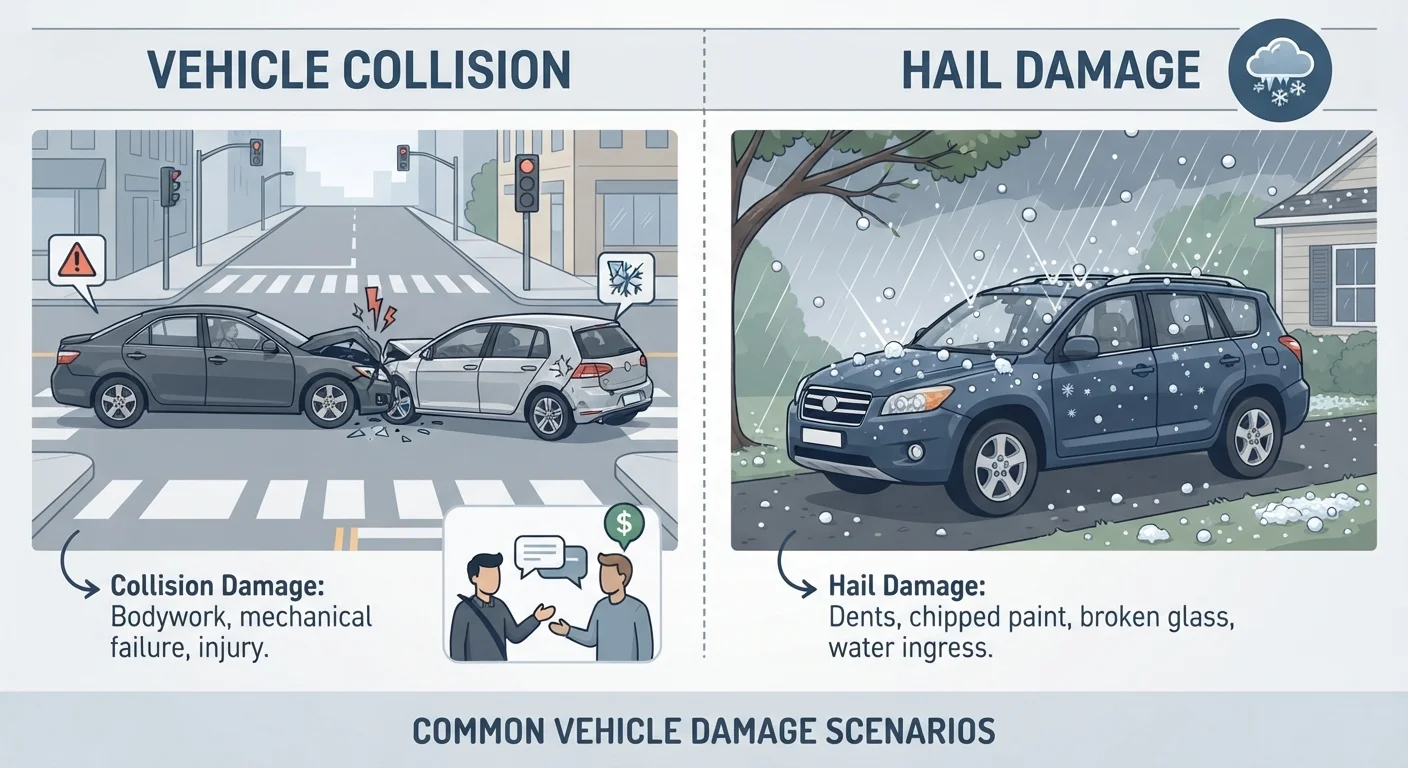
Photo credit: TheBlogZappier.com | Simple Search, Credible Results
In this article
Collision covers crashes; comprehensive covers nearly everything else. Learn the exact boundary between these two auto insurance types.
Key Takeaways
- Collision coverage pays for damage caused when your vehicle strikes another object or vehicle.
- Comprehensive coverage handles damage from events outside your control, such as theft, weather, and animals.
- Both coverages are typically optional unless required by a lender or lessor on a financed vehicle.
- Each coverage carries its own deductible, which you pay before the insurer covers the remainder.
- The dividing line between the two is straightforward: was the vehicle moving and involved in an impact?
The Core Distinction: Impact vs. Everything Else
Auto insurance policies divide physical damage coverage into two distinct buckets, each designed for a different category of loss. Understanding where one ends and the other begins helps you read your policy accurately and anticipate what will - and won't - be covered in a given scenario.
Collision coverage applies when your vehicle sustains damage as a direct result of a physical impact. This includes striking another vehicle, hitting a stationary object like a guardrail or parking barrier, or rolling over. The key factor is that the vehicle was in motion and made contact with something.
Comprehensive coverage applies to physical damage that does not result from a collision. Insurers sometimes describe this as damage caused by events largely outside the driver's control: theft, vandalism, fire, falling objects, flooding, hail, and contact with animals such as deer. If a tree falls on your parked car, that's comprehensive. If you swerve to avoid a deer and strike a fence, that's collision - even though a deer was involved.
For a broader map of how these coverages fit within the overall landscape of auto insurance, see the Auto Insurance Coverage Field Guide.
| Criterion | Collision Coverage | Comprehensive Coverage |
|---|---|---|
| Triggering event | Vehicle impact or rollover | Non-collision incident (theft, weather, animals, fire) |
| Vehicle in motion? | Typically yes | Often no (e.g., parked car) |
| Typical deductible | Often higher (e.g., $500-$1,000) | Often lower (e.g., $100-$500) |
| Relative premium cost | Generally higher | Generally lower |
| Covers theft? | No | Yes |
| Covers hail or flood? | No | Yes |
| Covers hitting a fence? | Yes | No |
| Required by lenders? | Yes, typically | Yes, typically |
| Pays up to | Actual cash value minus deductible | Actual cash value minus deductible |
Deductibles, Premiums, and When Each Pays Out
Both collision and comprehensive coverages are subject to a deductible - the amount you pay out of pocket before the insurer covers the remaining repair or replacement cost. Deductibles for each coverage are set independently, so your collision deductible and comprehensive deductible may differ.
Collision coverage generally carries higher premiums than comprehensive because traffic accidents occur more frequently than most non-collision perils. Comprehensive, by contrast, tends to be less expensive per year, though this varies by location, vehicle type, and the insurer.
~$290
Average annual comprehensive premium (US)
According to the National Association of Insurance Commissioners (NAIC), comprehensive coverage has historically been among the less expensive auto coverage add-ons.
~$490
Average annual collision premium (US)
NAIC data consistently shows collision premiums running higher than comprehensive due to the greater frequency of accident claims.
When a covered event occurs, the insurer will pay up to the vehicle's actual cash value (ACV) - the market value of the car at the time of the loss, factoring in depreciation - minus your deductible. Neither coverage pays more than the vehicle is worth. If repair costs exceed the ACV, the vehicle is typically declared a total loss and the insurer pays the ACV amount instead.
It's worth noting that neither collision nor comprehensive coverage addresses injuries, medical costs, or damage to another person's property. Those scenarios fall under liability and medical payments coverage. For a full explanation of how liability fits into the picture, see liability coverage explained.
The Deer Scenario: A Common Point of Confusion
Many drivers assume that hitting a deer is covered by comprehensive because the animal is involved. In fact, the determining factor is whether the vehicle made a physical impact: if you strike the deer directly, most insurers classify it as a comprehensive claim. If you swerve to avoid the deer and hit a guardrail, the resulting damage falls under collision. When in doubt, contact your insurer or agent before filing to confirm how a specific incident will be categorized under your policy.
When Both, One, or Neither Makes Sense
Whether to carry collision coverage, comprehensive coverage, both, or neither is a practical decision that depends on several factors: the vehicle's current market value, how it's financed, where it's parked, and your own financial capacity to absorb an unexpected loss.
If your vehicle is financed through a lender or leased, you almost certainly have no choice - most financing agreements require both coverages to protect the lender's interest in the asset. Dropping coverage while a loan is active may trigger a force-placed insurance clause, where the lender purchases coverage on your behalf at a typically higher cost and adds it to your loan balance.
For vehicles owned outright, the calculus is more nuanced. A common rule of thumb is to compare the annual cost of the coverage plus the deductible against the vehicle's ACV. If the potential payout would not meaningfully offset your financial risk, carrying the coverage may not be cost-effective. A licensed insurance agent can help you work through that comparison for your specific situation.
To understand how coverage limits interact with these decisions, the coverage limits vs. liability limits article provides useful context. And for a foundational overview of all major coverage categories, the main insurance coverage categories article is a helpful starting point.
This article provides general insurance education and is not personalized insurance, financial, or legal advice. Coverage terms, exclusions, and availability vary by insurer and state. Read your policy documents carefully and consult a licensed insurance agent or adviser for guidance specific to your situation.

Author
Insurance Basics Editorial Team
Insurance Basics Editorial Team is the collective byline for our editorial team and contributor network. Articles published under this byline or an editorial pen name are researched, written, and reviewed according to our editorial standards for clarity, consistency, and independence before publication.
View all articles →