
Coverage Limits vs. Liability Limits: A Distinction That Matters at Claim Time
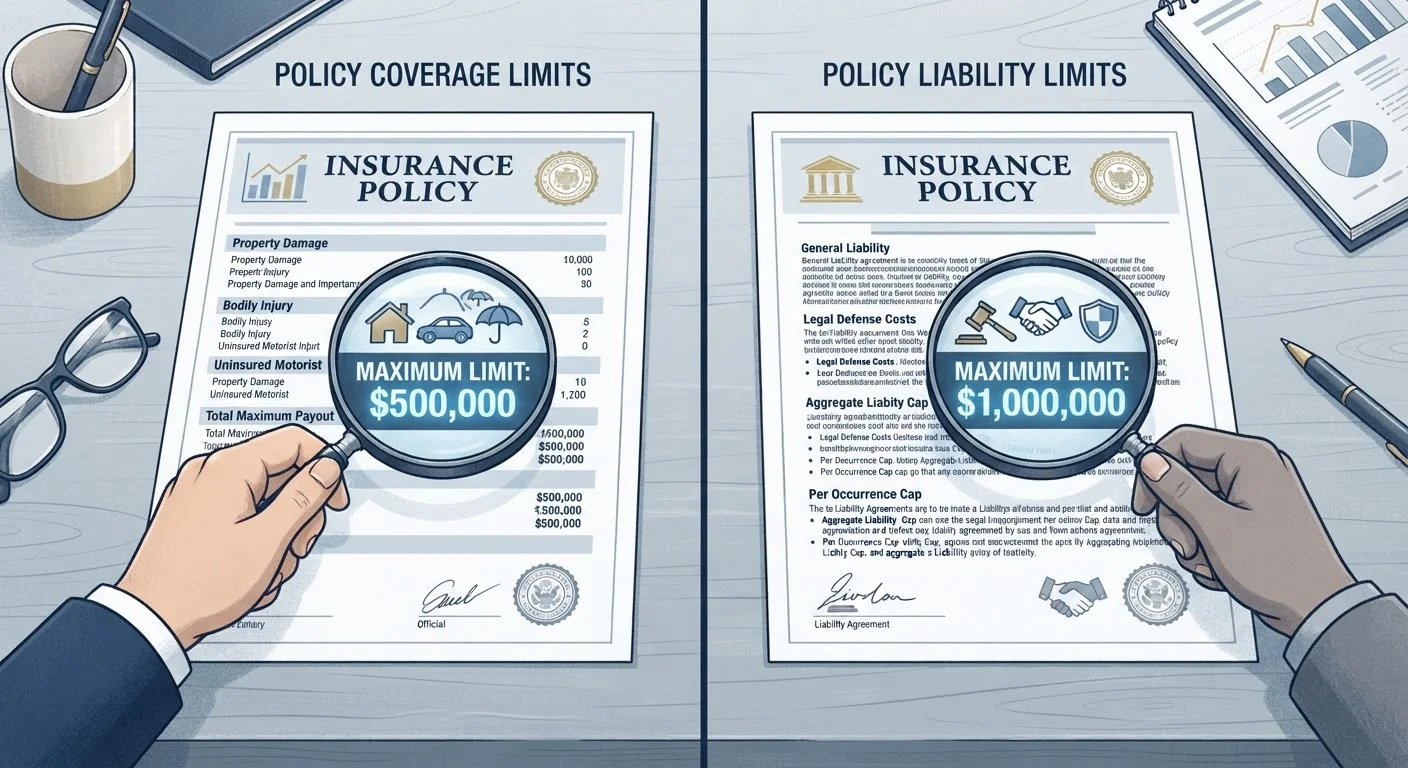
Photo credit: TheBlogZappier.com | Simple Search, Credible Results
In this article
These two limit types appear throughout property, auto, and health policies — but they don't work the same way. Here's a clear comparison.
Key Takeaways
- Coverage limits set the maximum payout for any insured loss across an entire policy or specific coverage type.
- Liability limits specifically cap what an insurer pays to third parties when you are legally at fault.
- Every liability limit is a type of coverage limit, but not every coverage limit is a liability limit.
- Amounts above either limit become your personal financial responsibility unless additional coverage applies.
- Policies frequently carry multiple distinct limits — understanding each one before a claim is critical.
Two Limits, One Policy: Why the Difference Matters
When you receive an insurance policy, the declarations page lists several dollar figures. Two of the most consequential are coverage limits and liability limits. These terms are often used interchangeably in casual conversation, but they describe different things — and mixing them up can leave you underestimating a serious gap in protection.
A coverage limit is the broadest category: it refers to the maximum dollar amount an insurer will pay under any specific coverage section of a policy. It applies whether the claim involves your own property, your medical bills, or someone else's losses.
A liability limit, by contrast, is a specific subset of coverage limit. It applies exclusively when you are held legally responsible — at fault — for bodily injury or property damage suffered by another person. Your auto policy's bodily injury liability section, for instance, contains a liability limit, not a general coverage limit.
Think of it this way: every liability limit is a coverage limit, but most coverage limits are not liability limits. See our overview of major insurance coverage categories for context on how different coverage types are structured.
| Criterion | Coverage Limit | Liability Limit |
|---|---|---|
| Definition | Max insurer pays for any covered loss | Max insurer pays to others when you're at fault |
| Who benefits | Policyholder (first-party) | Injured third parties |
| Applies to | Property damage, medical bills, loss of use, and more | Bodily injury and property damage you cause to others |
| Common policy types | Home, auto, health, renters | Auto, home, business, umbrella |
| Expressed as | Single dollar amount per claim or period | Per-person, per-accident, or combined single limit |
| Excess responsibility | Policyholder absorbs costs above the limit | Policyholder may face personal legal judgments above limit |
How Each Limit Functions at Claim Time
Understanding these limits in the abstract matters less than seeing how they behave when a claim is filed.
Coverage Limits in Practice
Suppose your homeowners policy has a personal property coverage limit of $50,000. A fire destroys $60,000 worth of belongings. Your insurer pays up to $50,000; the remaining $10,000 is your responsibility. That $50,000 ceiling is a coverage limit — it governs what the insurer pays for your loss.
Liability Limits in Practice
Now suppose you cause a car accident and the other driver sustains $80,000 in medical bills. Your auto policy carries a bodily injury liability limit of $50,000 per person. Your insurer pays up to $50,000 toward that driver's medical costs. You are personally exposed to the remaining $30,000 unless you carry an umbrella policy or other supplemental coverage.
Liability limits on auto policies are frequently expressed as split limits — for example, 100/300/100 — representing per-person bodily injury, per-accident bodily injury, and property damage maximums. Our guide to car insurance coverage types explains how these figures are structured in more detail.
1 in 8
Drivers estimated to be uninsured
According to the Insurance Research Council, roughly one in eight drivers on U.S. roads carries no liability coverage, increasing the financial exposure for everyone involved in an accident.
$15,000
Minimum bodily injury liability required in many states
Many U.S. states set a minimum bodily injury liability limit of $15,000 per person — an amount that can be exhausted quickly by a single emergency room visit.
In both scenarios, amounts above the applicable limit do not simply disappear — they become a potential out-of-pocket obligation. That is why reviewing both types carefully before a loss occurs, rather than after, is so important. You may also want to review how deductibles and out-of-pocket maximums interact with these limits.
Common Misconceptions and Policy Reading Tips
Several misunderstandings arise regularly when consumers review their policies.
Aggregate vs. Per-Occurrence Limits
Some policies distinguish between a per-occurrence limit (the maximum paid for a single event) and an aggregate limit (the total maximum paid across all claims in a policy period). Once an aggregate limit is reached, the insurer may not pay further claims until the policy renews. Always check which type applies to each coverage section in your policy.
Misconception 1: One Limit Covers Everything
Most policies contain multiple coverage sections, each with its own limit. A homeowners policy might have separate limits for dwelling structure, personal property, loss of use, and liability. Reaching one limit does not affect another — they operate independently.
Misconception 2: Liability Limits Protect Your Assets Automatically
A liability limit only defines what your insurer pays. If a court awards more than your liability limit, your personal assets — savings, property — may be at risk. Higher liability limits or a personal umbrella policy can help close this gap, though consulting a licensed insurance professional is the appropriate next step for evaluating your own situation.
Practical Reading Tips
- Find the declarations page: limits for each coverage section are summarized there.
- Check whether limits are per-occurrence, per-person, or aggregate (covering a policy period).
- Note any sub-limits — many policies cap specific categories (jewelry, electronics) at amounts below the overall personal property limit.
- Ask your agent to explain any figure you cannot locate a definition for in the policy's definitions section.
For a closer look at how liability coverage specifically functions in auto policies, see our field guide to auto insurance coverage.
This article provides general insurance education and is not personalized insurance, financial, or legal advice. Coverage terms, limits, exclusions, and regulations vary by insurer and by state. Always read your actual policy documents and consult a licensed insurance agent or adviser for guidance specific to your situation.

Author
Insurance Basics Editorial Team
Insurance Basics Editorial Team is the collective byline for our editorial team and contributor network. Articles published under this byline or an editorial pen name are researched, written, and reviewed according to our editorial standards for clarity, consistency, and independence before publication.
View all articles →