
Clothing Sizing Systems Around the World: A Quick Reference
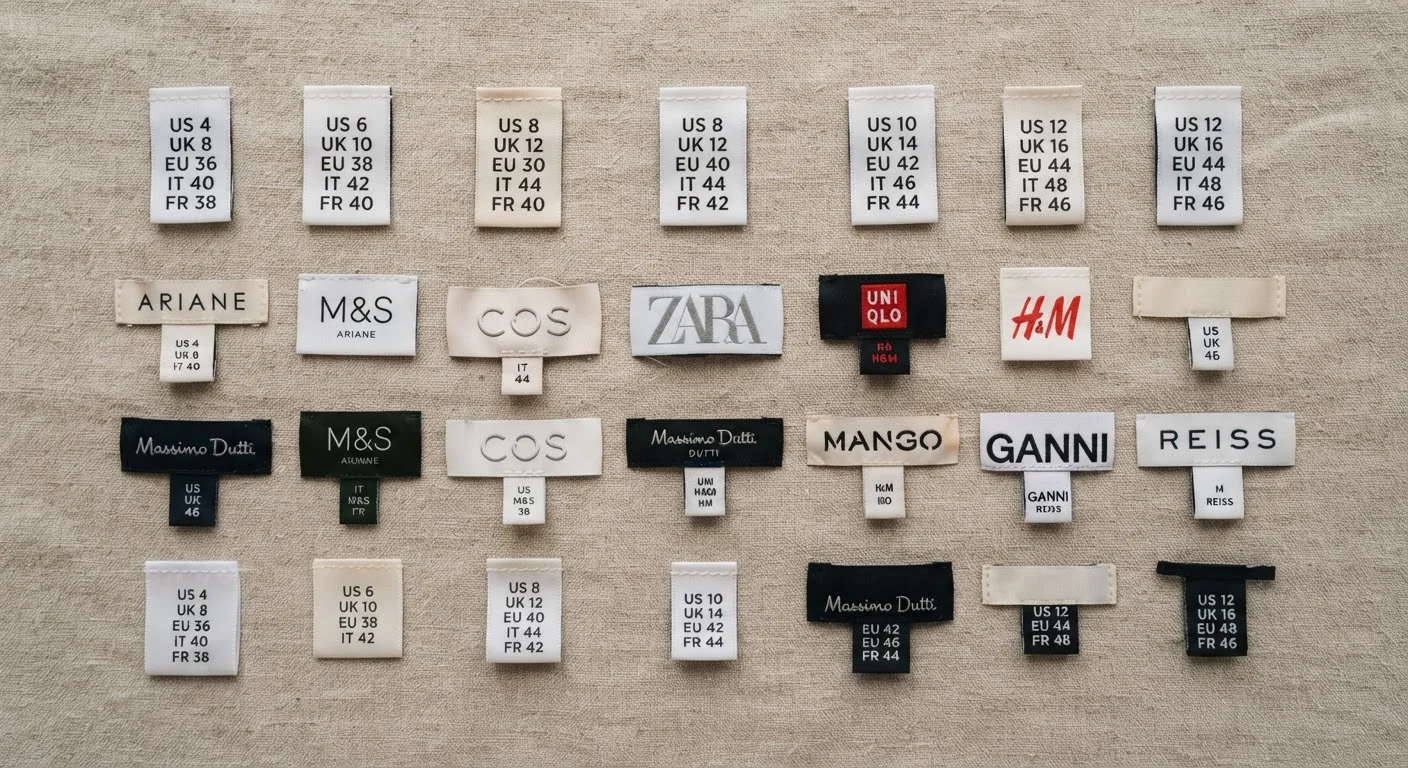
Photo credit: TheBlogZappier.com | Simple Search, Credible Results
In this article
UK, US, EU, Asian — sizing conventions differ significantly by region. This reference table helps you convert and understand what to expect.
Why Sizing Varies So Much by Region
Clothing sizing is not a universal language. The number or letter on a garment tag reflects a regional convention — not an absolute body measurement — and those conventions were developed independently, often decades apart, in different countries with different average body proportions in mind. The result is a patchwork of systems that can make shopping across borders genuinely confusing.
Compounding this, vanity sizing and brand-level variation mean that even within a single system, a size can shift meaningfully from one label to the next. Understanding the regional frameworks is a necessary starting point, but it won't eliminate the need to check actual measurements.
Vanity sizing
The practice by which garment measurements are labeled with smaller size numbers over time to flatter shoppers. It means a size 8 today may correspond to measurements that were once labeled a size 12.
Numeric sizing
A system that assigns clothes a plain number (e.g., 36, 38, 40) roughly tied to a body measurement in centimeters, used widely in European and Asian markets.
Standardized sizing
A national or regional sizing schema intended to create consistent garment dimensions across multiple manufacturers. In practice, brand-level variation is common even within a standard.
Alpha sizing
A system using letter codes — XS, S, M, L, XL, and so on — to indicate approximate size range. Highly prone to inconsistency across brands and countries.
Inseam measurement
The distance from the crotch seam to the hem of a trouser leg, measured in inches or centimeters. A key measurement for trousers that alpha and generic numeric sizing often omit.
Grading
The process of scaling a garment pattern up or down across a size range. Different brands grade at different rates, which is why proportions shift between sizes even within the same label.
Regional Systems at a Glance
The four most commonly encountered systems for women's ready-to-wear clothing are the US, UK, European (EU), and various Asian conventions. Men's sizing also varies, though the gap between US and EU tends to be smaller for tops and trousers.
| US women's size 8 EU equivalent | Approximately EU 38 |
| UK women's size 12 US equivalent | Approximately US 8 |
| EU men's shirt collar (size 38) | Approximately 15-inch collar (US/UK) |
| Japanese women's sizing offset | Typically 2–3 sizes smaller than US equivalent |
| Australian women's size vs. UK | Generally equivalent to UK sizing |
| Shoe sizing systems in use globally | At least 5 distinct systems (US, UK, EU, JP, CN) |
Women's Clothing: Key Conversions
| US | UK | EU | IT (Italy) | JP (Japan) |
|---|---|---|---|---|
| 0 | 4 | 32 | 36 | 5 |
| 2 | 6 | 34 | 38 | 7 |
| 4 | 8 | 36 | 40 | 9 |
| 6 | 10 | 38 | 42 | 11 |
| 8 | 12 | 40 | 44 | 13 |
| 10 | 14 | 42 | 46 | 15 |
| 12 | 16 | 44 | 48 | 17 |
These conversions are approximate guidelines. Actual fit depends on individual brand grading, cut, and fabric.
Men's Shirt Sizing (Collar Inches vs. EU)
| US/UK (collar in.) | EU Numeric |
|---|---|
| 14.5" | 37 |
| 15" | 38 |
| 15.5" | 39–40 |
| 16" | 41 |
| 16.5" | 42 |
| 17" | 43 |
~2 sizes
Typical variance between US and Japanese women's sizing
A US size 6 often corresponds to a Japanese size 9–11 depending on the brand and garment category.
4 cm
Standard increment between EU numeric sizes
European numeric sizing for women typically increases by 4 cm per size step, though actual garment measurements vary by brand.
Practical Tips for Shopping Across Sizing Systems
Conversion charts are a useful starting point, but they work best when combined with a few additional habits:
- Measure yourself in centimeters and inches. Knowing your bust, waist, hip, and inseam in both units lets you cross-reference a brand's size chart directly, rather than relying on a regional label alone.
- Check each brand's own size guide. Sizing is not standardized at the brand level, even within a country. A size M from one European label may differ noticeably from another.
- Note the country of manufacture. Clothing labels carry country-of-origin information that can signal which sizing convention was used as the base.
- Be cautious with Asian sizing, especially for bottoms. Japanese and Korean sizing systems, in particular, tend to run narrower and smaller across garment categories — not just in numeric terms but in proportional cut.
- Account for fit variation at home. In-store conditions can skew how you judge fit, which makes measurement-based decisions especially valuable for cross-border orders.
For anyone building a wardrobe with pieces from multiple regions, keeping a small personal measurement card — or a note on your phone — makes navigating these systems significantly faster. You can also explore how wardrobe planning strategies affect how many size conversions you'll regularly need to manage.

Author
Style & Beauty Editorial Team
Style & Beauty Editorial Team is the collective byline for our editorial team and contributor network. Articles published under this byline or an editorial pen name are researched, written, and reviewed according to our editorial standards for clarity, consistency, and independence before publication.
View all articles →