
Why Clothes Stop Fitting Even When Your Size Hasn't Changed
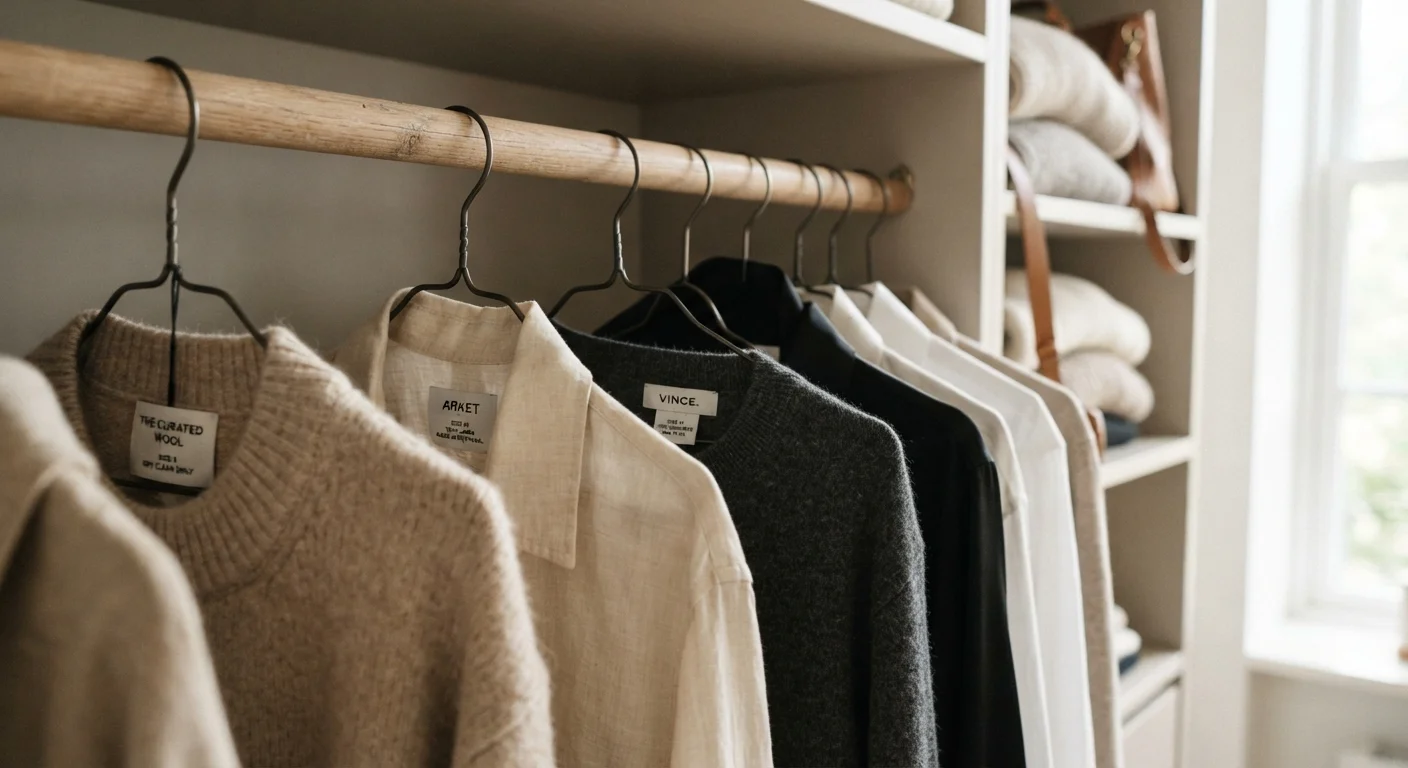
Photo credit: TheBlogZappier.com | Simple Search, Credible Results
In this article
Vanity sizing, fabric shrinkage, and brand variation — understand the real reasons clothing fit shifts over time and across labels.
Key Takeaways
- Clothing sizes are not standardized across brands in the United States — variation is normal and expected.
- Vanity sizing has gradually inflated labeled sizes over decades, so a size today measures larger than the same label did in past decades.
- Fabric composition and wash care directly affect how a garment fits after laundering.
- Body composition can shift even when overall weight and size stay the same, affecting how clothes sit.
- Taking your own body measurements is more reliable than relying on size labels alone.
The Sizing System Isn't a Standard — It's a Suggestion
Walk into any department store and pull the same labeled size from three different brands. Chances are, all three will fit differently. That's not a coincidence or a manufacturing error — it's the predictable result of an industry that has never adopted a single unified sizing framework.
In the United States, apparel brands establish their own size grading internally. Each brand creates patterns based on a sample size, then scales those patterns up and down to produce a range. The numeric or letter label attached to the result is that brand's internal designation — not a measurement guarantee. Sizing conventions also differ internationally, so a US size 6 does not translate directly to a UK 6 or an EU 36.
This explains why longtime customers of a specific brand often find fit easier to predict — they've learned that brand's particular interpretation of each size, not sizing in general.
No standard
Federal sizing mandate for US apparel
The US has no federally mandated clothing size standard; each brand sets its own internal grading system independently.
~3–4 sizes
Estimated vanity sizing inflation since the 1970s
Industry analysis has suggested that labeled sizes have expanded by roughly three to four size increments over the past five decades in mainstream US apparel.
Up to 10%
Shrinkage potential in untreated cotton
Untreated cotton garments can shrink up to approximately 10% of their original dimensions after initial washing, with continued minor shrinkage over repeated laundering.
How Vanity Sizing Has Shifted the Numbers
Over the past several decades, apparel brands have incrementally increased the physical dimensions of labeled sizes without changing the number on the tag. A garment labeled size 8 today is measurably larger than a garment labeled size 8 from the 1970s or 1980s. This practice — commonly called vanity sizing — reflects a marketing insight: consumers respond positively to fitting into smaller-numbered sizes.
The practical effect for shoppers is that the number on the label carries less informational value over time. If you find yourself fitting into a size you wore years ago, it may reflect label inflation rather than any physical change on your part. Conversely, if a size you've reliably worn suddenly feels tight in a brand you haven't tried before, that brand may simply grade its sizes more closely to traditional measurements.
“Size is a label, not a measurement. Consumers who focus on fit rather than the number on the tag generally end up with wardrobes that serve them better over time.”
— Clothing industry sizing consultant, Apparel grading and fit specialist
Fabric Behavior: Shrinkage, Stretch, and Structural Change
Even a perfectly fitting garment on the day of purchase can shift over time — and the fabric is often responsible. Natural fibers like cotton, linen, and wool absorb water and contract under heat. Even low-heat washing cycles apply some mechanical agitation that gradually tightens fiber structure. This is why a shirt that fit comfortably in the dressing room may feel noticeably snug at the shoulders and chest after several washes.
Fabrics containing elastane (spandex) stretch to accommodate the body but lose recovery elasticity with repeated washing and wearing. A pair of jeans with 2% elastane may feel more fitted after a year of regular use than it did when new.
Reading the fiber content on a clothing label can help you anticipate how a garment is likely to behave. Blends with higher synthetic content typically hold shape more consistently than 100% natural fiber garments. For guidance on slowing this process, see our article on caring for clothes so they last longer.
Pre-Wash New Garments Before Judging Fit
If you're on the fence about a garment's fit, wash it according to care label instructions before deciding to keep or return it. Natural fiber garments in particular may shift enough in that first wash to change how they feel. This is especially important for cotton trousers, linen shirts, or any structured piece where fit is critical.
Body Composition Changes That Don't Move the Scale
Body weight is a single number that obscures a great deal of physical variation. Two people — or the same person at two points in time — can weigh identically while having significantly different body shapes. Changes in muscle mass, fat distribution, hydration levels, and even posture affect how clothing drapes and fits across the shoulders, hips, chest, and waist.
Hormonal shifts (including those associated with age, menstrual cycles, pregnancy, or medication) can alter how the body retains fluid and distributes tissue. Someone who has increased lean muscle through exercise may find that structured garments feel tighter across the shoulders or thighs even if their overall weight is unchanged. This isn't a fit failure — it's the body changing in ways that numeric weight doesn't capture.
Understanding tailored versus relaxed fit becomes especially useful here: relaxed silhouettes accommodate body variation more gracefully than closely cut styles, which leave less room for fluctuation.
Using Measurements Instead of Labels
The most reliable way to navigate sizing inconsistency is to track your own body measurements rather than treating a size number as a fixed identity. Measuring the chest, natural waist, and hips with a soft tape measure — and comparing those numbers against a brand's specific size chart — removes the guesswork that labeled sizes introduce.
Most brands publish size charts on their product pages, and these charts vary enough that checking them before ordering significantly reduces the likelihood of poor fit, particularly when shopping online. If a brand's size chart lists measurements rather than just size designations, use those numbers as your guide.
Fit perception in a store environment can also mislead — specific lighting, mirrors, and the pressure of making a purchase decision all color judgment. Approaching fit as a measurable, adjustable factor rather than a fixed size label takes some of that friction out of the process.
This article is for general informational purposes. Individual fit and body-related changes may have a range of causes; consult a qualified professional if you have concerns about health-related changes to your body.
Frequently Asked Questions

Author
Style & Beauty Editorial Team
Style & Beauty Editorial Team is the collective byline for our editorial team and contributor network. Articles published under this byline or an editorial pen name are researched, written, and reviewed according to our editorial standards for clarity, consistency, and independence before publication.
View all articles →