
Why Clothes That Fit Well in the Store Look Different at Home
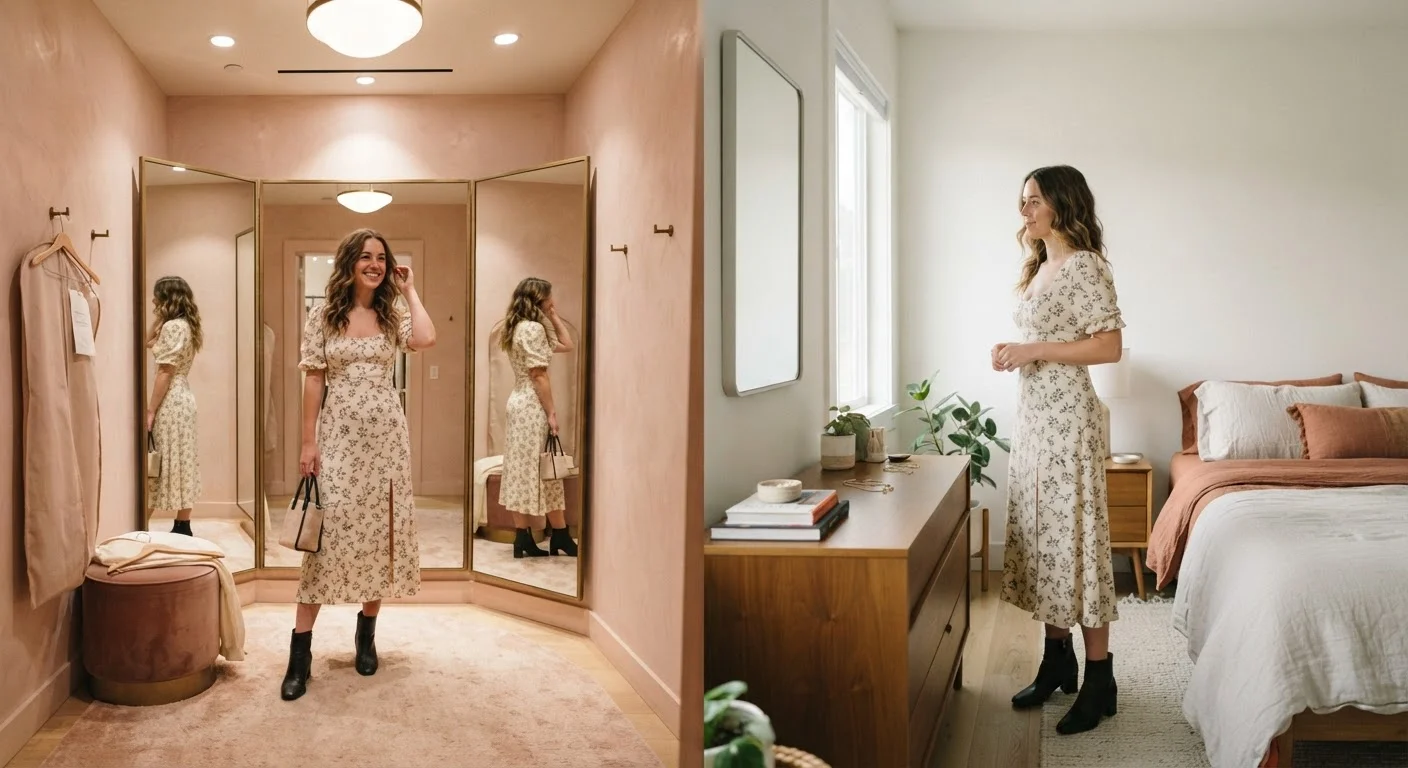
Photo credit: TheBlogZappier.com | Simple Search, Credible Results
In this article
Lighting, mirrors, and in-store pressure affect how we judge fit. Understand these factors so you shop with a clearer head.
Key Takeaways
- Fitting room lighting and mirrors are deliberately designed to make clothes look more flattering.
- Social pressure and shopping fatigue impair your ability to judge fit objectively in stores.
- Moving freely and sitting down while trying on clothes reveals fit issues a standing pose hides.
- Fabric content affects how garments drape and behave under different lighting conditions at home.
- Bringing reference photos or a trusted second opinion can counteract in-store perception distortions.
Why the Store Environment Shapes Your Perception
Walking out of a store with a garment that looked perfect — only to find it sits strangely under your bathroom light at home — is one of the most common frustrations in everyday shopping. It isn't a failure of judgment so much as a predictable response to a carefully engineered environment.
Retail fitting rooms are designed with a commercial purpose. Lighting rigs are positioned to flatter complexions and minimize the appearance of fabric irregularities. Mirrors are often angled slightly — even a few degrees can create a lengthening effect on the body. The cumulative result is an atmosphere where almost everything looks reasonably good, making it genuinely harder to evaluate fit with precision.
Add in the effects of shopping fatigue, social dynamics, and the subtle pressure of a salesperson waiting outside the curtain, and the conditions for clear-eyed assessment become even harder to achieve. Understanding exactly where perception breaks down is the first step to making decisions you won't regret.
Store Conditions Are Not Neutral
Retailers invest significantly in lighting, mirror angles, and fitting room design to present merchandise favorably. This is not deceptive in a legal sense, but it does mean the environment where you evaluate a garment is not a neutral one. Understanding this dynamic puts the power back in your hands as a shopper.
Common Mistakes That Lead to Regret — and How to Avoid Them
The errors below aren't about poor taste or careless shopping. They're predictable responses to an environment designed to compress your decision-making window. Recognizing each one gives you a practical way to push back.
Trusting fitting room lighting as an accurate representation of how a garment will look in real life.
Why it happens: Most fitting rooms use warm, diffused overhead lighting positioned to minimize shadows and even out skin tone, which can make both the color and drape of a garment look better than they are.
Judging fit only while standing still and facing forward in the mirror.
Why it happens: Standing upright in a pose is the most forgiving position for most garments, and it's the default posture in a time-pressured fitting room visit.
Accepting a salesperson's positive opinion as objective feedback on fit.
Why it happens: Sales staff are there to help and their encouragement is usually well-intentioned, but they operate in an environment with an inherent interest in completing a sale.
Overlooking fabric composition when evaluating how a garment sits and moves.
Why it happens: Shoppers typically focus on silhouette and color, while fabric content — which determines drape, stretch, and how a piece responds to body heat and movement — gets less attention.
Shopping while fatigued or under social time pressure, then justifying a borderline fit.
Why it happens: Decision fatigue is real — after trying on multiple items, the brain defaults to easier, more positive evaluations. Group shopping adds social momentum that can push a marginal purchase over the line.
It's also worth noting that sizing inconsistencies across brands mean the number on a tag tells only part of the story. Our reference on clothing sizing systems explains why the same size can feel dramatically different depending on the label — and how to account for that when shopping.
Building a More Reliable Evaluation Habit
A simple shift in approach can significantly reduce the gap between how something looks in the store and how it performs in daily life. The core principle is to introduce friction before committing — not after.
~30%
Online clothing return rate in the US
Industry estimates from retail research groups consistently place online apparel return rates around 30%, with fit cited as the leading reason for returns.
3–5°
Mirror angle difference that creates a slimming effect
Retail design studies have noted that angling a mirror even a few degrees from true vertical can produce a noticeably elongating effect on the reflected figure.
Before leaving the fitting room, run through a brief physical checklist: sit, bend, reach, and walk. Look at the garment from the side and back, not just straight ahead. If you're evaluating a structured piece like a blazer or trousers, consider how it will work with the shoes and layers you actually own — understanding the difference between tailored and relaxed cuts can help clarify which silhouette genuinely suits your wardrobe needs.
Finally, use return windows as a built-in evaluation phase rather than a fallback. Many shoppers treat a return policy as an emergency option, when it's more useful as a deliberate part of the process. Take the item home, try it in your own space, with your own mirror and light — then decide. That extra 24 hours of perspective is often all it takes to know whether a purchase will last or end up unworn.
For a broader look at how wardrobe-building decisions stack up over time, seasonal versus year-round wardrobes explores how the pieces you choose to keep shape the system as a whole.
Watch for Vanity Sizing Across Brands
A garment that fits well at one label's size 8 may be cut entirely differently at another brand's size 8. This isn't a flaw — it's a result of each brand sizing to its target customer's measurements. If a piece feels tight but the tag suggests it should fit, don't assume the problem is yours. Our article on why clothes stop fitting even when your size hasn't changed explains how brand variation and fabric behavior contribute to this experience.

Author
Style & Beauty Editorial Team
Style & Beauty Editorial Team is the collective byline for our editorial team and contributor network. Articles published under this byline or an editorial pen name are researched, written, and reviewed according to our editorial standards for clarity, consistency, and independence before publication.
View all articles →