
Sustainable vs. Fast-Fashion Trend Cycles: How Their Rhythms Differ
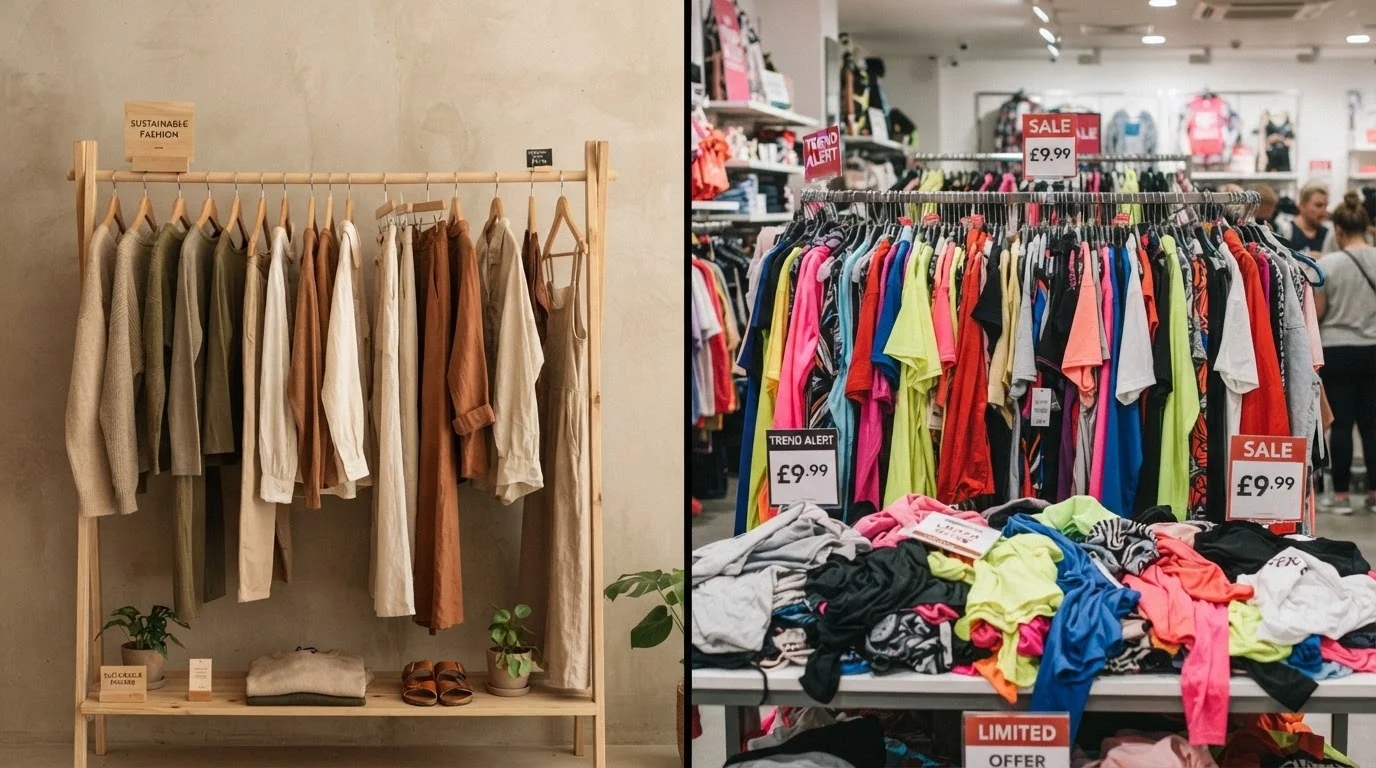
Photo credit: TheBlogZappier.com | Simple Search, Credible Results
In this article
Sustainable and fast-fashion brands operate on very different timelines. Here's how those cycles shape what you see on the rack.
Key Takeaways
- Fast-fashion brands may release new collections weekly or even daily, while sustainable brands typically work on seasonal or annual cycles.
- Sustainable fashion's slower timeline is often tied to ethical sourcing, longer production runs, and intentional design decisions.
- Fast-fashion trend cycles accelerate consumer turnover and can contribute to wardrobe clutter and style inconsistency.
- Understanding both rhythms helps consumers make more deliberate choices about when and what to buy.
- Neither model is monolithic — there is significant variation in pace within both categories.
Two Very Different Clocks
If you've ever noticed that a trend seems to appear and disappear almost overnight, you're observing the fast-fashion cycle at work. Conversely, if a brand you follow only introduces new pieces a handful of times a year, that's a hallmark of the slower, more deliberate sustainable model. These two systems don't just differ in how often clothes arrive — they differ in philosophy, production logic, and the cultural signals they respond to.
Fast-fashion brands have compressed the traditional retail calendar beyond recognition. Where legacy fashion once operated on two primary seasons — spring/summer and fall/winter — many fast-fashion retailers now push new styles every week, sometimes multiple times per week. Micro-trend cycles, fueled by social media virality, can compress a trend's entire lifespan — from emergence to saturation to obsolescence — into a matter of weeks. To understand how this compares with the traditional runway calendar, see how the fashion calendar works.
Sustainable brands, by contrast, tend to anchor their releases to longer development cycles. This slower pace is partly structural: responsible sourcing, ethical labor practices, and lower-volume production runs all take time. But it's also intentional — the design philosophy emphasizes longevity over novelty.
The Mechanics of Fast-Fashion Trend Cycles
Fast-fashion's speed is driven by a vertically integrated supply chain that can move a design from concept to store floor in as little as two to four weeks. Trend identification is increasingly algorithmic, drawing on search data, social media engagement, and real-time sales signals to determine what to produce next.
This creates a self-reinforcing loop: consumers browse frequently because new items are always arriving, and brands interpret that browsing as demand for more constant newness. The result is a cycle that rewards volume over depth. A piece might be worn a handful of times before a newer option displaces it in the consumer's attention.
| Fast Fashion | Sustainable Fashion | |
|---|---|---|
| Release frequency | Weekly or near-daily drops | 2–4 collections per year |
| Trend responsiveness | Real-time, algorithm-driven | Seasonal or intentional |
| Production lead time | 2–4 weeks | Months to over a year |
| Design philosophy | Volume and novelty | Longevity and quality |
| Supply chain transparency | Often limited | Typically higher priority |
| Consumer engagement pace | Constant, habitual browsing | Deliberate, seasonal review |
The downstream effect on shoppers is real. Chasing every trend can leave wardrobes cluttered and personal style feeling inconsistent — a pattern explored in detail in our piece on where seasonal style advice goes wrong. Understanding the difference between a fleeting micro-trend and a broader macro-trend is essential to navigating this pace wisely. Our editorial on micro-trends vs. macro-trends breaks that distinction down.
The Mechanics of Sustainable Fashion Cycles
Sustainable brands typically release two to four collections per year, mirroring the traditional fashion calendar rather than competing with the fast-fashion tempo. Some operate on an even slower cadence — releasing pieces on a rolling basis or in small, deliberate drops tied to material availability rather than trend forecasting.
Production timelines are longer because ethical supply chains require it. Sourcing certified organic or recycled materials, paying fair wages, and maintaining transparent factory relationships all add lead time. This is a feature, not a bug: the extended cycle allows for quality control, thoughtful design iteration, and reduced overproduction.
Align Your Shopping Rhythm Intentionally
Consider auditing how often you browse for new clothing versus how often you actually need something. Many style experts suggest setting a personal cadence — such as reviewing your wardrobe each season — rather than responding to the constant stream of fast-fashion releases. This doesn't require switching entirely to sustainable brands; it simply means being aware of who is setting your pace and whether that rhythm serves you.
For consumers, this slower rhythm asks for a different kind of engagement. Rather than checking what's new weekly, the sustainable fashion shopper tends to monitor brand releases seasonally and make more deliberate decisions when they do buy. This approach connects naturally to the concept of investing in trend pieces thoughtfully — a framework worth understanding before committing to any trend-led purchase.
What These Rhythms Mean for Everyday Shoppers
Awareness of these two cycles is practically useful. If you find yourself feeling overwhelmed by the pace of new releases, that sense of trend fatigue is a meaningful signal — it may indicate that the fast-fashion tempo isn't serving your actual style goals. Slowing down your consumption pace to align more closely with the sustainable model, even without switching brands entirely, can reduce decision fatigue and help you build a more coherent wardrobe over time.
On the other hand, understanding fast-fashion cycles isn't inherently harmful — knowing that a micro-trend has a short shelf life helps you evaluate whether it's worth your time and resources at all. The fashion basics that underpin any wardrobe don't change with trend speed; they provide an anchor regardless of which cycle you're navigating.
Ultimately, neither model is entirely good or bad for every consumer. What matters is recognizing which rhythm you're operating within — and making choices that reflect your own priorities rather than the pace set by the industry.

Author
Style & Beauty Editorial Team
Style & Beauty Editorial Team is the collective byline for our editorial team and contributor network. Articles published under this byline or an editorial pen name are researched, written, and reviewed according to our editorial standards for clarity, consistency, and independence before publication.
View all articles →