
Colour Forecasting Explained: Who Decides What Shade Is 'In' Each Year
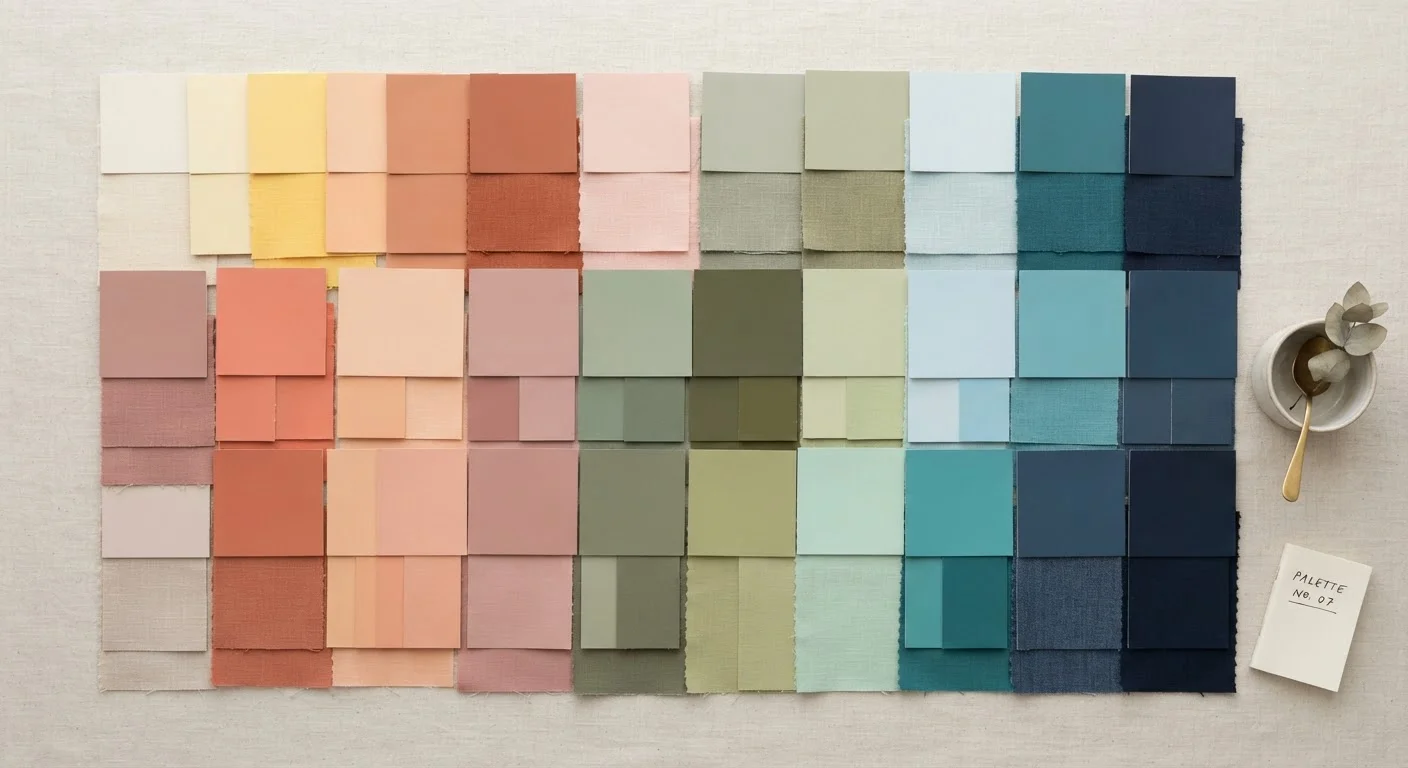
Photo credit: TheBlogZappier.com | Simple Search, Credible Results
In this article
From trend agencies to paint companies, here's how the industry arrives at seasonal colour palettes — and how much influence they really have.
Key Takeaways
- Colour forecasts are produced 18–24 months before products reach consumers.
- Dedicated trend agencies, paint companies, and industry bodies all contribute to seasonal palettes.
- No single organization controls which colour becomes dominant — consensus emerges across multiple sectors.
- Forecasts reflect cultural mood, global events, and consumer psychology, not just aesthetic preference.
- Consumers are not obligated to follow forecasts; understanding them helps make more intentional choices.
The Mechanics Behind a Colour Forecast
Long before a shade appears on a runway or a retail shelf, it has passed through a structured research process. Colour forecasting agencies — specialist firms that monitor cultural, economic, and design signals globally — begin their work roughly two years before a given season. Their analysts study everything from emerging art movements and political climates to shifts in consumer spending and social behaviour.
The raw inputs are synthesised into trend directions, which are presented to clients — typically manufacturers, fashion brands, beauty companies, and retailers — at trade fairs and in subscription-based forecast reports. These clients then make sourcing and design decisions that eventually produce the products consumers encounter in stores.
Understanding this pipeline helps explain something that can otherwise seem mysterious: why a very specific shade of, say, muted sage or warm terracotta seems to appear everywhere at once. The answer is not coincidence. It reflects dozens of independent design teams working from similar directional inputs at the same time. For more on how this timing intersects with retail drops, see how the fashion calendar works.
18–24 months
Typical forecasting lead time before retail
Industry sources consistently cite this window as standard for apparel and consumer goods colour planning.
Multiple sectors
Industries using shared colour forecasts
Fashion, interiors, automotive, beauty, and packaging industries often subscribe to overlapping trend intelligence, driving cross-category colour synchrony.
2 years
Ahead of when consumers see the colour in stores
By the time a forecasted colour appears on a high-street rail, the next cycle's palette decisions are already in progress.
The Key Players in Colour Prediction
No single organisation controls colour trends — the landscape is a loose ecosystem of influence. The most recognised contributors include:
- Specialist forecasting agencies — firms that sell trend intelligence to brands across multiple sectors. Their research teams monitor global design events, street culture, and macro social trends.
- Paint and coatings companies — several major manufacturers announce an annual signature colour with significant media reach. These announcements generate consumer awareness and function as cultural moments in their own right.
- Industry colour bodies — organisations that bring together colourists from fashion, textiles, and interiors to agree on seasonal palettes for member industries. Their role is partly coordinating so that fabrics, trims, and accessories can be produced in compatible hues.
- Runway designers — while designers typically receive rather than originate forecasts, their collections amplify certain colours through press coverage and retail influence, reinforcing a palette once it is in motion.
- Retail buyers — buying decisions at large retailers can make or break a colour's commercial life. A forecast colour ignored by major buyers simply will not appear at scale, regardless of its agency backing.
“Colour is a silent language. The palette a season carries often tells you more about the cultural moment than any trend report could in words.”
— Leatrice Eiseman, Executive Director, Pantone Color Institute
The interaction among these players creates a feedback loop rather than a top-down decree. A colour gains momentum when it resonates simultaneously across several independent channels.
What Colour Forecasts Actually Reflect
Forecasters are consistent about one point: the colours they select are symptoms of cultural mood, not arbitrary choices. Periods of collective anxiety have historically driven demand for grounding, earthy neutrals. Eras of optimism tend to surface saturated, expressive hues. The post-pandemic years, for instance, saw many agencies point toward vivid, life-affirming palettes as a collective counter to prolonged uncertainty — though the specific interpretations varied by organisation.
This means reading a colour forecast is partly an exercise in cultural literacy. A forecaster naming a specific dusty lavender is communicating something about a broader emotional register they believe will resonate — calm, introspection, softness — not simply recommending a paint chip.
Use Forecasts as Context, Not Instructions
Colour forecasts are designed to guide manufacturers and retailers — not to dictate personal style. Treating a forecasted palette as one available option rather than a requirement puts you back in control. Ask whether a trending shade works with your existing wardrobe and skin tone, not simply whether it has appeared on a runway.
For consumers, this cultural dimension is arguably more useful than the specific shade itself. Understanding why a palette is being proposed allows you to decide whether it aligns with how you want to dress or decorate — or whether a different direction better reflects your own context. This is the foundation that colour theory in getting dressed builds on in practical terms.
How Much Influence Do Forecasts Really Have?
Colour forecasting has genuine structural power at the manufacturing level. Because supply chains require long lead times, a colour that does not appear in early-stage trend reports is unlikely to be produced in volume. In that sense, forecasters operate as gatekeepers of what is even available to buy.
At the consumer level, however, the influence is softer. Shoppers do not follow colour reports; they respond to what appears on shelves, in windows, and across social media — all of which has already been shaped upstream by forecast decisions. The effect is real but indirect.
It is also worth noting that forecasts do not always succeed. A colour promoted across multiple reports can fail to achieve cultural traction if it lands in an unreceptive moment. Forecasting is a disciplined form of informed prediction, not a guarantee. The history of trends — including which predictions aged well and which did not — is traced across style and beauty trends through the decades.
For shoppers who engage consciously with colour — whether in clothing, nail polish, or home goods — knowing how forecasts function is more empowering than prescriptive. It explains why your options look a certain way each season, which is a different thing from telling you what to choose. See how this plays out at the product level in the seasonal nail colour guide, and consider how it factors into seasonal versus year-round wardrobe planning.
Frequently Asked Questions

Author
Style & Beauty Editorial Team
Style & Beauty Editorial Team is the collective byline for our editorial team and contributor network. Articles published under this byline or an editorial pen name are researched, written, and reviewed according to our editorial standards for clarity, consistency, and independence before publication.
View all articles →