
The Seasonal Nail Colour Guide: Understanding the Palettes That Rotate Each Quarter
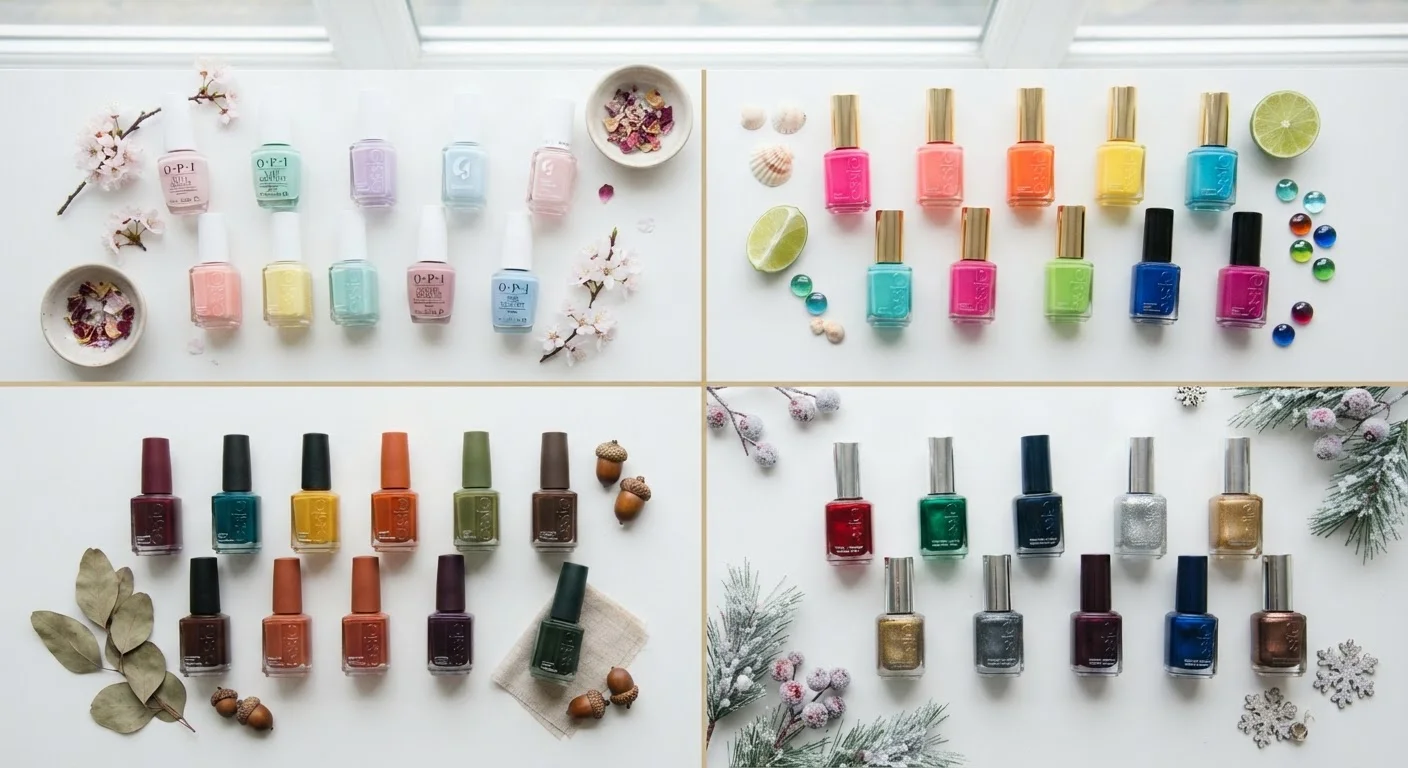
Photo credit: TheBlogZappier.com | Simple Search, Credible Results
In this article
A reference to the colour families, finishes, and textures that typically define nail trends across spring, summer, autumn, and winter.
How Seasonal Nail Palettes Are Established
Nail colour trends don't emerge in isolation. They're shaped by the same forces that drive apparel and accessories: runway presentations, beauty trade shows, forecasting agencies, and the editorial cycle. Understanding this pipeline helps consumers distinguish between a colour that will saturate store shelves and one that surfaces briefly in editorial imagery before disappearing.
Cosmetic brands typically plan shade launches six to twelve months in advance, aligning launches with the broader fashion calendar. How that fashion calendar actually functions is worth understanding before interpreting any nail trend report, because "spring" in a press release may refer to runway showings that happen in autumn of the prior year.
Colour forecasting organisations publish directional reports that inform multiple beauty categories simultaneously. Nail palettes, lip shades, and eyeshadow families are often developed in parallel, which is why a particular dusty mauve or citrus orange tends to appear across categories in the same season rather than in one product type alone.
The Four Seasonal Palettes Explained
Spring
Spring nail palettes typically draw from soft, airy colour families: milky pastels, sheer pinks, mint greens, and lavender. Finishes lean toward glossy or jelly-like translucency, reflecting the season's association with freshness and light. Sheer nudes with a faint blush or peach cast are perennial spring staples because they complement warmer skin tones emerging from winter.
Summer
Summer palettes intensify. Bright corals, saturated yellows, electric blues, and neon-adjacent tones dominate, alongside clean whites and high-contrast reds. Finishes diversify — glossy lacquers remain popular, but matte topcoats applied over vivid shades create a contemporary, graphic look. Metallic and chrome finishes also perform well during summer, reflecting light in ways that complement warm-weather environments.
4 distinct
Colour palette rotations per year
Most cosmetic brands structure their nail launches around four seasonal collection drops aligned with fashion-calendar timing.
6–12 months
Advance planning for shade launches
Industry-standard lead times mean colours visible on shelves this season were selected well before the prior season ended.
Autumn
Autumn marks the shift toward deeper, earthier tones: terracotta, burnt sienna, plum, forest green, and warm burgundy. These shades align with the season's wider palette shift in apparel — the same tones appearing on outerwear and accessories tend to surface in nail colour. Finishes in autumn skew toward satin and semi-matte, with textures like velvet or suede occasionally introduced by brands seeking a tactile seasonal effect. Seasonal beauty cycles have recurred across decades, and autumn's affinity for richly pigmented shades is one of the most consistent patterns in that history.
Winter
Winter palettes split between two contrasting directions. The first is deep and moody: oxblood, navy, near-black shades, and inky greens. The second direction is festive and luminous: champagne, rose gold, glitter-infused formulas, and holographic finishes timed to the holiday period. Both directions co-exist within a single winter season, giving consumers two distinct reference points when choosing shades.
Finishes, Textures, and How They Shift
Colour family is only one dimension of seasonal nail trends. Finish — the surface quality of dried polish — often carries as much directional weight as the hue itself. A dusty rose applied as a matte reads entirely differently than the same pigment in a glossy formula, and brands exploit this intentionally when building seasonal collections.
Jelly finish
A sheer, glass-like nail formula with visible translucency. It allows the nail or underlying colour to show through slightly, creating a soft, dimensional effect popular in spring.
Duochrome
A finish that shifts between two distinct colours depending on the viewing angle and light source. Often associated with winter and festive collections.
Satin finish
A mid-point between glossy and matte: it has a slight sheen without the full reflectivity of a lacquer. Common in autumn and transitional-season launches.
Colour forecasting
The professional practice of predicting which colour palettes will be directionally relevant in a future season. Agencies publish reports used by fashion, beauty, and interiors industries simultaneously.
Neon-adjacent
Shades that approach neon intensity without reaching full fluorescence. They are highly saturated and vivid but remain wearable in standard lighting conditions.
Texture has also become an increasingly discussed element. Gel formulas and long-wear systems have expanded what's achievable at home versus in-salon, and this distinction matters when translating a trend from editorial context to everyday wear. Seasonal transitions affect more than nail colour — humidity, temperature, and indoor heating also influence how nail formulas perform and how long they last.
When evaluating a seasonal palette, it's useful to consider the finish category alongside the colour family. A specific season may consistently favour high-shine lacquers, or it may introduce duochrome effects that shift colour depending on the light angle. These finish trends are as meaningful as the headline shade categories for consumers trying to understand what's directionally current.

Author
Style & Beauty Editorial Team
Style & Beauty Editorial Team is the collective byline for our editorial team and contributor network. Articles published under this byline or an editorial pen name are researched, written, and reviewed according to our editorial standards for clarity, consistency, and independence before publication.
View all articles →