
Reading a Cosmetics Ingredient List Without a Chemistry Degree
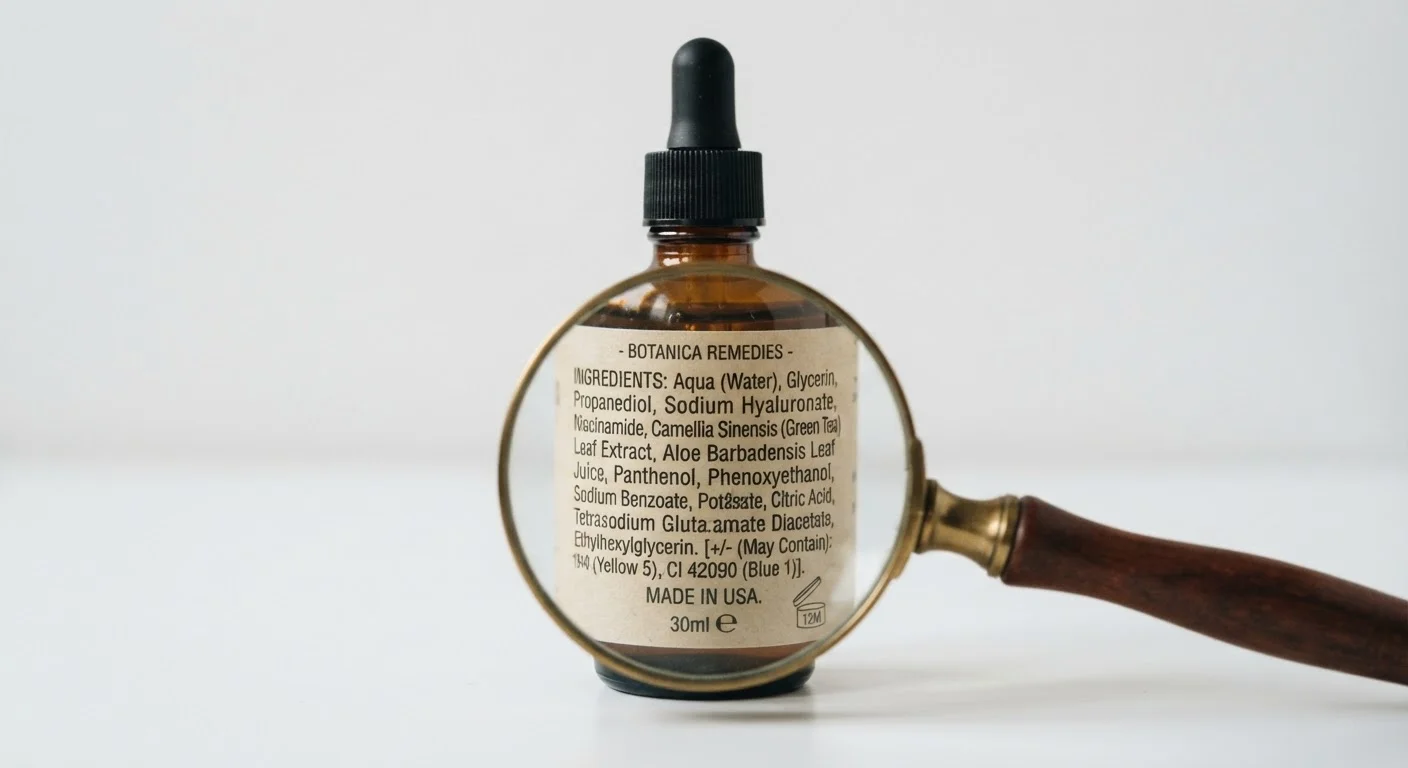
Photo credit: TheBlogZappier.com | Simple Search, Credible Results
In this article
INCI names, concentration order, and red-flag terms — a practical guide to understanding what ingredient labels are actually telling you.
Key Takeaways
- Cosmetics ingredients are listed in descending order of concentration, with the most prevalent ingredients first.
- INCI names are standardized Latin or scientific terms — unfamiliar names don't automatically signal danger.
- Ingredients present at 1% or less can appear in any order at the end of the list.
- Fragrance and parfum are umbrella terms that may conceal dozens of individual chemical compounds.
- Understanding label structure helps you compare products and identify potential irritants for your skin type.
Why Ingredient Labels Look So Intimidating
Cosmetics ingredient lists are governed by the INCI system — a globally standardized naming convention that uses Latin botanical names, chemical names, or descriptive scientific terms for every ingredient. Because INCI names are designed for regulatory consistency rather than consumer readability, a moisturizer's label might list Butyrospermum parkii instead of the far more recognizable shea butter.
This standardization is actually a consumer advantage: any INCI name means the same thing regardless of which brand uses it, making ingredient-to-ingredient comparisons possible across products. The confusion isn't a product of complexity — it's mostly a language barrier. Once you learn the structure, the label becomes genuinely informative.
For a broader look at how label literacy applies across shopping categories, the approach is similar to reading a nutrition label — structural rules unlock the information.
The Rules That Govern Every Ingredient List
In the United States, the FDA requires cosmetics sold domestically to display ingredients following INCI naming conventions, listed in descending order of concentration by weight. This means the ingredient that makes up the largest percentage of the formula appears first.
There is one important exception: any ingredient present at a concentration of 1% or less may be listed in any order after all higher-concentration ingredients. Manufacturers are not required to disclose the exact percentage of any individual ingredient, which is why the 1% threshold matters — once you reach the mid-to-lower portion of a list, ranking becomes less meaningful.
Water First Doesn't Mean Watered Down
Water (Aqua) is almost universally the first ingredient in water-based products because it forms the formula's base. Its presence at the top tells you the product is hydration-focused, not that it's diluted or low quality. Emulsions, serums, and toners all rely on water as their primary vehicle for delivering other ingredients.
Water (Aqua) is almost universally the first ingredient in water-based products because it forms the formula's base. Its presence at the top tells you the product is hydration-focused, not that it's diluted or low quality.
Step-by-Step: How to Read the Label
Find the complete ingredient list, not the marketing panel
Packaging often highlights a few hero ingredients prominently on the front or sides. These callouts are marketing, not the full formula. The regulated INCI ingredient list — typically found on the back or bottom in small print — is the only complete, legally required disclosure. Start there.
Identify the top five ingredients
The first five ingredients typically account for the majority of the formula by weight. For most water-based products, this means water followed by emollients, humectants, or active compounds. Scanning this zone tells you what the product is fundamentally made of — and whether its primary character matches what's claimed on the front label.
Locate the 1% threshold zone
The transition from ranked to unranked ingredients is not marked explicitly, but you can estimate it. Look for where preservatives typically appear — ingredients like phenoxyethanol are commonly used at concentrations around 1% or just below. Everything listed after that point is present in trace amounts, which matters for assessing both efficacy and potential reactivity.
Cross-reference any INCI name you don't recognize
An unfamiliar name is not a warning sign on its own. Use a reputable ingredient database to look up the INCI term and find its common name, function (e.g., emollient, preservative, surfactant), and any documented safety considerations. This step demystifies most entries within seconds.
Flag entries relevant to your skin profile
Once you've worked through the full list, note any ingredients that align with known sensitivities, allergies, or skin conditions you're managing. Keep a short personal reference list of INCI names you want to avoid or prioritize — this makes future label reading significantly faster and more targeted.
Once you're comfortable with the step-by-step process, you can apply the same approach to any product category. If you're also navigating care symbols and fiber content, our guide to reading a clothing label uses the same structured thinking.
Terms Worth Paying Attention To
A few specific entries on ingredient lists deserve closer attention, particularly for readers with sensitive skin or known reactions.
- Fragrance / Parfum: A single line item that can represent a proprietary blend of potentially dozens of individual compounds. Regulatory exemptions allow manufacturers to keep exact formulas confidential. For a detailed breakdown of why this matters, see fragrance in beauty products.
- Alcohol denat. (denatured alcohol): A drying alcohol used in many lightweight formulas. Not inherently harmful, but relevant for very dry or sensitized skin.
- Essential oils listed by INCI name: Botanicals like Lavandula angustifolia (lavender) or Melaleuca alternifolia (tea tree) are natural but not automatically non-reactive — some are common contact allergens.
- Preservatives (e.g., phenoxyethanol, sodium benzoate): Required to keep products safe from microbial growth. Their presence is a sign of responsible formulation, not a red flag.
Ingredient Lists Are Not Safety Ratings
The presence of a chemical-sounding name does not make an ingredient unsafe, and a 'natural' or 'botanical' name does not make it hypoallergenic or universally gentle. Reactivity depends on concentration, formulation context, and individual skin biology. If you experience persistent irritation, redness, or allergic reactions from a product, discontinue use and consult a dermatologist rather than self-diagnosing based on the ingredient list alone.
To go deeper on what specific actives actually do once you've located them on a label, our skincare ingredients guide covers common actives from retinol to niacinamide.

Author
Style & Beauty Editorial Team
Style & Beauty Editorial Team is the collective byline for our editorial team and contributor network. Articles published under this byline or an editorial pen name are researched, written, and reviewed according to our editorial standards for clarity, consistency, and independence before publication.
View all articles →