
The Difference Between Saving and Investing — and Why It Matters
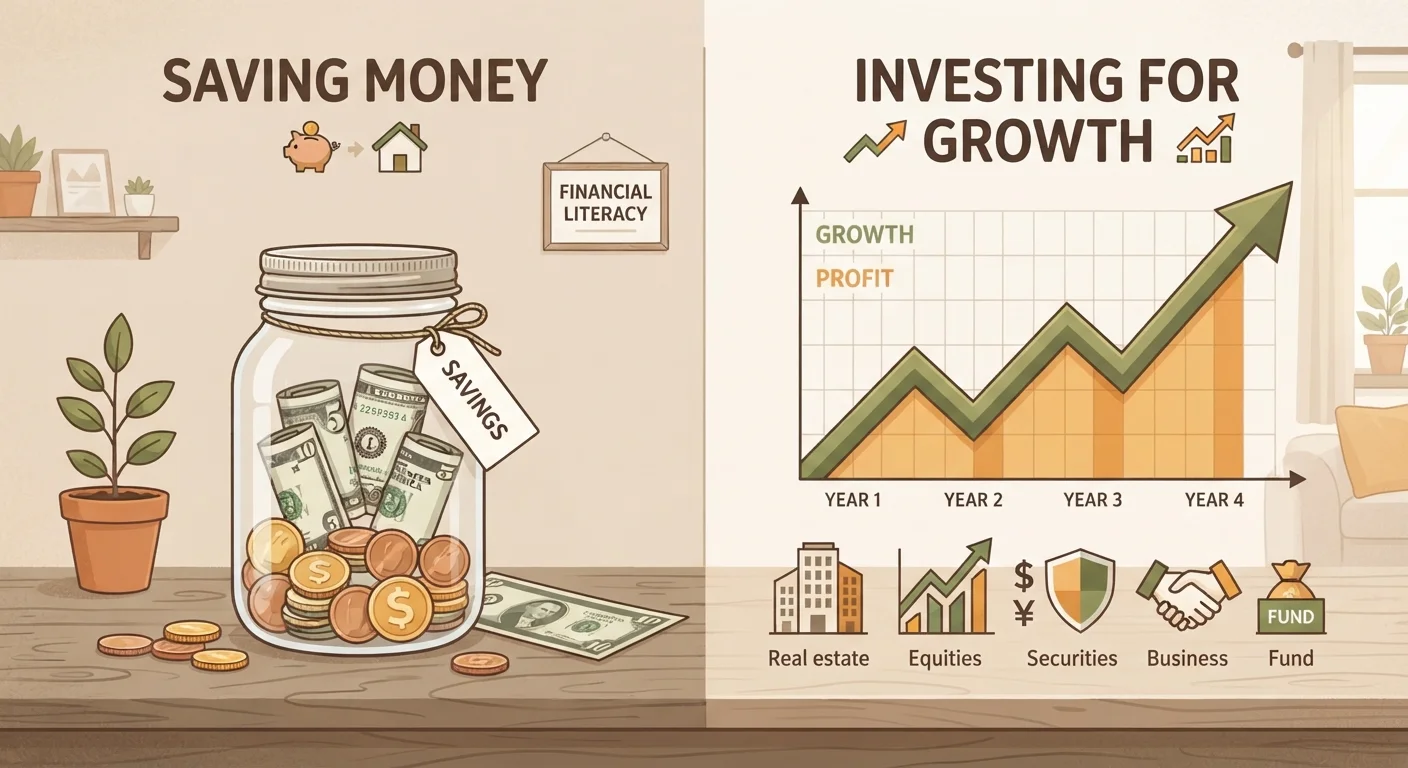
Photo credit: TheBlogZappier.com | Simple Search, Credible Results
In this article
Saving and investing aren't the same thing. Learn how each works, when to use one over the other, and why the distinction shapes your financial future.
Key Takeaways
- Saving prioritises safety and accessibility; investing prioritises long-term growth.
- Savings accounts are low-risk and FDIC-insured; investments can lose value.
- Inflation can gradually erode money held only in savings over the long term.
- Most financial guidance suggests building savings before taking on investment risk.
- Both tools work together — they are not an either/or choice.
Two Different Tools for Two Different Jobs
People often use the words "saving" and "investing" interchangeably, but they describe two distinct financial activities with different purposes, different risks, and different time horizons. Mixing them up can lead to poorly matched strategies — like keeping long-term retirement money in a low-interest account, or putting an emergency fund into volatile assets that could drop in value right when you need the cash.
Think of saving as the foundation and investing as the engine. A foundation needs to be stable and reliable; an engine needs fuel and time to generate meaningful output. Both matter. Neither replaces the other.
$250,000
FDIC insurance limit per depositor
The Federal Deposit Insurance Corporation (FDIC) insures eligible deposits at member banks up to this amount per depositor, per institution, per ownership category.
3–6 months
Recommended emergency savings buffer
Many financial professionals recommend keeping three to six months of essential living expenses in an accessible savings account before directing surplus funds to investments.
How Saving Works
When you save, you deposit money into an account — typically a savings account, money market account, or certificate of deposit (CD) — held at a bank or credit union. These accounts earn interest, though rates tend to be modest. The key characteristics of saving are:
- Safety: Deposits at FDIC-insured banks are protected up to $250,000 per depositor, per institution, against bank failure.
- Liquidity: Savings accounts allow you to access your money quickly, often within one business day.
- Predictability: The interest rate is known in advance, so you can calculate exactly what you'll earn.
The trade-off is that savings accounts rarely outpace inflation over long periods. If the average annual inflation rate exceeds your account's interest rate, the purchasing power of your savings gradually declines. For short-term goals and emergency reserves, this is generally acceptable — for decade-long goals, it's a limiting factor.
If you're ready to build a structured savings approach, see our guide to building your first savings plan for practical steps.
How Investing Works
Investing means purchasing assets — such as stocks, bonds, mutual funds, or exchange-traded funds (ETFs) — with the expectation that they will grow in value over time. Unlike a savings account, there is no guaranteed return, and the value of investments can fall as well as rise.
The potential upside is significantly greater long-term growth. Historically, diversified stock market investments have outpaced inflation over long periods, though past performance never guarantees future results. The mechanism behind much of this growth is compound interest and compounding returns — where gains build on previous gains over time.
Match the Tool to the Time Horizon
A useful rule of thumb: if you expect to need the money within one to three years, keep it in savings. If you're working toward a goal that is five or more years away, investing may be appropriate. The longer your timeline, the more time your investments have to recover from any downturns. Always consider your personal risk tolerance and consult a financial professional before making investment decisions.
To understand the specific vehicles available to investors, our explainer on stocks, bonds, and funds breaks down how each asset class works and the trade-offs involved.
Why the Distinction Shapes Your Financial Future
The practical stakes of confusing saving and investing are real. Here are two common mistakes the distinction helps you avoid:
- Over-saving in low-yield accounts: Keeping all your money in a savings account feels safe, but over a 20- or 30-year horizon, inflation can meaningfully reduce what that money can actually buy. Money you won't need for many years is generally better positioned in investments.
- Investing money you may need soon: If you put your emergency fund or a down-payment fund into the stock market, a sudden market downturn could force you to sell at a loss at the worst possible time.
Matching the right tool to the right goal — based on your time horizon and ability to absorb risk — is one of the most important habits in personal finance. The question of which to prioritise first is explored in detail in our article on emergency funds versus investment accounts.
This article is for general informational purposes only and does not constitute personalised financial, investment, or tax advice. Consult a licensed financial adviser for guidance specific to your situation.
Frequently Asked Questions

Author
Money & Finance Editorial Team
Money & Finance Editorial Team is the collective byline for our editorial team and contributor network. Articles published under this byline or an editorial pen name are researched, written, and reviewed according to our editorial standards for clarity, consistency, and independence before publication.
View all articles →