
Building Your First Savings Plan: A Practical Starting Point
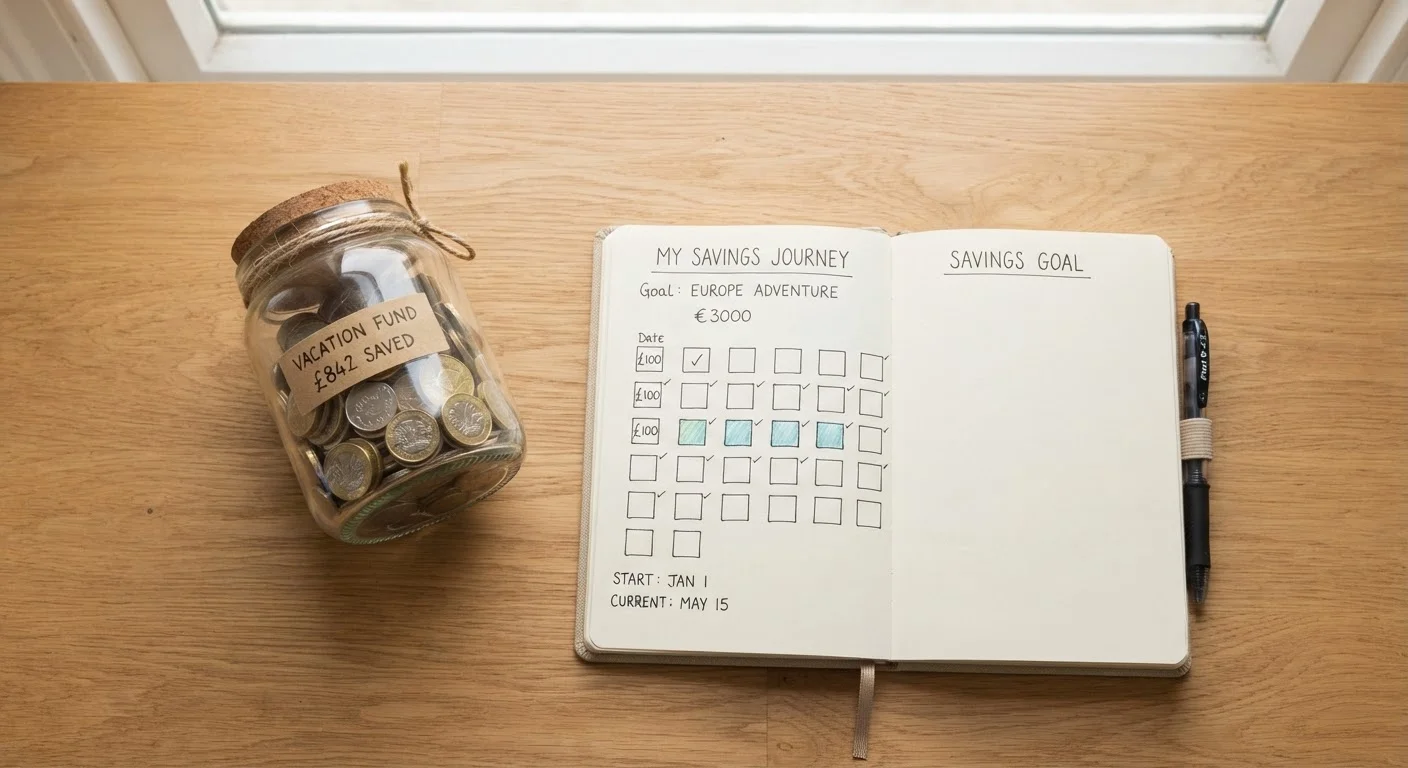
Photo credit: TheBlogZappier.com | Simple Search, Credible Results
In this article
A savings plan doesn't need to be complicated. This beginner's guide covers the core principles: setting goals, choosing accounts, and staying consistent.
Key Takeaways
- A savings plan works best when tied to specific, named goals rather than a vague intention to save more.
- Even small, consistent contributions add up significantly over time thanks to compound interest.
- The account type you choose matters — some accounts grow your money faster than others.
- Automating transfers removes the temptation to spend money before it's saved.
- A budget is the foundation that makes any savings plan sustainable.
Why a Savings Plan Matters
Most people intend to save more money. Far fewer have a written plan that tells them exactly how much to save, where it goes, and what it's for. That gap — between intention and structure — is where most first-time savers get stuck.
A savings plan is simply a written commitment that connects your income to your goals. It doesn't require a financial background or a high salary. What it does require is a basic understanding of your monthly cash flow, which starts with a budget. If you haven't built one yet, the step-by-step guide to building your first monthly budget is the right starting point before you proceed here.
Without a plan, savings tend to be whatever is left at the end of the month — and for most households, that amount is unpredictable at best and zero at worst. A plan reverses that equation by treating savings as a fixed expense, not an afterthought.
Emergency fund
A dedicated cash reserve set aside to cover unexpected expenses or income loss, typically equal to three to six months of essential living costs.
Compound interest
Interest calculated on both the original amount you deposited and the interest already earned. Over time, this causes your balance to grow faster than simple interest would.
Liquidity
How quickly and easily you can access your money without penalty. A checking account is highly liquid; a CD locked into a term is not.
FDIC insurance
Federal Deposit Insurance Corporation protection that guarantees deposits at insured banks up to $250,000 per depositor, per institution, per account category.
High-yield savings account
A savings account — typically offered by online banks — that pays a higher interest rate than a traditional bank savings account, while offering the same deposit protections.
Paying yourself first
A savings strategy where you automatically transfer money into savings as soon as you receive income, treating it like a non-negotiable bill rather than optional leftover money.
Setting Goals That Actually Stick
Vague goals produce vague results. "Save more money" is not an actionable target. A savings goal that works names a specific purpose, a dollar amount, and a target date — for example: "Save $1,200 for an emergency fund within 12 months by setting aside $100 per month."
Most financial planners recommend sequencing savings goals in this order:
- Emergency fund first. Before saving for anything else, build a cash buffer covering three to six months of essential expenses. This protects your other goals when life doesn't go as planned.
- Short-term goals. Anything you need within one to three years — a vacation, a car down payment, a home repair fund.
- Long-term goals. Retirement and other goals a decade or more away, often involving investment accounts.
Writing goals down — even in a simple notebook — significantly increases follow-through. Review your goals whenever your income or expenses change. For a deeper look at how good habits sustain long-term progress, see keeping your savings on track over time.
Name Each Goal Separately
Open a dedicated sub-account or labeled savings bucket for each goal — one for your emergency fund, one for a vacation, one for a car. Keeping them separate makes it easier to track progress and reduces the temptation to borrow from one goal to fund another.
Choosing the Right Account
Not all savings accounts are alike, and where you keep your money affects how quickly it grows. Here are the main options worth understanding:
- Standard savings account. Offered by most banks and credit unions. FDIC-insured (or NCUA-insured for credit unions), meaning your deposits are protected up to federal limits. These accounts are liquid — you can access your money quickly — but interest rates vary widely between institutions.
- High-yield savings account (HYSA). Functionally similar to a standard savings account but offered primarily by online banks, often at significantly higher interest rates. Generally the same federal deposit protections apply.
- Money market account. A hybrid account that earns interest while allowing limited check-writing or debit access. Interest rates are often competitive, but minimum balance requirements may apply.
- Certificates of deposit (CDs). You agree to leave your money deposited for a fixed term (e.g., 6 months, 1 year, 5 years) in exchange for a guaranteed interest rate. Early withdrawal typically incurs a penalty, so CDs are better suited for money you won't need immediately.
One thing no account type can fully offset on its own is inflation — the gradual rise in prices that erodes purchasing power. If your savings rate is lower than the inflation rate, your money buys less over time even if the balance is growing. The article why your savings lose value over time even when the balance grows explains this dynamic in practical terms.
Interest Rates Change Over Time
The interest rate on a savings account or money market account can change at any time — banks are not required to lock in a rate. Only CDs guarantee a fixed rate for the term you agree to. This is worth factoring in when you compare account types for your goals.
Building Consistency into Your Routine
Discipline alone is an unreliable savings strategy. The most effective approach is automation: schedule a transfer from your checking account to your savings account on the day you get paid, before you have a chance to spend that money elsewhere. This is often called paying yourself first.
Most banks allow you to set up recurring automatic transfers at no cost. Even a modest automated transfer — done reliably every pay period — builds a larger balance over time than irregular, larger transfers made only when you remember.
As your income grows or your expenses decrease, revisit the transfer amount. A raise is an ideal trigger to increase your savings rate rather than absorbing the full increase into discretionary spending. For a grounded look at budgeting principles that support saving, the personal budgeting from the ground up guide covers foundational frameworks in plain language.
Common Beginner Mistakes to Avoid
A few missteps are especially common among first-time savers. Recognizing them in advance makes them easier to sidestep:
- Saving without a goal. Money saved without a purpose is easy to spend. Named goals give your savings meaning and make it psychologically harder to withdraw the funds impulsively.
- Skipping the emergency fund. Saving for a vacation while carrying no emergency buffer means one unexpected expense can erase your progress and force you into debt.
- Keeping savings in a checking account. Mixing spending money and savings money in one account almost always results in the savings being spent. Separate accounts create a practical barrier.
- Waiting for the "right time" to start. No month will be perfectly convenient. Starting with a small amount now is more valuable than waiting to save a larger amount later.
- Ignoring the next step: investing. Once you have an emergency fund and short-term goals funded, leaving all remaining savings in a low-interest account may not serve your long-term financial health. See how to start investing with a small amount of money when you're ready to take that step.
Don't Confuse Saving with Investing
Savings accounts are designed to protect and preserve money with minimal risk. Investment accounts can grow faster over the long term but carry the possibility of loss — your balance can go down as well as up. Make sure your emergency fund and near-term savings stay in stable, accessible accounts before exploring investment options.
This article is for general informational and educational purposes only and does not constitute personalized financial, investment, tax, or legal advice. Consult a qualified financial professional before making decisions about your own financial situation.
Frequently Asked Questions

Author
Money & Finance Editorial Team
Money & Finance Editorial Team is the collective byline for our editorial team and contributor network. Articles published under this byline or an editorial pen name are researched, written, and reviewed according to our editorial standards for clarity, consistency, and independence before publication.
View all articles →