
Compound Interest: The Mechanism Behind Long-Term Money Growth
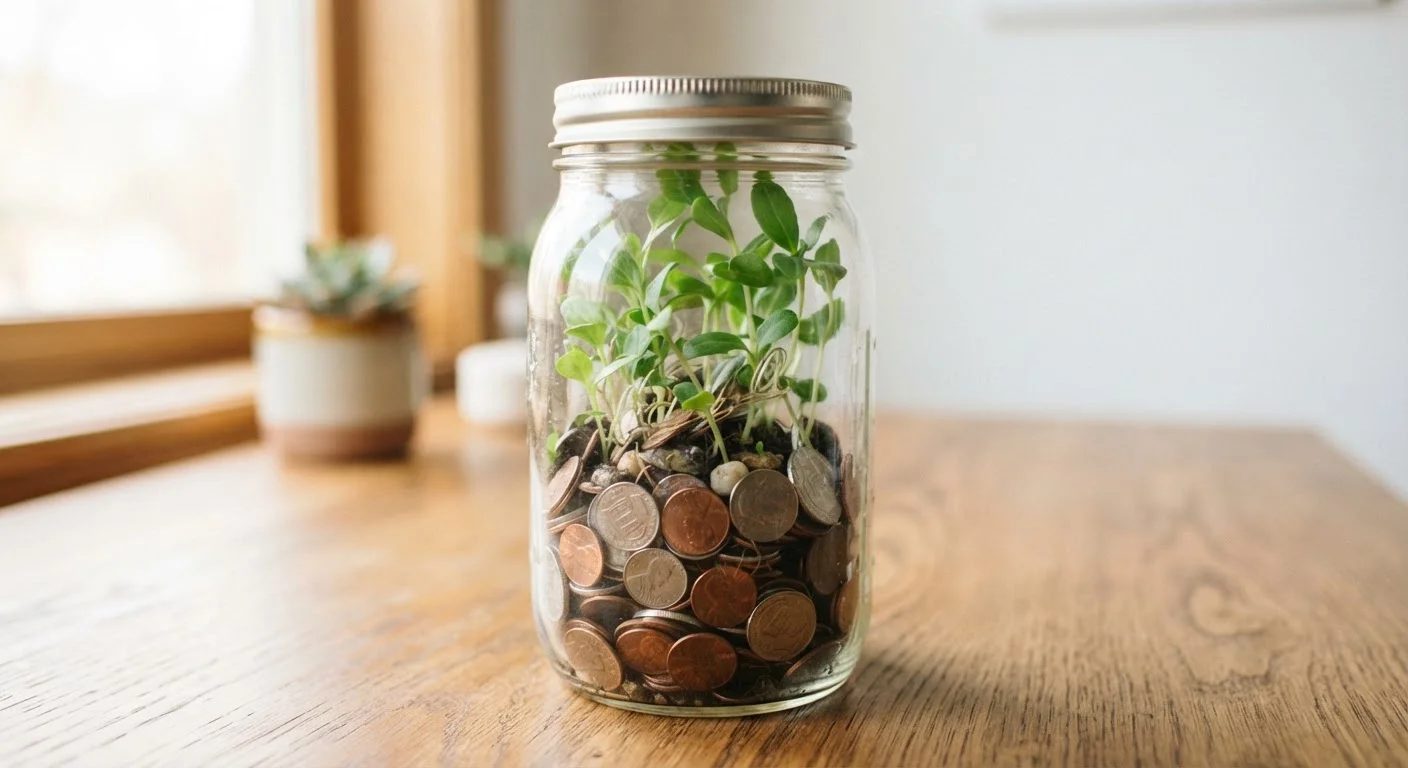
Photo credit: TheBlogZappier.com | Simple Search, Credible Results
In this article
Compound interest is often called the engine of wealth-building. Here's a clear, jargon-free breakdown of how it works and why starting early changes everything.
Key Takeaways
- Compound interest earns returns on both your original principal and previously earned interest.
- Starting earlier has a greater impact on long-term growth than contributing larger amounts later.
- Compounding also works against you — it amplifies debt balances on credit cards and loans.
- APY (Annual Percentage Yield) reflects compounding and is a more accurate growth measure than APR.
- Consistent, even small, contributions dramatically increase compounding's effect over time.
How Compound Interest Actually Works
The core mechanic is straightforward: each time interest is added to your balance, that new, larger balance becomes the base for the next interest calculation. Your interest earns interest.
Consider a simplified example. If you deposit $1,000 at a 5% annual interest rate:
- Year 1: You earn $50 in interest. Balance: $1,050.
- Year 2: You earn 5% on $1,050, not just $1,000. That's $52.50. Balance: $1,102.50.
- Year 10: Your balance has grown to roughly $1,629 — without adding a single additional dollar.
The growth looks slow at first and accelerates later. This curve — gradual early on, steep later — is the hallmark of compounding. It is sometimes described as exponential growth, meaning the rate of increase itself increases over time.
Compounding and Inflation: A Real Consideration
A growing balance doesn't always mean growing purchasing power. If your savings account earns less than the current inflation rate, your money's real value may be declining even as the number on your statement increases. For more on this dynamic, see why savings can lose value even as the balance grows.
To understand where compounding fits within your broader financial strategy, see how saving and investing differ — the distinction shapes which accounts and vehicles you'll use.
Why Starting Early Changes the Math Dramatically
Time is the variable that makes compounding either remarkable or merely useful. Two savers depositing the same total amount can end up with very different balances if one starts earlier.
72
The Rule of 72: years to double your money
Divide 72 by your annual interest rate to estimate how many years it takes to double a balance — a widely used financial rule of thumb.
APY vs. APR
Key metric for comparing savings accounts
APY accounts for compounding frequency; APR does not. For savings accounts, APY gives a more accurate picture of what you will actually earn.
10 years
Typical illustration of early-start advantage
Financial educators commonly illustrate that a decade's head start in saving can outperform decades more of contributions made later, due to compounding's time dependence.
A person who begins contributing at age 25 and stops at 35 — investing for just 10 years — can often end up with more at retirement than someone who starts at 35 and contributes for 30 consecutive years, assuming the same annual contribution and return rate. This is a well-established illustration used in financial education to show how powerfully time amplifies compounding.
The takeaway is practical: if you are building your first savings plan, starting — even with a small amount — is more valuable than waiting until you can contribute more. A practical savings plan can help you put this into motion, regardless of your current income level.
Automate Contributions to Maximize Compounding
Setting up automatic transfers into a savings or retirement account removes the decision point each month. Consistent, regular contributions — even modest ones — let compounding work continuously rather than in sporadic bursts. Keeping your savings on track over time explores the habits and structures that support this kind of consistency.
The Flip Side: Compounding on Debt
The same mechanism that builds savings can erode your finances when it works against you. Credit card balances typically compound daily. If you carry a $3,000 balance at an 20% APR and make only minimum payments, the interest accumulates on an ever-growing base — making it considerably harder to pay down over time.
Understanding this helps explain why high-interest debt is treated as a financial priority by most financial educators. Compounding amplifies both growth and loss, depending on which side of the equation you are on.
For readers working to manage credit alongside saving, building credit responsibly covers how to approach both goals without taking on unmanageable risk.
This article is for general informational and educational purposes only. It is not personalized financial, investment, or tax advice. Please consult a qualified financial professional before making decisions based on your individual circumstances.
Frequently Asked Questions

Author
Money & Finance Editorial Team
Money & Finance Editorial Team is the collective byline for our editorial team and contributor network. Articles published under this byline or an editorial pen name are researched, written, and reviewed according to our editorial standards for clarity, consistency, and independence before publication.
View all articles →