
Emergency Fund vs. Investment Account: Where Should Spare Cash Go First?
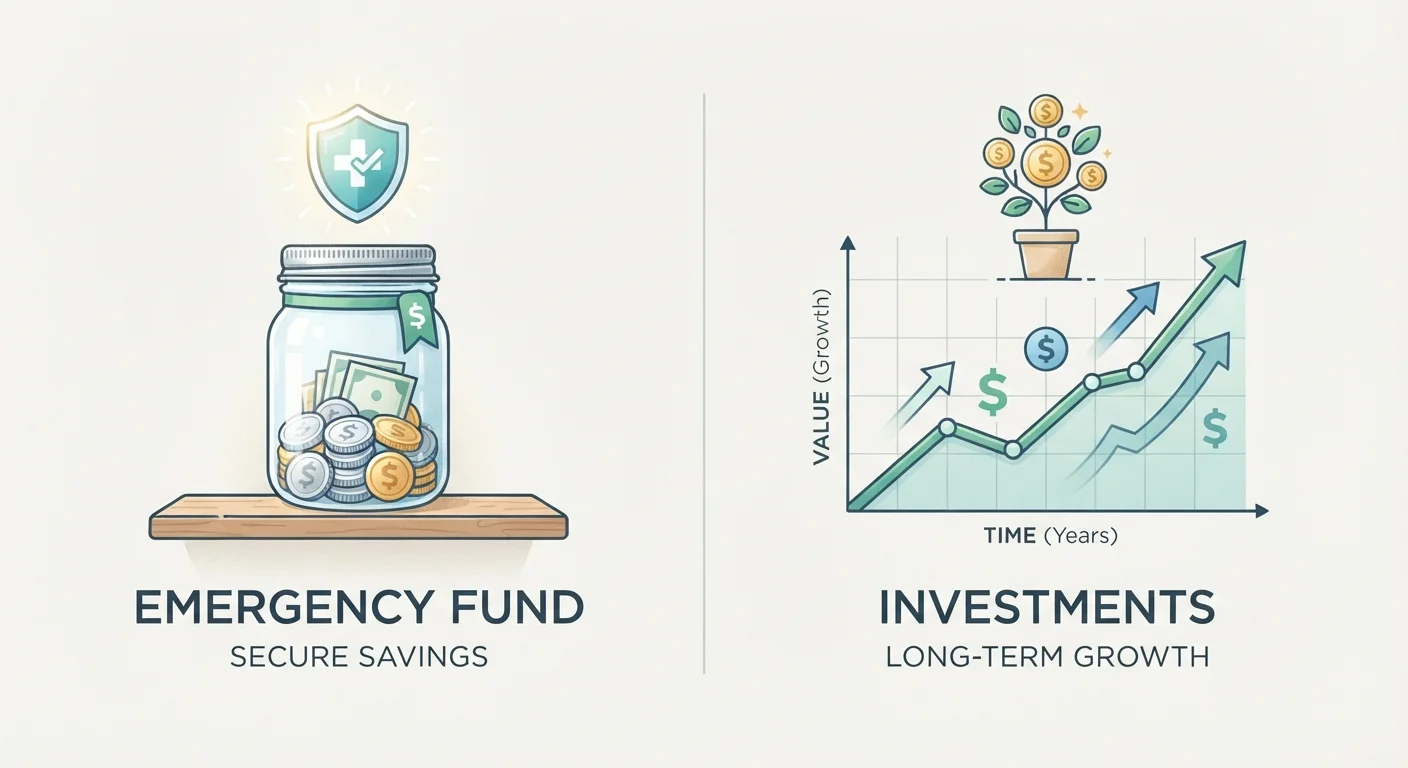
Photo credit: TheBlogZappier.com | Simple Search, Credible Results
In this article
Should you build an emergency cushion before you invest? Understand the purpose of each, how they interact, and a logical order for prioritising both.
Key Takeaways
- An emergency fund covers unplanned expenses; an investment account builds wealth over time.
- Most financial guidance suggests building an emergency fund before investing spare cash.
- Emergency funds should typically hold three to six months of essential living expenses.
- Investment accounts carry market risk — money invested can lose value, especially in the short term.
- Once an emergency fund is in place, contributing to both goals simultaneously is often practical.
- Neither account replaces the other — they serve different, complementary purposes.
What Each Account Actually Does
Before deciding where spare cash goes, it helps to understand what each vehicle is designed to accomplish. As covered in our guide to saving versus investing, these two approaches serve fundamentally different roles in your financial life.
An emergency fund is a dedicated pool of liquid cash — typically held in a savings account or money market account — set aside exclusively for unplanned financial shocks. Think job loss, urgent home repairs, or unexpected medical costs. The goal is not growth; it's availability. You need to be able to access this money quickly, without penalty, and without worrying about its current market value.
An investment account, by contrast, is designed for growth over time. Whether through a brokerage account, a retirement account like an IRA or 401(k), or another vehicle, you're putting money into assets — such as stocks, bonds, or funds — that can appreciate in value. The trade-off is risk: investment balances fluctuate, and there's no guarantee of a positive return. This is money you generally shouldn't count on needing within the next few years.
Why the Order of Operations Matters
When money is limited, sequencing matters. Most personal finance educators and practitioners suggest building an emergency fund before focusing on a taxable investment account — and there's a straightforward reason for this.
If you invest spare cash but haven't built a safety net, the first major unexpected expense can force you to sell investments at an inconvenient time — potentially at a loss. Market timing is something even professional investors can't reliably control, and being forced to liquidate during a downturn can permanently set back your financial progress.
~57%
Americans unable to cover a $1,000 emergency
A Bankrate survey found that roughly 57% of U.S. adults could not pay for a $1,000 unexpected expense from savings alone.
3–6 months
Recommended emergency fund size
Widely cited financial guidance, including from the Consumer Financial Protection Bureau, suggests holding three to six months of essential expenses in liquid savings.
The conventional guidance is to hold three to six months of essential living expenses in your emergency fund. If your monthly necessities — rent, utilities, food, transportation — total $3,000, that means holding $9,000 to $18,000 in accessible savings. People with variable income, dependents, or less stable employment may benefit from building toward the higher end of that range.
Our first savings plan guide walks through how to set a target and build toward it consistently, even on a tight budget.
Head-to-Head: Key Differences at a Glance
Understanding the structural differences between these two accounts makes the trade-offs clearer. Before you decide how to allocate your next paycheck, review how they compare on the factors that matter most.
| Criterion | Emergency Fund | Investment Account |
|---|---|---|
| Primary purpose | Cover unexpected expenses | Grow wealth over time |
| Liquidity | High — accessible immediately | Varies — may take days to liquidate |
| Risk level | Very low — cash is stable | Low to high — market-dependent |
| Return potential | Low (interest only) | Higher over long term, not guaranteed |
| Recommended timeline | Build before investing | After emergency fund is in place |
| Typical account type | High-yield savings or money market | Brokerage, IRA, or 401(k) |
| When to use it | Emergencies only | Long-term financial goals |
One important nuance: contributions to certain investment accounts — particularly employer-sponsored 401(k) plans where an employer matches contributions — may warrant attention even before an emergency fund is fully funded. An unmatched employer contribution is effectively leaving part of your compensation unclaimed. This is a specific exception to the general order, and it's worth reviewing with a qualified financial adviser given your circumstances. Our financial readiness checklist can help you assess where you currently stand.
Making Both Goals Work Together
The emergency fund vs. investment question isn't always binary. Once a partial emergency cushion is in place — say, one month of expenses — many people find it practical to split contributions: a larger portion to the emergency fund until it's fully funded, and a smaller amount toward long-term savings or an employer-matched retirement plan.
After the emergency fund reaches its target, the calculus shifts. Spare cash can flow more freely toward investment accounts, though maintaining that cushion remains important. A good budget helps you track these allocations clearly — see our guide to building a monthly budget for a practical framework.
Don't Let Perfection Stall Progress
Waiting until your emergency fund is fully funded before saving anything else can feel discouraging and may cause you to miss years of compounding. A common practical approach is to build a starter emergency fund of one month's expenses, then split contributions between topping up the fund and beginning modest investment contributions. The specific split depends on your income stability, existing debts, and financial goals — a licensed financial adviser can help tailor this to your situation.
For those ready to begin investing, our guide to investing with a small amount explains how to get started without needing a large lump sum. And if you're weighing which investment vehicles to use, the comparison of index funds and actively managed funds is a useful next read.
This article is for general informational and educational purposes only. It is not personalised financial, investment, tax, or legal advice. Consult a qualified, licensed financial professional before making decisions about your own financial situation.

Author
Money & Finance Editorial Team
Money & Finance Editorial Team is the collective byline for our editorial team and contributor network. Articles published under this byline or an editorial pen name are researched, written, and reviewed according to our editorial standards for clarity, consistency, and independence before publication.
View all articles →