
Speaker Placement Decisions That Quietly Ruin Good Audio Equipment
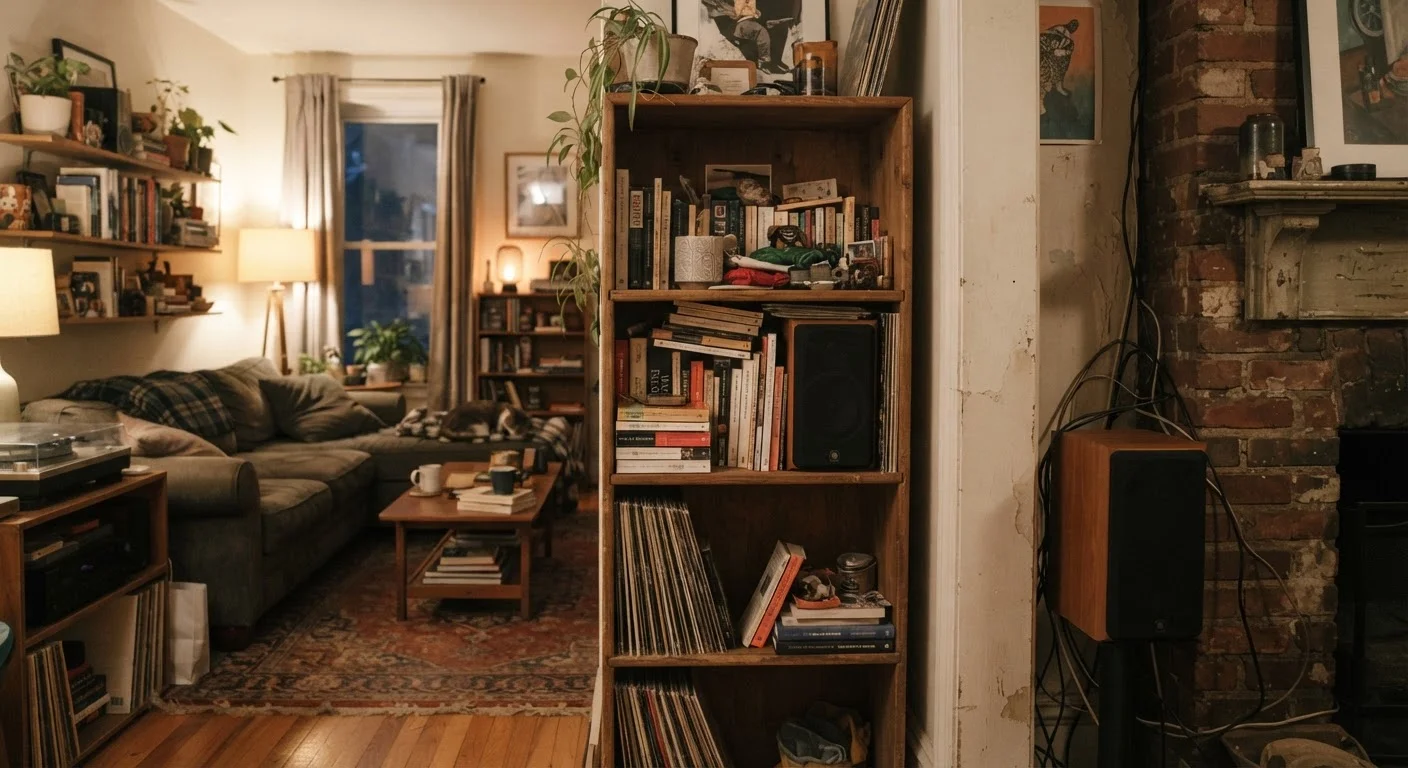
Photo credit: TheBlogZappier.com | Simple Search, Credible Results
In this article
Corners, enclosed shelves, and asymmetrical positioning can undermine even capable speakers. Learn the placement errors most listeners make.
Key Takeaways
- Corner placement amplifies bass unevenly, creating boomy, muddy low frequencies.
- Enclosing speakers inside shelving traps sound and causes reflections that muddy clarity.
- Asymmetrical speaker positioning makes stereo imaging collapse toward one side.
- Tweeters aimed above or below ear level cause noticeable high-frequency loss.
- Hard, bare room surfaces create flutter echo that no speaker upgrade can fix.
Why Placement Matters as Much as the Speaker Itself
It's easy to assume that a capable, well-reviewed speaker will deliver good sound regardless of where it ends up in your room. In practice, that's rarely how acoustics work. The space around a speaker — walls, floors, shelves, and even furniture — becomes part of the audio system, shaping what reaches your ears in ways that no amount of driver engineering can override.
Understanding the physics behind a few common placement errors won't turn your living room into a recording studio, but it will help you get much closer to what your speakers are actually capable of. For a broader look at how different speaker configurations interact with rooms, see our guide on matching audio to your room.
Room acoustics shape sound more than specs
A speaker's frequency response measurements are taken in controlled anechoic conditions — not your living room. Hard floors, parallel walls, and furniture all alter what actually reaches your ears. Addressing the room is often more impactful than upgrading equipment.
The Most Common Placement Mistakes — and How to Fix Them
The errors below don't require expensive gear or room renovations to address. Most involve repositioning, which costs nothing. A few involve inexpensive stands or minor furniture rearrangement. Work through them systematically and you'll likely hear a meaningful difference before spending anything.
Pushing speakers directly into room corners.
Why it happens: Corners feel like natural anchor points and keep speakers out of walking paths. Many people don't realize corners have a dramatic acoustic effect.
Placing speakers inside enclosed or semi-enclosed shelving units.
Why it happens: Shelves are convenient and keep gear organized, so speakers often end up sharing space with books, media players, and decorative items — sometimes surrounded on three sides.
Setting up speakers asymmetrically relative to the listening position.
Why it happens: Room layouts rarely cooperate — a TV stand, window, or doorway often forces one speaker closer to a wall or farther from the sofa than the other.
Leaving tweeters aimed significantly above or below ear level while seated.
Why it happens: Speaker height is often set by whatever surface is available — a low shelf, a tall bookcase — rather than by the listening position.
Placing speakers flat against the wall without accounting for rear-port design.
Why it happens: Wall-mounting or pushing speakers close to a wall looks clean and saves space. Many buyers don't check whether their speakers have a rear-facing port.
Ignoring hard, reflective room surfaces that cause flutter echo.
Why it happens: Bare floors, large windows, and empty walls are standard in many homes. The connection between those surfaces and audio quality isn't obvious until you hear a comparison.
If you're also rethinking the type of speaker system you're using, it's worth understanding how passive and active speaker designs differ — placement considerations can vary slightly depending on which type you have.
What Good Placement Can — and Can't — Fix
Addressing the mistakes above will close a real gap between what your speakers are capable of and what you're currently hearing. But placement works within the limits of the speaker's design and the room's fundamental geometry. A small speaker in a large, open-plan room may still struggle with bass extension no matter where you put it.
Don't rely on volume to compensate for bad placement
Turning up the volume to overcome dull or muddy sound caused by poor placement stresses drivers and amplifiers unnecessarily. It also doesn't fix the underlying acoustic problem — it usually makes resonance and distortion worse. Correct the placement first.
It's also worth separating placement problems from source-quality problems. If audio sounds compressed or flat even in a well-arranged room, the issue may be upstream — at the streaming or format level. Our article on what bitrate and codec actually affect explains what's realistically within the signal chain's control. And if you've heard strong claims about what specific cables or room treatments can or can't do, home audio myths examined against evidence is a useful reference for separating fact from folklore.
~40%
Of audible coloration attributed to room acoustics
Acoustic research consistently finds that room effects — reflections, modes, and absorption — account for a substantial share of perceived sound quality differences in typical listening environments.
6 dB
Bass increase from a single boundary surface
Speaker placement theory holds that each nearby room boundary (wall, floor, ceiling) adds roughly 6 dB of bass reinforcement, with corner placement compounding this dramatically.
3–6 ft
Typical recommended speaker-to-listener distance
Most bookshelf and compact speaker manufacturers suggest a listening distance between roughly 3 and 6 feet for near-field listening, depending on driver size and cabinet volume.

Author
Tech & Electronics Editorial Team
Tech & Electronics Editorial Team is the collective byline for our editorial team and contributor network. Articles published under this byline or an editorial pen name are researched, written, and reviewed according to our editorial standards for clarity, consistency, and independence before publication.
View all articles →