
Tinted Moisturiser vs. Foundation: Choosing the Right Base Coverage
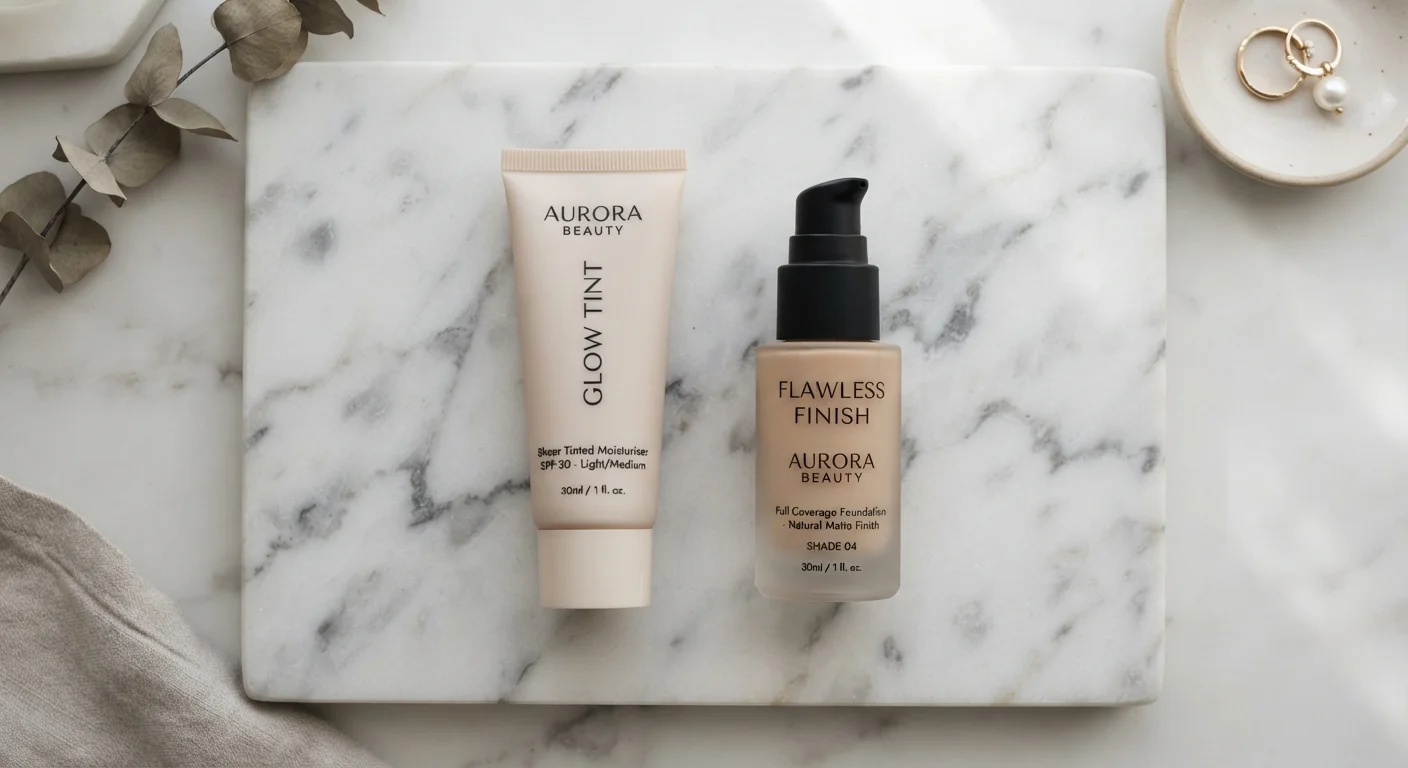
Photo credit: TheBlogZappier.com | Simple Search, Credible Results
In this article
Coverage, finish, and skin feel differ significantly between these two base products. Here's how to determine which suits your routine and preference.
Key Takeaways
- Tinted moisturisers offer sheer-to-light coverage with a skin-care-first formulation and minimal finish.
- Foundations provide a broader coverage spectrum — from light to full — with more finish and longevity options.
- Skin type, desired finish, and how much time you want to spend applying are the main deciding factors.
- Neither product is universally superior; your routine, lifestyle, and coverage needs should guide the choice.
- Many routines successfully use both products on different days or occasions.
What Each Product Is Actually Formulated to Do
A tinted moisturiser is, at its core, a moisturiser — it just happens to carry a small amount of pigment. The formula prioritises hydrating ingredients such as humectants and emollients, with pigment added to offer a subtle, unifying wash of colour. The result is a sheer, skin-like finish that does not attempt to mask or significantly alter the complexion. Coverage is typically light, and the texture is thin enough to apply with fingers in seconds.
Foundation, by contrast, is a dedicated pigment-delivery system. Its primary purpose is to provide controlled, consistent coverage, and modern formulas span a wide spectrum — from buildable light coverage to full, opaque finishes. Foundations are engineered to adhere to skin reliably, resist fading, and work alongside setting products to extend wear. Their textures vary considerably: liquids, cushions, sticks, powders, and serum foundations each target specific skin types and finish preferences. For a closer look at how skin type influences product performance, see how different formulas interact with skin types.
| Criterion | Tinted Moisturiser | Foundation |
|---|---|---|
| Coverage range | Sheer to light | Light to full |
| Primary purpose | Hydration with colour | Controlled coverage |
| Typical finish | Natural or dewy | Matte, satin, dewy — varies |
| Longevity | Moderate; fades faster | Longer-wearing |
| Application speed | Very quick; finger-friendly | Requires more blending |
| Texture weight | Lightweight | Light to full weight |
| Skin-care crossover | Often includes actives or SPF | Primarily cosmetic formulation |
| Best skin type fit | Dry, sensitive, balanced | All types (formula-dependent) |
Coverage, Finish, and Longevity: The Key Differences
Coverage is the most obvious distinction. Tinted moisturisers sit firmly in the sheer-to-light range — they can reduce the appearance of minor redness or uneven tone, but they will not conceal blemishes, significant discolouration, or texture. Foundation gives you options: the same formula can often be sheered out or layered for more coverage depending on application technique.
Finish is equally important. Most tinted moisturisers deliver a natural or dewy result because the moisturising base reflects light softly. Foundations are available in matte, satin, natural, radiant, and dewy finishes, giving you much greater control over how skin looks once set.
Longevity is where foundation has a clear functional advantage. The formulation is designed to stay put. Tinted moisturisers tend to fade faster, particularly on oily skin, because the formula is not built around wear extension. If you know you will not be touching up throughout the day, foundation is generally the more durable choice.
~30%
Consumers who use both product types regularly
Industry surveys on base makeup habits consistently indicate a meaningful proportion of users alternate between sheer and coverage-focused bases depending on occasion.
SPF 15–30
Typical SPF range in tinted moisturisers
Most tinted moisturisers that include sun protection fall in the SPF 15–30 range, though this does not replace dedicated broad-spectrum sunscreen.
Skin Type Compatibility and Ingredient Considerations
Dry skin types often find tinted moisturisers more comfortable because the formula actively hydrates throughout wear rather than sitting on top of the skin. Oily skin types may notice a tinted moisturiser does not hold up as well at the T-zone, while a mattifying foundation can help manage shine more effectively.
Sensitive skin warrants attention to ingredient lists for both product types. Tinted moisturisers sometimes include active skin-care ingredients — SPF filters, antioxidants, or soothing agents — that may not suit all sensitivities. Foundations may contain higher concentrations of preservatives or film-forming agents to support wear. Our guide to understanding common skincare ingredients can help you decode labels more confidently before committing to either product.
It is also worth noting that SPF claims in cosmetics are not equivalent to dedicated sunscreen protection. A tinted moisturiser with SPF 20 does not replace a separate broad-spectrum sunscreen applied as part of your skincare routine. For more on building a layered routine that accounts for this, the foundational skincare routine guide is a practical starting point.
A Note on SPF in Base Products
Both tinted moisturisers and some foundations may carry an SPF rating, but dermatologists generally note that the amount of product applied in typical use is insufficient to deliver the labelled protection. For reliable daily sun protection, a dedicated broad-spectrum sunscreen applied before your base product is the recommended approach. This applies regardless of which base you choose.
How to Decide — and When to Use Both
The simplest way to decide is to identify your non-negotiables. If coverage is secondary and skin comfort or speed is primary, a tinted moisturiser fits naturally into a low-effort routine. If you want reliable, visible coverage with a specific finish and longevity, foundation is the more purposeful choice.
Many people find value in keeping both on hand. A tinted moisturiser can serve well on casual days or when skin is having a particularly good stretch, while foundation earns its place for events, longer days, or occasions when a more polished look matters. Neither product is a compromise — each is genuinely suited to different priorities, and rotating between them based on need is a perfectly sound approach.
Skin condition also shifts seasonally. Some people move toward tinted moisturiser in warmer months when heavier coverage feels uncomfortable, and gravitate back to foundation in cooler months when drier conditions call for a more even finish. These seasonal adjustments are common, though worth examining critically — as explored in our look at persistent seasonal skincare misconceptions.

Author
Style & Beauty Editorial Team
Style & Beauty Editorial Team is the collective byline for our editorial team and contributor network. Articles published under this byline or an editorial pen name are researched, written, and reviewed according to our editorial standards for clarity, consistency, and independence before publication.
View all articles →