
Seasonal Skincare Myths That Could Be Undermining Your Routine
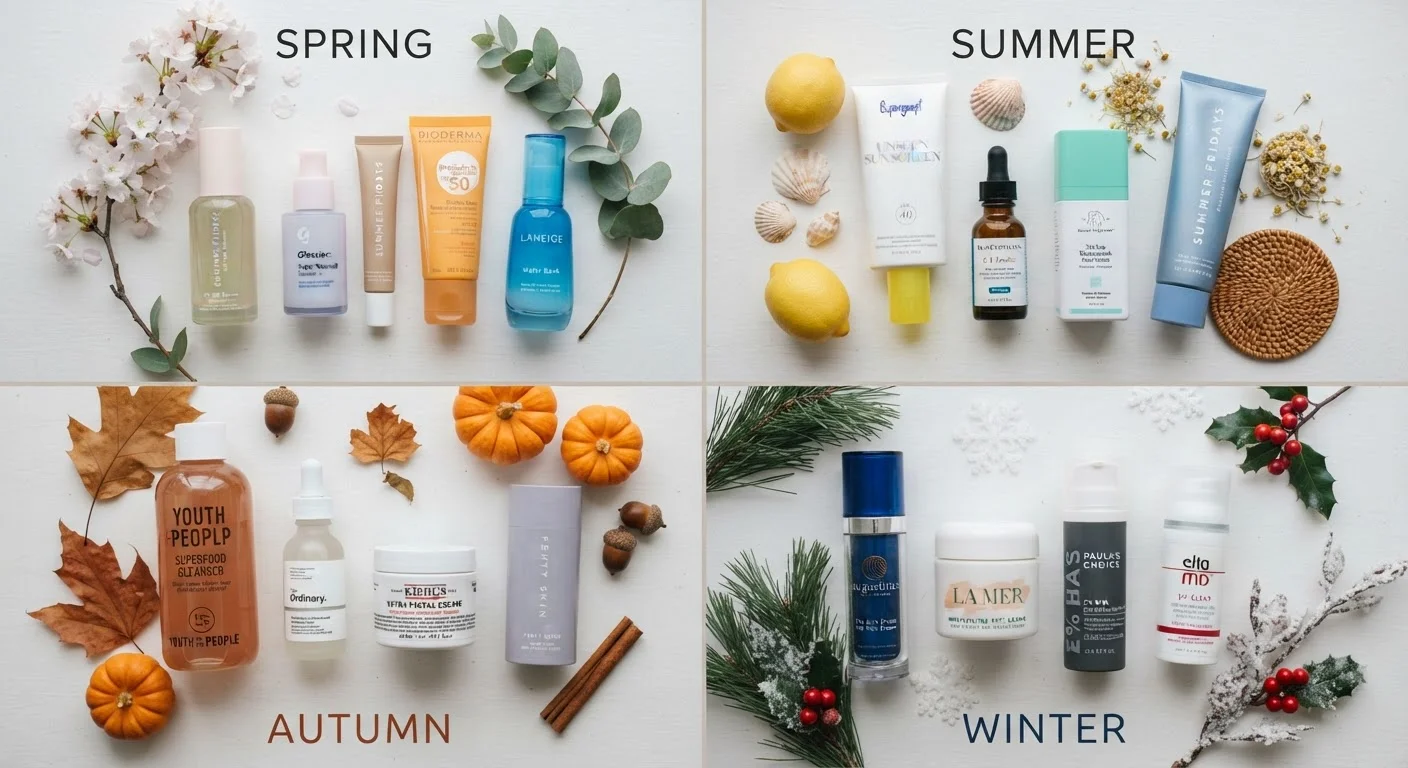
Photo credit: TheBlogZappier.com | Simple Search, Credible Results
SPF only in summer? Heavy creams only in winter? We examine the most persistent seasonal skincare misconceptions.
Key Takeaways
- UV radiation reaches skin year-round, making daily SPF relevant in every season.
- Oily and combination skin types still need moisturizer in cold, dry months.
- Heavy creams can clog pores in winter if they don't match your skin's actual needs.
- Retinol is not exclusively a winter ingredient; proper SPF use makes year-round application viable.
- Indoor heating and air conditioning affect skin hydration as much as outdoor temperatures do.
Why Seasonal Skincare Myths Persist
Seasonal skincare advice is everywhere — and much of it contains a kernel of truth stretched into an oversimplified rule. The idea that summer demands one set of products and winter demands another has been reinforced by marketing cycles, beauty editorial calendars, and the very real fact that environmental conditions do shift with the seasons. But the line between a genuinely useful seasonal adjustment and an unfounded myth can be difficult to distinguish, especially when both feel intuitive.
Environmental factors including temperature, humidity, UV index, wind, and the effects of indoor climate control all influence how skin behaves. The mistake is applying blanket seasonal rules rather than responding to what your specific skin is actually doing. For a broader look at evidence-based skincare guidance, the truth behind common skincare myths addresses many of the same evidence gaps that seasonal myths fall into.
Myth
You only need sunscreen in summer when the sun is strong and visible.
Fact
UVA radiation is present year-round, including on overcast winter days, making daily SPF application necessary in every season.
The sun emits two primary types of UV radiation that reach the skin's surface: UVB rays, which are strongest in summer and responsible for sunburn, and UVA rays, which remain relatively constant throughout the year and penetrate deeper into the skin. UVA exposure is closely linked to photoaging and contributes to the development of skin cancers. Cloud cover filters only a portion of UV radiation — studies have shown that up to 80% can pass through overcast skies. For a detailed breakdown of how protection factors are measured, see our SPF explainer.
Myth
Oily or combination skin doesn't need moisturizer in winter because it already produces enough oil.
Fact
Sebum production and skin hydration are distinct functions; oily skin can still be dehydrated and benefit from appropriate moisturization in dry, cold months.
Skin oiliness refers to sebum — a lipid produced by sebaceous glands — while hydration refers to water content within skin cells. Cold outdoor air and dry indoor heating both strip moisture from the skin's surface regardless of sebum levels, leaving oily skin feeling tight, flaky, or reactive. A lightweight, non-comedogenic moisturizer supports the skin barrier without adding congestion. Skipping moisturizer entirely can prompt the skin to overcompensate by producing more sebum. Our routine-building guide covers choosing the right moisturizer for your skin type.
Myth
Winter means switching to the heaviest cream available for maximum protection.
Fact
Richer formulas suit some skin types in winter, but heavier textures can clog pores and cause breakouts for others — texture should follow individual skin needs, not the calendar.
The idea that winter universally demands thick, occlusive creams is an oversimplification. Those with dry or mature skin often benefit from richer emollients when humidity drops, but for acne-prone or oily skin types, heavy creams can trap debris and contribute to congestion. A more useful approach is to assess how your skin actually feels — tightness, flaking, and sensitivity are signals worth responding to — rather than defaulting to heavier products as a seasonal rule. The seasonal transition checklist offers a practical audit framework for this evaluation.
Myth
Retinol should only be used in winter because sun exposure makes it dangerous in summer.
Fact
Retinol can be used year-round; the key is consistent, adequate SPF use the following morning and gradually building tolerance.
Retinoids can increase photosensitivity, which led to the widespread advice to reserve them for winter months. However, dermatologists generally clarify that this risk is manageable with proper sun protection rather than seasonal avoidance. Applying retinol at night, allowing it to fully absorb, and wearing broad-spectrum SPF the next morning addresses the photosensitivity concern effectively. Limiting retinol use to winter also means missing months of potential benefit for concerns like uneven texture and fine lines. The cold-weather beauty routine guide explores which adjustments are genuinely necessary versus those based on convention.
Myth
You don't need to adjust your skincare routine unless your skin visibly reacts to a season change.
Fact
Invisible environmental changes — including shifts in indoor humidity, heating systems, and UV index — affect the skin barrier before outward symptoms appear.
By the time skin shows visible signs of seasonal stress — flaking, redness, or increased breakouts — the barrier has already been compromised for some time. Proactive, modest adjustments made at the onset of seasonal transitions are generally more effective than reactive interventions after damage has accumulated. Indoor heating in winter and air conditioning in summer both reduce ambient humidity, quietly affecting the skin's moisture retention capacity. A consistent cleansing approach also plays a role: see cleansing methods across skincare cultures for context on how different methods interact with skin across changing conditions.
Making Smarter Seasonal Adjustments
The most effective seasonal skincare transitions are incremental and responsive rather than wholesale product overhauls. Humidity, not temperature alone, is often the most relevant environmental variable — and it's shaped as much by indoor conditions as outdoor weather. Layering products strategically matters too: the order in which actives, hydrators, and SPF are applied directly affects how well each performs. Our guide on why layering order matters explains the logic in detail.
Don't Overload Skin During Seasonal Switches
Introducing multiple new active ingredients at the same time during a seasonal transition — such as adding both a new exfoliant and a retinoid simultaneously — significantly increases the risk of irritation, barrier disruption, and breakouts. Introduce one new product at a time and allow at least two weeks between additions to accurately assess how your skin responds.
Finally, consider that product shelf life and storage conditions shift across seasons — heat and humidity affect preservative stability. Before reaching for a product stored through a particularly warm summer, the shelf life and expiry guide is worth consulting. The Beauty Essentials hub brings together foundational knowledge across all these areas for readers building or refining a routine.
SPF Is a Year-Round Requirement
UVA rays — the type most associated with premature skin aging — maintain consistent intensity regardless of season and penetrate cloud cover. Dermatology organizations consistently recommend broad-spectrum SPF 30 or higher as a daily practice, not a summer-only habit. Skipping sunscreen in cooler months leaves skin exposed to cumulative UV damage that compounds over time.
This article is for informational purposes only and does not constitute medical or dermatological advice. Consult a qualified dermatologist or healthcare professional for guidance specific to your skin concerns or conditions.

Author
Style & Beauty Editorial Team
Style & Beauty Editorial Team is the collective byline for our editorial team and contributor network. Articles published under this byline or an editorial pen name are researched, written, and reviewed according to our editorial standards for clarity, consistency, and independence before publication.
View all articles →