
Why Layering Skincare Products in the Wrong Order Undermines Results
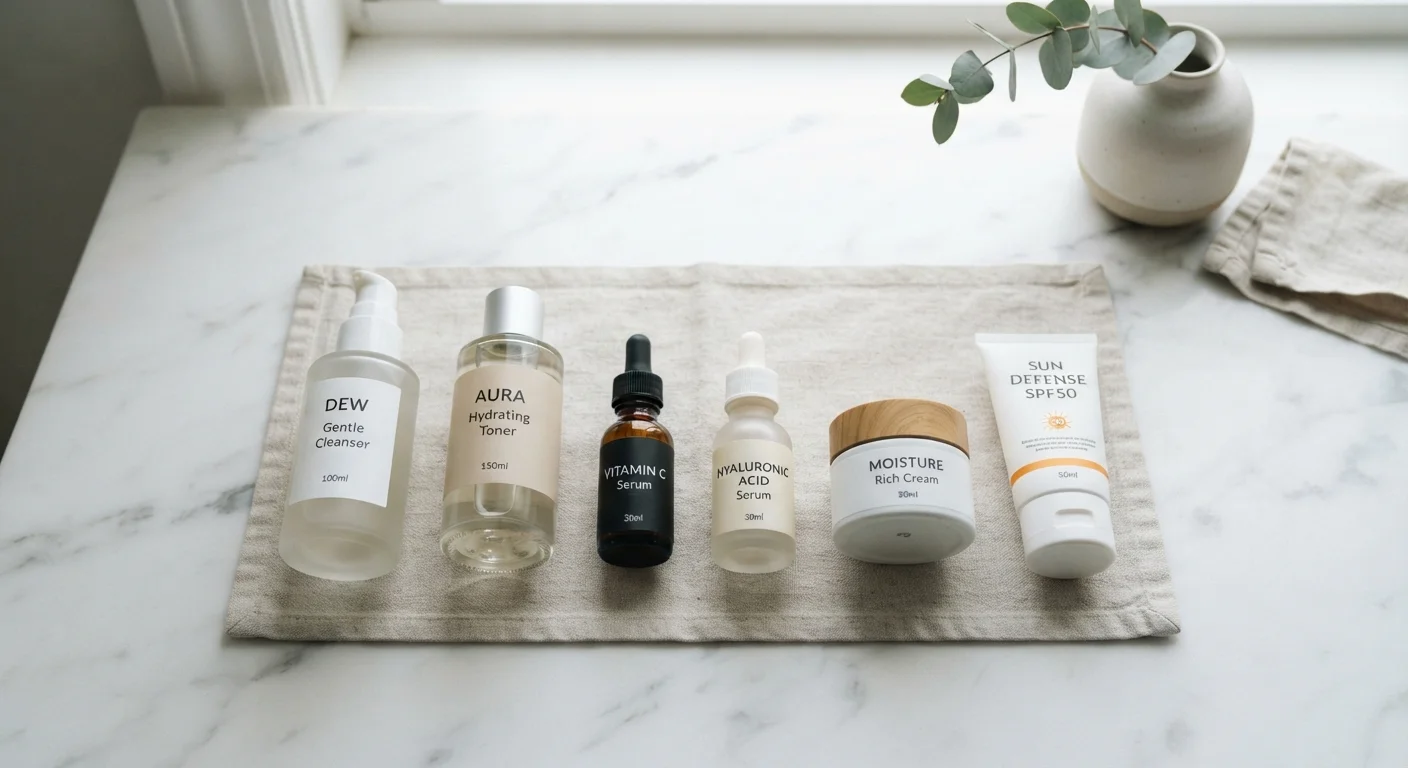
Photo credit: TheBlogZappier.com | Simple Search, Credible Results
In this article
The sequence in which you apply skincare products affects how well they absorb. Here's what goes wrong and the logic behind correct layering.
Key Takeaways
- Applying products thickest-to-thinnest blocks lighter formulas from reaching the skin.
- Oil-based products applied before water-based serums prevent proper absorption.
- Active ingredients like retinol and vitamin C can be rendered less effective by incorrect sequencing.
- pH-sensitive actives, such as AHAs and BHAs, need to be applied before higher-pH products.
- Letting each layer absorb briefly before the next maximizes efficacy and minimizes irritation.
Why Application Order Is a Functional Issue, Not a Preference
Skincare layering is often treated as a matter of personal habit, but the sequence in which products are applied has a direct effect on whether they work. Skin is selective about what it allows in, and the physical and chemical properties of each formula determine how well it can penetrate. When the order is off, products either sit uselessly on the surface or actively block what follows.
The foundational principle is straightforward: apply products from thinnest to thickest consistency, and from water-based to oil-based formulas. This mirrors how skin absorbs — lighter, lower-molecular-weight molecules reach deeper layers more readily, while richer textures remain at the surface to seal hydration in. Disrupting that sequence creates a kind of traffic jam at the skin's surface.
For a thorough walkthrough of how a full routine should be structured, see our guide on building a skincare routine from the ground up.
Applying a thick moisturizer or oil before a lightweight serum.
Why it happens: Many people default to a logic of "more coverage first," or apply products in the order they reach for them. Rich textures feel more substantial and are often applied early without considering molecular weight.
Layering an oil-based product directly before a water-based formula.
Why it happens: Oil and water don't mix. When an oil sits on the skin's surface, any water-based serum applied afterward cannot penetrate through it, making the serum largely ineffective.
Applying SPF before other daytime products and then continuing to layer on top.
Why it happens: Sunscreen packaging sometimes instructs users to apply it as "the last step," which can lead to confusion when moisturizer or makeup is added afterward, breaking down or diluting the SPF film.
Not waiting between steps, applying products in rapid succession.
Why it happens: Morning routines especially are rushed, and it feels counterintuitive to stand still while a serum "soaks in." The instinct is to keep moving.
Using a high-pH product immediately before a pH-sensitive active ingredient.
Why it happens: The role of pH in skincare absorption is rarely explained on packaging. Most consumers aren't aware that AHAs, BHAs, and vitamin C work optimally at a low pH and can be neutralized by alkaline products applied just before.
The Logic of Correct Layering — and What Breaks It
Understanding why each rule exists makes it easier to apply consistently. Water-based serums are formulated to deliver concentrated actives — hyaluronic acid, niacinamide, vitamin C — into the skin. They rely on an unobstructed surface to do so. An oil applied first creates a barrier that physically prevents water-based molecules from penetrating, no matter how high-quality the serum.
Actives Need the Right Environment
pH-dependent ingredients like AHAs, BHAs, and vitamin C require an acidic environment to function correctly. Applying a higher-pH toner or moisturizer immediately before them can neutralize that environment and reduce their effectiveness. Always allow these actives to absorb fully before layering anything else on top.
SPF is its own category of concern. Sunscreen is an active formulation engineered to form a continuous protective film across the skin. Anything layered on top of it — a second moisturizer, a facial oil, or extra serum — disturbs that film. This doesn't mean SPF protection drops to zero, but uneven application does reduce its reliability.
Mixing Some Actives Causes Irritation
Combining certain active ingredients — retinol with AHAs, for example — in the same routine can cause significant irritation, redness, or sensitivity, regardless of application order. If your routine includes multiple actives, consider alternating them on different nights rather than stacking them. Consult a dermatologist if you experience persistent skin reactions.
Rushing through steps is a compounding problem. When products are applied in quick succession without a brief absorption window, the surface becomes a blended mix of formulas rather than distinct layers. Some may physically dilute others; oil-based products can lift water-based ones that haven't had time to settle. This is especially relevant for actives, where precise delivery to the skin is the entire point.
It's also worth separating layering mistakes from broader skincare misconceptions — some of which affect routine-building decisions before any product is even opened. Our piece on evidence-based skincare myth-busting addresses several widely held but inaccurate beliefs about how skin behaves.
~4.5–5.5
Natural skin surface pH range
Dermatology literature consistently identifies this slightly acidic range as optimal for the skin barrier and for pH-sensitive active ingredients to function.
30–60 sec
Recommended wait time between light layers
Many skincare professionals advise a brief absorption window between product applications to prevent formulas from interfering with one another.
This article is for informational purposes only. It does not constitute medical or dermatological advice. If you experience persistent skin irritation or concerns, consult a qualified dermatologist or healthcare professional.

Author
Style & Beauty Editorial Team
Style & Beauty Editorial Team is the collective byline for our editorial team and contributor network. Articles published under this byline or an editorial pen name are researched, written, and reviewed according to our editorial standards for clarity, consistency, and independence before publication.
View all articles →