
Men's Grooming Routines: Skincare and Beyond
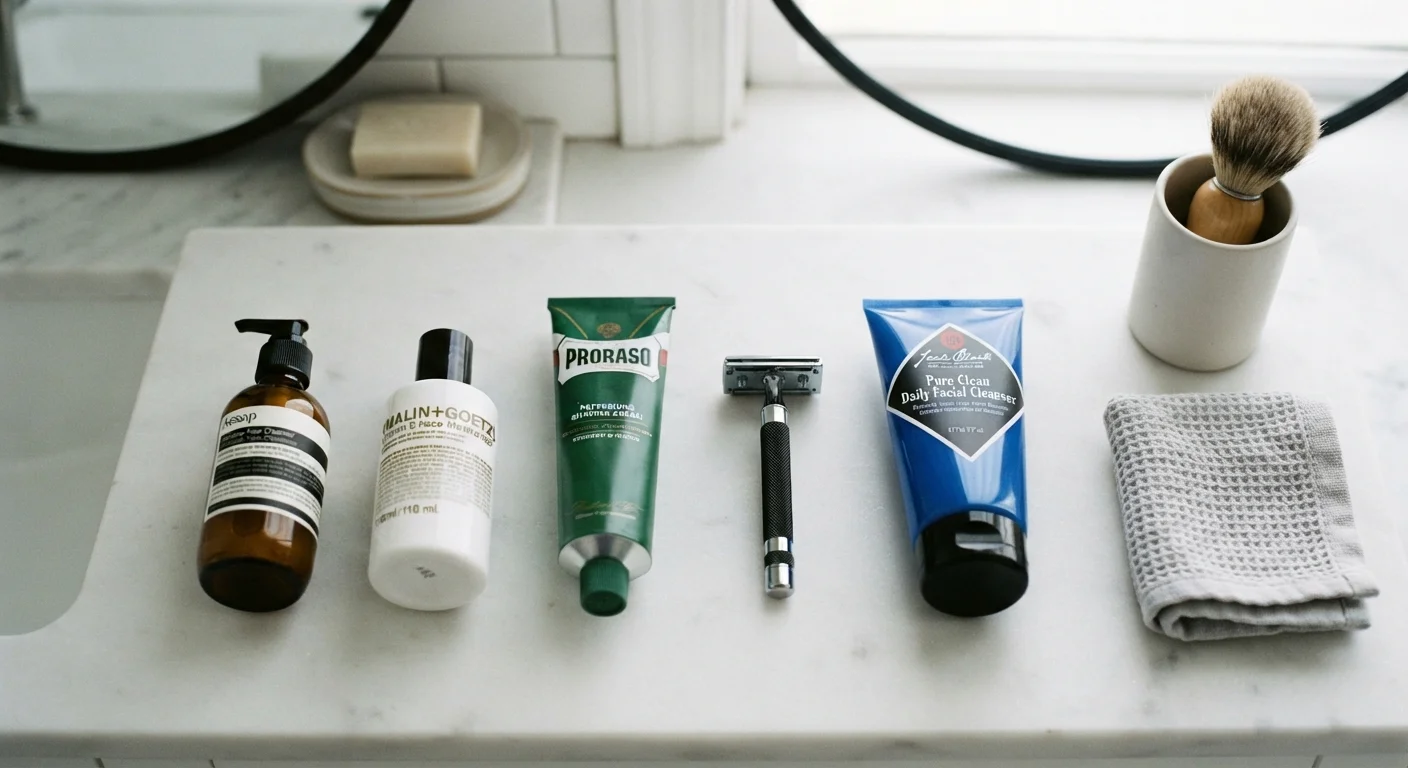
Photo credit: TheBlogZappier.com | Simple Search, Credible Results
In this article
A foundational guide to grooming for men, covering face washing, shaving, moisturising, and when to consider additional steps.
Key Takeaways
- A consistent three-step routine — cleanse, shave (if applicable), moisturise — forms the foundation of effective men's skincare.
- Product selection should match your specific skin type, not a generic 'men's' label.
- SPF is one of the most evidence-supported steps you can add to any morning routine.
- Exfoliation and serums are optional additions, but timing and frequency matter.
- Grooming routines should be reassessed as seasons change or skin conditions shift.
Why a Grooming Routine Matters
Skincare is not a niche concern — it is basic maintenance for the body's largest organ. Despite this, many men still operate without a defined routine, relying on a single bar soap or whatever product is available. The result is often preventable dryness, irritation, or accelerated visible aging.
A structured grooming routine does not require a shelf full of products. It requires understanding what your skin actually needs and applying the right steps consistently. The same principle that applies to building any skincare routine from the ground up — cleanse, treat, protect — holds for men's routines as well.
This guide covers the essentials: what to do daily, how to shave without causing skin damage, and when adding extra steps makes practical sense.
The Core Daily Routine: Cleanse, Shave, Moisturise
Three steps anchor any effective men's grooming routine. These should happen every morning, and a simplified version at night.
1. Cleansing
A facial cleanser removes oil, sweat, and environmental debris accumulated on the skin. Use a formula designed for the face — body soap is typically too alkaline and strips the skin's natural moisture barrier. Wash with lukewarm water, not hot, which can dehydrate skin. For a deeper look at cleansing philosophies and methods, see cleansing methods across skincare cultures.
2. Shaving
Shaving is a mechanical exfoliant — it removes dead skin cells along with hair. To reduce irritation: always prep skin with warm water first to soften hair, use a shaving cream or gel (not dry), shave in the direction of hair growth on sensitive areas, and rinse with cool water after. A sharp blade causes less friction and cuts more cleanly than a dull one.
Apply Moisturiser to Damp Skin
Moisturiser is most effective when applied to skin that is still slightly damp — within about 60 seconds of patting dry. This helps trap existing moisture rather than relying solely on the product to add it. Keep your moisturiser within arm's reach of the sink to make this a consistent habit.
3. Moisturising
Applying a moisturiser after cleansing (and after shaving) seals hydration into the skin and supports the barrier function. Look for ingredients like glycerin, hyaluronic acid, or ceramides — these are well-documented humectants and barrier-supporting compounds. Apply while skin is still slightly damp for better absorption.
~11%
Lifetime skin cancer risk for US men
According to the American Cancer Society, men in the US have a roughly 1 in 9 lifetime risk of developing melanoma, higher than the rate for women.
2×
Rate men die from melanoma vs. women
The Skin Cancer Foundation reports that men are more than twice as likely to die from melanoma compared to women, linked in part to lower sunscreen adoption rates.
Choosing Products for Your Skin Type
Marketing labels like 'for men' often obscure what actually matters: formulation. Skin type — not gender — should drive product selection.
- Oily skin: Gel-based or foaming cleansers, lightweight oil-free moisturisers, and non-comedogenic (won't clog pores) product labels.
- Dry skin: Cream or lotion cleansers, richer moisturisers with ceramides or shea butter, and avoiding alcohol-based toners.
- Combination skin: Mild gel cleansers and lighter moisturisers, applying heavier product only to dry zones.
- Sensitive skin: Fragrance-free formulas, minimal ingredient lists, and patch-testing new products before full use.
If you are uncertain about your skin type, observe how your skin feels roughly two hours after cleansing with no products applied. Tightness suggests dryness; visible shine across the face suggests oily; shine only in the T-zone suggests combination.
When patch-testing a new product, apply a small amount to the inner forearm for two to three days before using it on your face — the face is more reactive, and this step catches most contact sensitivities early.
The face has higher skin sensitivity and more sebaceous glands than the forearm, so testing there first reduces the risk of a widespread facial reaction to an incompatible ingredient.
If you shave in the morning, apply your active serums at night rather than immediately after shaving. Freshly shaved skin has a temporarily compromised barrier and is more prone to stinging or irritation from acids and actives.
The mechanical action of shaving removes the very top layer of the epidermis, leaving skin temporarily more permeable and reactive to strong ingredients applied directly after.
Beyond the Basics: Additional Steps Worth Considering
Once the core routine is established and consistent, additional steps can address specific concerns.
SPF
Applying a broad-spectrum sunscreen with SPF 30 or higher every morning is one of the most evidence-supported steps in skincare. UV exposure is a primary driver of premature skin aging and increases skin cancer risk. Many daily moisturisers include SPF, which simplifies the routine.
SPF Is Not Optional Skincare
Dermatologists consistently identify daily sunscreen use as the single most impactful preventive skincare step. UV exposure occurs even on overcast days and through glass. Skipping SPF because it is cloudy or because you work indoors is a common and consequential oversight — UV radiation still reaches the skin in both scenarios.
Exfoliation
Chemical exfoliants (such as products containing salicylic acid or lactic acid) dissolve dead skin cells without the abrasion of physical scrubs. One to three times per week is generally sufficient — overuse can damage the skin barrier. Men who shave regularly are already performing some mechanical exfoliation, so they may need less additional exfoliation than non-shavers.
Eye Cream
The skin around the eyes is thinner and more prone to visible changes. A simple eye cream or gel formulated for that area can address puffiness or dryness, though it is not a prerequisite for a functional routine.
Serums
Serums deliver concentrated active ingredients — such as vitamin C (brightening) or niacinamide (pore appearance, oil control) — at a lighter texture than a moisturiser. Apply after cleansing and before moisturiser. Start with one serum addressing a specific concern rather than layering multiple actives simultaneously.
Adapting Your Routine Over Time
Skin is not static. Hormonal shifts, seasonal changes, stress, diet, and age all affect how it behaves. A routine that worked well in summer may need adjustment in winter when indoor heating reduces ambient humidity. For a practical approach to those transitions, a seasonal skincare transition checklist can serve as a useful audit tool.
Pay attention to how your skin responds after introducing any new product. Give each addition at least two to four weeks before assessing its effect — skin adjusts gradually. If persistent irritation, breakouts, or unusual dryness develops and does not respond to routine adjustments, consulting a dermatologist is the appropriate next step.
Grooming routines, like any maintenance habit, are most effective when they are consistent and proportionate to actual need — not maximally complex.
This article is for general informational purposes only and does not constitute medical or dermatological advice. Consult a qualified healthcare professional for concerns about your skin health.
Building a Skincare Routine from the Ground Up
A step-by-step walkthrough of structuring a daily skincare routine for any skin type, from cleansing through SPF. Useful for expanding on the foundations covered in this article.
A Seasonal Skincare Transition Checklist
Practical guidance on auditing and adjusting your routine as humidity, temperature, and indoor conditions change across seasons.
Cleansing Methods Across Skincare Cultures
Explores how different cleansing philosophies — from double cleansing to micellar water — work and which skin concerns each approach addresses.

Author
Style & Beauty Editorial Team
Style & Beauty Editorial Team is the collective byline for our editorial team and contributor network. Articles published under this byline or an editorial pen name are researched, written, and reviewed according to our editorial standards for clarity, consistency, and independence before publication.
View all articles →