
Chemical Exfoliants vs. Physical Scrubs: What Sets Them Apart
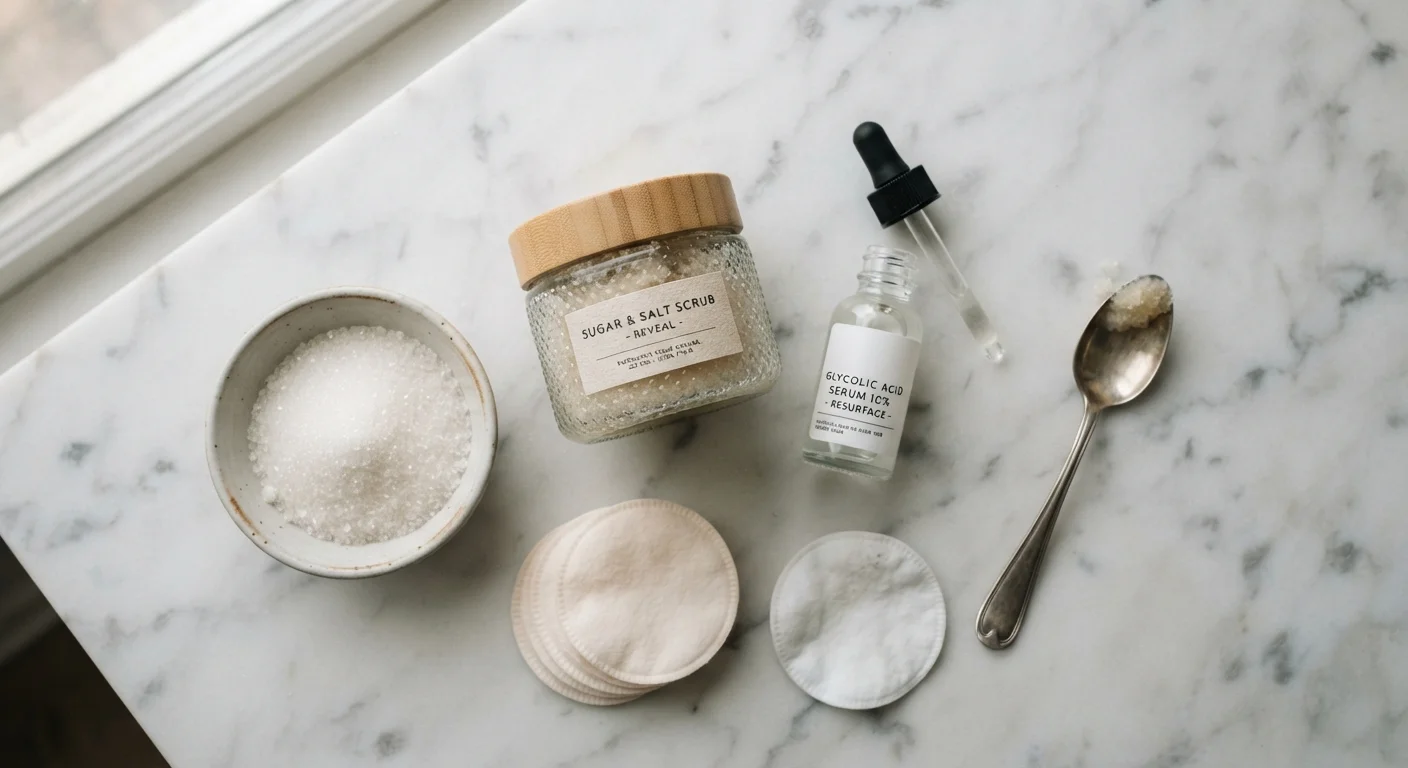
Photo credit: TheBlogZappier.com | Simple Search, Credible Results
In this article
Understand the difference between AHAs, BHAs, and physical exfoliants — and which approach suits different skin types and goals.
Key Takeaways
- Chemical exfoliants use acids or enzymes to dissolve the bonds between dead skin cells without friction.
- Physical scrubs manually buff away dead skin using abrasive particles, tools, or textured materials.
- AHAs work on the skin's surface; BHAs penetrate into pores, making each suited to different concerns.
- Physical scrubs carry a higher risk of micro-tears and irritation if used too aggressively or too often.
- Skin type and concern — not trend — should drive your exfoliation method choice.
- Both approaches can be used safely when matched to skin type and applied with appropriate frequency.
How Each Method Actually Works
Exfoliation — the process of removing dead skin cells from the surface layer — is a fundamental step in many skincare routines. But the word covers two mechanically distinct approaches that deliver results through entirely different means.
Chemical exfoliants use acids or enzymes to break down the bonds that hold dead skin cells together. The two most common acid categories are alpha hydroxy acids (AHAs) and beta hydroxy acids (BHAs). AHAs — such as glycolic acid, lactic acid, and mandelic acid — are water-soluble and work primarily on the skin's surface, improving tone and texture. BHAs, most notably salicylic acid, are oil-soluble and can penetrate into the lining of pores, making them particularly relevant for oily and congestion-prone skin. Enzyme exfoliants, often derived from papaya or pineapple, offer a milder alternative and function by dissolving dead-cell proteins without the acidity.
Physical scrubs, by contrast, use friction. Granules — sugar, salt, rice bran, finely ground seeds — or textured surfaces like silicone brushes or washcloths physically dislodge dead skin cells through mechanical motion. The result is immediate and tactile, but the effectiveness depends heavily on pressure, particle shape, and how often the method is used.
To understand how these ingredients fit into a broader routine, see our guide to skincare ingredients.
| Criterion | Chemical Exfoliants | Physical Scrubs |
|---|---|---|
| Mechanism | Dissolves cell bonds with acids or enzymes | Physically buffs away dead cells via friction |
| Key types | AHAs, BHAs, enzyme exfoliants | Granule scrubs, brushes, exfoliating cloths |
| Depth of action | Surface to pore level (BHAs go deeper) | Surface only |
| Best for | Uneven tone, pores, acne, dullness | Immediate texture smoothing, normal skin |
| Sensitive skin suitability | Yes, with gentle formulas at low concentration | Lower — friction risk with certain skin types |
| Frequency guidance | 1–3x per week depending on concentration | 1–2x per week with light pressure |
| SPF required after use | Yes — especially AHAs increase photosensitivity | Recommended as standard practice |
| Learning curve | Moderate — pH, concentration, layering matter | Low — straightforward application |
Skin Type Considerations and Risk Factors
Neither method is universally superior — the right choice depends on skin type, tolerance, and what you're trying to address.
Physical scrubs have faced scrutiny in recent years, and with some justification. Coarse or irregularly shaped particles can cause micro-tears in the skin, especially when applied with too much pressure. For skin that is thin, sensitized, or already compromised, the friction involved can worsen redness and disrupt the skin barrier. That said, a gentle physical scrub used once or twice a week with light pressure is unlikely to cause harm for most skin types — the issue is primarily one of overuse and formulation quality.
A Note on Over-Exfoliation
Both chemical and physical methods can cause over-exfoliation if used too frequently or with too much intensity. Signs include persistent tightness, flaking, unusual shininess, or increased sensitivity to other products. If you notice these signals, pulling back on exfoliation frequency and focusing on barrier-supportive ingredients — like ceramides and humectants — is generally the recommended response before reintroducing any exfoliant.
Chemical exfoliants carry their own cautions. Higher-concentration AHAs can increase photosensitivity, making consistent SPF use non-negotiable. Introducing acids too quickly — especially in combination with other active ingredients like retinoids — can lead to over-exfoliation, characterized by persistent tightness, flaking, or sensitivity. Starting with lower concentrations and increasing gradually is the standard guidance across most dermatology literature.
If you're building a routine around exfoliation, structuring your full skincare routine provides a practical framework for layering these steps correctly.
~30%
Skin renewal slowdown by age 40
Dermatology literature broadly notes that natural cell turnover slows with age, making regular exfoliation a more relevant maintenance step for older skin types.
pH 3–4
Effective pH range for AHA exfoliants
Research consistently shows that AHAs require a low pH to function as active exfoliants; formulations above pH 4 tend to have limited exfoliating efficacy.
Choosing the Right Approach for Your Skin Goals
Skin concern should lead the decision. Those dealing with blackheads or sebaceous congestion often find that BHAs address the root of the problem more effectively than surface scrubbing. Those with dull, dry, or hyperpigmented skin may find lactic or glycolic acid delivers more lasting improvement than a weekly polish.
Physical scrubs retain genuine utility — particularly for people who prefer a tangible exfoliation experience, or who want to avoid navigating acid concentrations and pH requirements. A gentle formula used appropriately remains a valid option for normal to combination skin without active sensitivity concerns.
It's also worth noting that some people use both methods — though not simultaneously. Alternating between a gentle physical scrub and a low-concentration acid on different days can work for certain skin types, but this approach requires attention to how the skin responds over time.
Exfoliation doesn't exist in isolation. The products you apply after exfoliating — particularly hydrators and serums — play a role in how well the skin recovers and benefits. Our breakdown of serums, essences, and ampoules can help you understand what to reach for after exfoliating. Similarly, skin type shapes every step of your routine — including how your skin responds to makeup — as explored in our piece on makeup for different skin types.

Author
Style & Beauty Editorial Team
Style & Beauty Editorial Team is the collective byline for our editorial team and contributor network. Articles published under this byline or an editorial pen name are researched, written, and reviewed according to our editorial standards for clarity, consistency, and independence before publication.
View all articles →