
Zero-Based Budgeting vs. the 50/30/20 Method
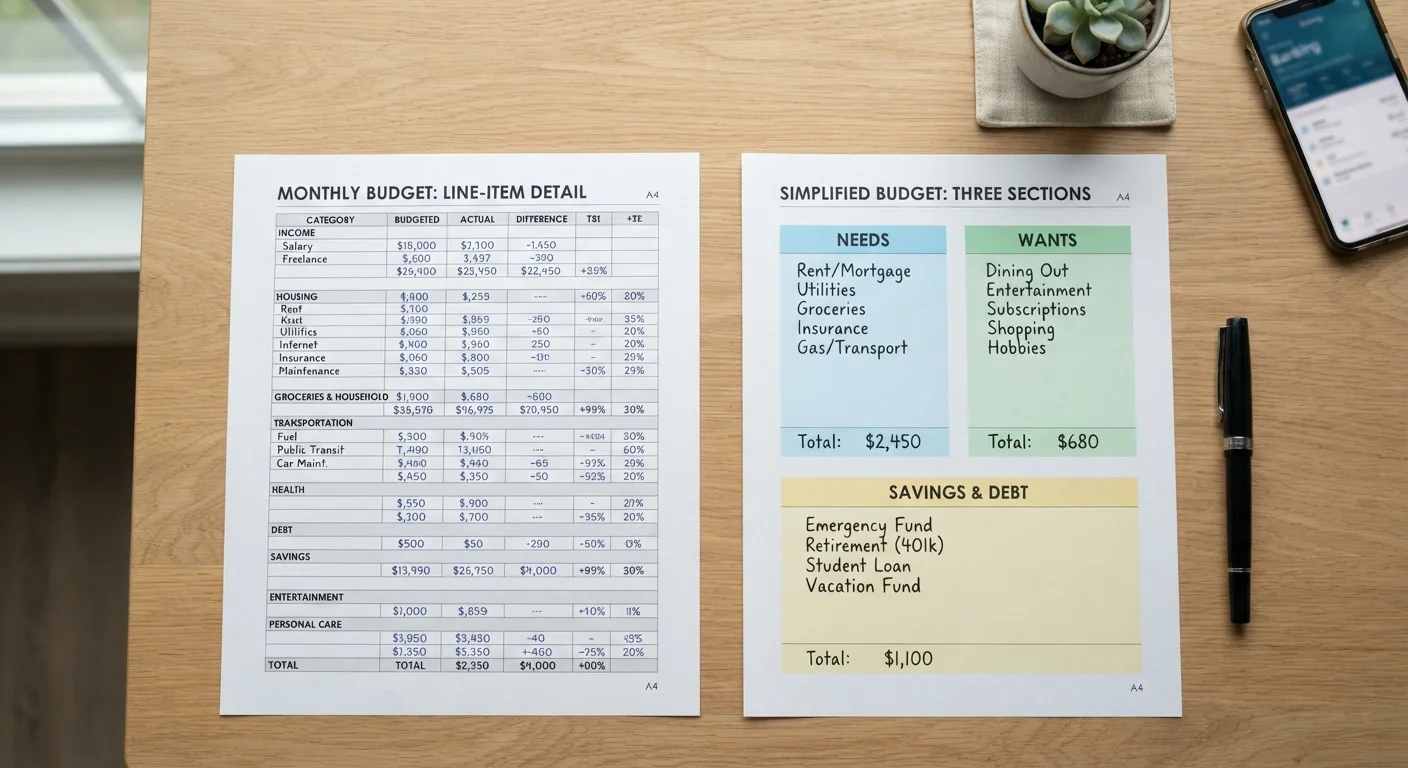
Photo credit: TheBlogZappier.com | Simple Search, Credible Results
In this article
Two of the most popular budgeting approaches, compared side by side. Understand how each works and which suits different financial situations.
Key Takeaways
- Zero-based budgeting assigns every dollar of income to a specific category until the balance reaches zero.
- The 50/30/20 method divides after-tax income into needs (50%), wants (30%), and savings or debt (20%).
- Zero-based budgeting demands more time and discipline; 50/30/20 is quicker to set up and maintain.
- Neither method guarantees financial success — consistent follow-through matters more than which system you choose.
- Both approaches can be adapted for irregular income, though each requires different adjustments.
How Each Method Works
Understanding the mechanics of each approach is the first step to choosing one that fits your life. For a broader foundation, see our introduction to personal budgeting.
Zero-Based Budgeting
Zero-based budgeting (ZBB) starts with your total monthly income and requires you to assign every dollar to a category — housing, groceries, transportation, savings, entertainment, and so on — until you reach exactly zero. Zero does not mean you've spent everything; it means every dollar has a designated purpose, including savings and debt payments. You rebuild this plan from scratch each month, which demands time but delivers granular insight into your spending habits.
The 50/30/20 Method
The 50/30/20 rule, popularized in personal finance literature, divides your after-tax income into three broad buckets: 50% toward needs (rent, utilities, groceries, minimum debt payments), 30% toward wants (dining out, subscriptions, travel), and 20% toward savings and debt repayment. For a deeper walkthrough of those categories, see The 50/30/20 Rule Explained. The structure is pre-set, so there's far less monthly setup involved.
| Criterion | Zero-Based Budgeting | 50/30/20 Method |
|---|---|---|
| Setup time | 30–60 min per month | 30 min to set up once |
| Category structure | Fully customized line items | Three fixed percentage buckets |
| Flexibility | High — rebuilt monthly | Moderate — categories are preset |
| Best income type | Stable or variable | Stable, predictable income |
| Spending visibility | Very detailed | Broad overview |
| Learning curve | Steeper | Gentle |
| Ideal for | Debt payoff, tight budgets | New budgeters, stable finances |
Effort, Flexibility, and Who Each Suits
The most meaningful difference between these methods isn't philosophical — it's practical. Zero-based budgeting can take 30–60 minutes to set up each month and requires regular check-ins to track spending against your plan. The 50/30/20 method, once configured, mainly asks that you monitor which bucket each purchase falls into.
~1 in 3
Americans with a detailed household budget
Surveys by Gallup and similar polling organizations consistently find that fewer than half of U.S. adults maintain a detailed written or tracked budget.
20%
Savings and debt allocation in 50/30/20
The 50/30/20 framework designates a fixed fifth of after-tax income to savings and debt repayment, providing a clear minimum savings benchmark.
Zero-based budgeting suits people who are highly motivated to change their financial behavior, are dealing with tight margins, or find that broad categories allow too much spending drift. It pairs well with strategies like the debt snowball or debt avalanche when aggressively paying off debt.
The 50/30/20 method works well for people with relatively stable, predictable income who want structure without micromanagement. It's also a natural starting point before moving to a more detailed system. You can combine either approach with digital tools — explore the pros and cons of paper vs. digital budgeting to decide how to track your chosen method.
Adjusting the 50/30/20 Splits
The 50/30/20 percentages are guidelines, not rigid rules. In high cost-of-living areas, needs may routinely exceed 50% of income, requiring adjustments to the wants or savings buckets. Adapt the ratios to reflect your actual circumstances rather than forcing your budget to fit the default split. If you're building your first monthly budget, starting with the standard percentages and refining from there is a reasonable approach.
Neither method is inherently superior. Research on budgeting behavior consistently shows that consistency matters more than the specific system used. A simple method you follow beats a complex one you abandon after two months.
This article is for general informational and educational purposes only and does not constitute personalized financial advice. Consult a qualified financial professional for guidance specific to your situation.

Author
Money & Finance Editorial Team
Money & Finance Editorial Team is the collective byline for our editorial team and contributor network. Articles published under this byline or an editorial pen name are researched, written, and reviewed according to our editorial standards for clarity, consistency, and independence before publication.
View all articles →