
Pros and Cons of Budgeting on Paper vs. Digitally
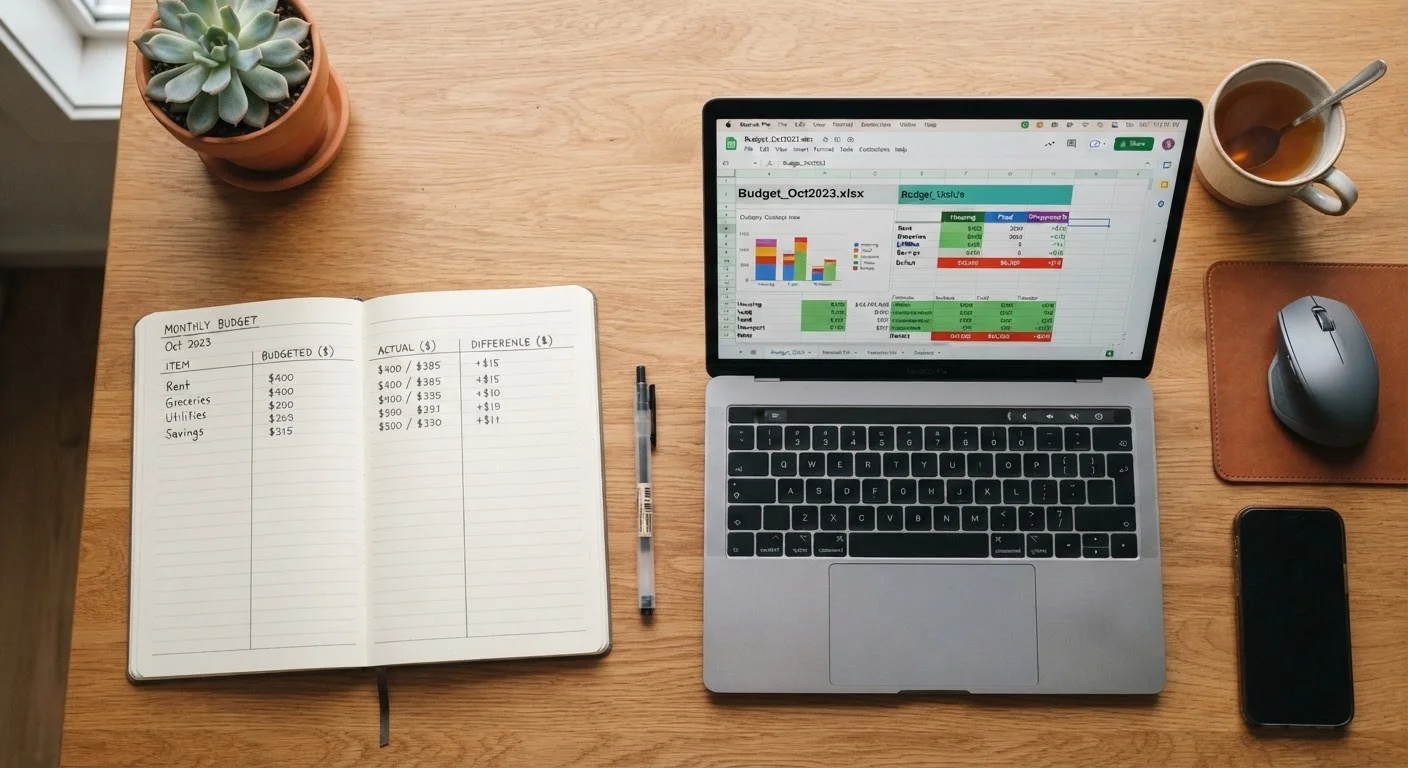
Photo credit: TheBlogZappier.com | Simple Search, Credible Results
In this article
Both approaches have real advantages and real drawbacks. A balanced look at handwritten budgets versus spreadsheets and app-based tracking.
Key Takeaways
- Paper budgeting builds mindful spending habits through the physical act of writing.
- Digital tools automate tracking and reduce the time needed to maintain your budget.
- Neither method is universally superior — your consistency with the system matters most.
- Many budgeters successfully combine both approaches to get the benefits of each.
Encourages mindful, deliberate awareness of each expense
Writing numbers by hand forces a small pause with every entry, which can make overspending more psychologically visible and harder to ignore.
No technology required — zero setup friction
A notebook and pen are all you need; there's no software to learn, no account to create, and no subscription to manage.
Complete privacy with no data-security risk
A paper budget stores nothing online, so there's no exposure to data breaches or third-party access to your financial information.
Works well for straightforward, single-account finances
If your financial life is relatively simple — one checking account, a few regular bills — a written budget captures everything you need without complexity.
Automation reduces tedious manual data entry
Many apps can sync directly with bank accounts and categorize transactions automatically, saving significant time each week.
Instant access to charts, trends, and spending summaries
Digital tools can display your spending patterns visually, making it easier to spot problem categories or progress toward savings goals at a glance.
Easy to update and reorganize as life changes
Adding a new income source, changing a spending category, or recalculating totals takes seconds in a spreadsheet versus erasing and rewriting on paper.
Supports real-time collaboration with a partner
Shared spreadsheets or synced budgeting apps let two people view and update the same budget simultaneously, reducing miscommunication about shared spending.
Why the Format You Choose Actually Matters
When you're starting out, budgeting advice often focuses on which method to use — zero-based, 50/30/20, envelope — but overlooks a more immediate question: where should you actually write it all down? The format isn't a trivial detail. Research in cognitive psychology consistently suggests that the physical act of writing by hand deepens information processing, while digital tools offer speed and accuracy that pen and paper simply can't match.
If you're new to budgeting, starting with the foundational concepts before choosing a format can save you from switching tools mid-stream. That said, understanding the trade-offs up front helps you make a more informed choice from day one.
This Is General Information, Not Financial Advice
The discussion here covers general budgeting formats and their trade-offs. It does not account for your specific income, expenses, financial goals, or personal circumstances. For guidance tailored to your situation, consider speaking with a licensed financial counselor or adviser.
The Case for Budgeting on Paper
Handwritten budgets have existed as long as people have had income to track, and they persist for good reasons. Writing figures by hand tends to slow you down in a productive way — each number gets a moment of attention rather than a quick keystroke.
Encourages mindful, deliberate awareness of each expense
Writing numbers by hand forces a small pause with every entry, which can make overspending more psychologically visible and harder to ignore.
No technology required — zero setup friction
A notebook and pen are all you need; there's no software to learn, no account to create, and no subscription to manage.
Complete privacy with no data-security risk
A paper budget stores nothing online, so there's no exposure to data breaches or third-party access to your financial information.
Works well for straightforward, single-account finances
If your financial life is relatively simple — one checking account, a few regular bills — a written budget captures everything you need without complexity.
Paper also eliminates a common obstacle: the learning curve. There's no app to download, no account to link, and no privacy concern about connecting bank credentials to a third-party platform. A notebook and pen are universally accessible and cost almost nothing. For people who find screens distracting or who prefer analog systems across their lives, a written budget can feel like a natural extension of how they already operate.
The envelope budgeting method — which assigns physical or virtual cash to spending categories — pairs particularly well with a paper system. See how the envelope method works and how people adapt it today.
The Case for Digital Budgeting
Spreadsheets and budgeting apps have transformed what's possible for everyday consumers. The core advantage is automation: once your accounts are connected or your template is built, the heavy lifting of data entry is largely eliminated.
Automation reduces tedious manual data entry
Many apps can sync directly with bank accounts and categorize transactions automatically, saving significant time each week.
Instant access to charts, trends, and spending summaries
Digital tools can display your spending patterns visually, making it easier to spot problem categories or progress toward savings goals at a glance.
Easy to update and reorganize as life changes
Adding a new income source, changing a spending category, or recalculating totals takes seconds in a spreadsheet versus erasing and rewriting on paper.
Supports real-time collaboration with a partner
Shared spreadsheets or synced budgeting apps let two people view and update the same budget simultaneously, reducing miscommunication about shared spending.
Digital tools also make it easier to share and collaborate. If you manage finances with a partner, a shared spreadsheet or synced app removes the need to reconcile two separate notebooks. Managing a household budget together introduces its own dynamics, and digital tools can reduce the friction of keeping both people on the same page.
~1 in 3
Americans who use a budgeting app regularly
Surveys from the National Endowment for Financial Education and similar organizations suggest adoption of digital budgeting tools has grown steadily but still leaves most consumers without one.
~29%
Adults who maintain any written or tracked budget
According to Gallup polling, fewer than one-third of U.S. adults maintain a detailed household budget, underscoring that the habit itself — not the format — is the biggest gap.
Visualization is another underrated benefit. Charts showing spending by category, month-over-month trends, and progress toward savings goals can surface patterns that rows of handwritten numbers obscure. If you're choosing between two structured budgeting philosophies, comparing zero-based budgeting with the 50/30/20 method can help you decide which framework translates best into a digital format.
Making the Right Choice — or Combining Both
There's no single correct answer, and the research doesn't firmly declare a winner. What matters most is adherence: a paper budget you review every Sunday is more valuable than a sophisticated app you open twice a year. Consider these practical factors when deciding:
- Complexity of your finances: Multiple income streams, credit cards, and investment accounts lean toward digital.
- Privacy sensitivity: If you're cautious about linking financial accounts online, paper has no data-breach risk.
- Habit style: If you journal, plan on paper, or use physical calendars, a written budget may feel more natural.
- Shared finances: Real-time syncing makes digital tools the practical default for couples or households.
A hybrid approach works well for many people: use a simple notebook for weekly spending check-ins and a spreadsheet for the big-picture monthly overview. This way you get the mindfulness of writing with the accuracy of calculated totals. Don't let common budgeting myths steer you away from getting started — the format is secondary to the habit.
This article is for general informational and educational purposes only and does not constitute personalized financial advice. Consult a qualified financial professional for guidance specific to your situation.

Author
Money & Finance Editorial Team
Money & Finance Editorial Team is the collective byline for our editorial team and contributor network. Articles published under this byline or an editorial pen name are researched, written, and reviewed according to our editorial standards for clarity, consistency, and independence before publication.
View all articles →