
Envelope Budgeting in a Digital Age
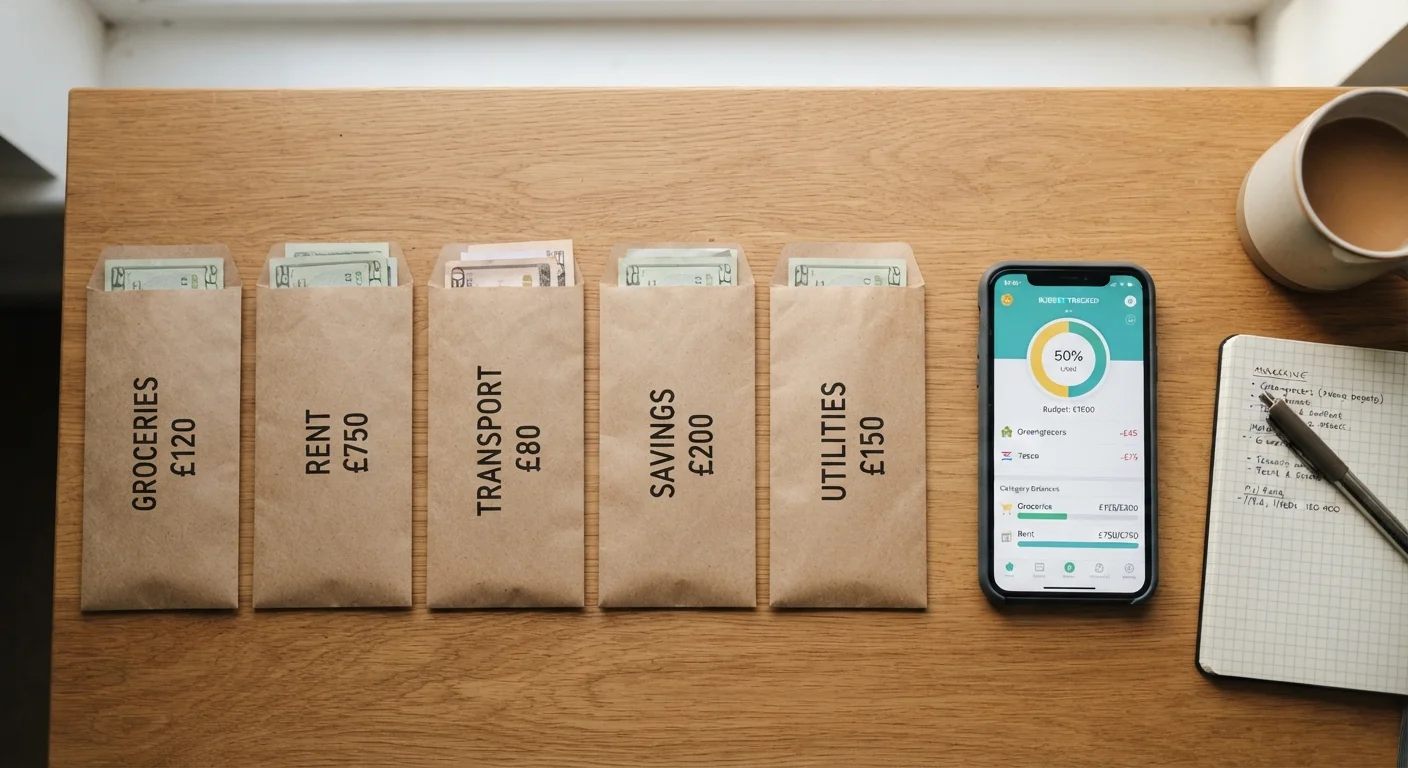
Photo credit: TheBlogZappier.com | Simple Search, Credible Results
In this article
The envelope method has been around for decades. Here's how the core idea works, why it still resonates, and how people adapt it without physical cash.
Key Takeaways
- Envelope budgeting assigns every dollar to a spending category before the month begins.
- Physical cash envelopes are optional — the same logic applies inside budgeting apps or spreadsheets.
- The system works best for variable spending categories like groceries, dining, and entertainment.
- Running out of money in one envelope prompts a conscious decision, not an automatic overdraft.
- Couples and households can use shared digital envelopes to align on spending goals together.
How the Original System Worked
The envelope method dates back to an era when paychecks were cashed in person and most purchases were made with bills and coins. The process was straightforward: on payday, you divided your cash into labeled envelopes — one for groceries, one for gas, one for utilities, and so on. Each envelope held exactly what you'd budgeted for that category. When the cash was gone, the spending was done.
That physical constraint was the system's greatest strength. You couldn't accidentally overspend on takeout and make up for it later; the empty envelope was immediate, undeniable feedback. There were no bank statements to reconcile at month's end — your wallet told the story in real time.
The method is closely associated with the broader philosophy of intentional spending: money is allocated before it's spent, not tracked after. If you're new to this mindset, our introduction to personal budgeting covers the foundational ideas that make any budgeting system work.
Why the Concept Still Holds Up
Consumer behavior research consistently shows that people spend more freely when transactions are abstract — a tap of a card feels different from handing over cash. Envelope budgeting counteracts that abstraction by making limits tangible, whether or not physical currency is involved.
The system is also forgiving to learn. Unlike more mathematical frameworks, it doesn't require spreadsheet skills or financial expertise. You decide what categories matter to your life, assign a monthly amount to each, and check the balance before spending. That simplicity is why financial educators continue to recommend it decades after its origins.
~2x
More spent when paying by card vs. cash
Behavioral economics research, including work by Drazen Prelec and Duncan Simester, has found that the abstract nature of card payments tends to increase willingness to spend compared to handing over physical cash.
74%
Americans living paycheck to paycheck at some point
Various surveys from financial wellness organizations have consistently found that a large share of U.S. adults report difficulty covering expenses between pay periods, underscoring the value of proactive allocation methods.
It's also worth addressing a common misconception: envelope budgeting isn't just for people struggling with debt. It's a planning tool, not a punishment. Our piece on common budgeting myths unpacks several assumptions that keep people from trying systems like this one.
Adapting the Method for a Digital Lifestyle
Most people today don't carry much cash, and that doesn't disqualify them from using envelope logic. The adaptation is straightforward: replace physical envelopes with digital equivalents.
- Budgeting apps: Several apps are built specifically around virtual envelopes or category buckets. You fund each category at the start of the month and the app deducts spending automatically as transactions sync.
- Spreadsheets: A simple table with category names, budgeted amounts, and running totals replicates the envelope concept entirely in software.
- Sub-accounts: Some banks allow multiple savings or checking sub-accounts. Physically moving money into labeled accounts creates near-identical behavior to cash envelopes.
Each approach has trade-offs worth understanding. For a balanced look at paper versus digital tools, see our article on the pros and cons of budgeting on paper vs. digitally.
Start With Just Three or Four Envelopes
New budgeters often try to categorize everything at once, which creates complexity and discouragement. Begin with only your top two or three variable spending categories — the places where you know money slips away. Once those feel natural to track, add more categories gradually.
One practical note: digital envelope systems work best when you check category balances before making discretionary purchases, not just after. The pre-purchase check is what preserves the discipline the original cash system enforced automatically.
Setting Up Your Own Envelope Budget
Getting started takes one focused session rather than an ongoing commitment to complex tracking. Here's a practical sequence:
- List your monthly income after taxes — this is the total you have to allocate.
- Separate fixed from variable expenses. Rent, loan payments, and insurance don't need envelopes because their amounts don't change. Focus envelope categories on variable spending where decisions happen regularly.
- Name your categories based on your actual habits: groceries, dining out, gas, personal care, entertainment, clothing, and a miscellaneous buffer are common starting points.
- Assign amounts to each category. Use recent bank statements to ground those numbers in reality rather than optimism.
- Fund the envelopes at the start of each pay period — either in cash or by updating your digital tracker.
- Check balances before spending in any variable category. When an envelope nears zero, pause and decide whether to stop or transfer from another category.
Over the first two or three months, your category amounts will naturally self-correct as you learn where your estimates were off. That calibration process is normal and valuable — it's how the system teaches you about your own spending patterns. For anyone managing these decisions alongside a partner, the framework also creates a shared language for household finances. Our article on budgeting as a couple explores how to make those conversations productive.
This article is for general informational and educational purposes only and does not constitute personalized financial advice. Consider consulting a qualified financial professional for guidance specific to your situation.
Frequently Asked Questions

Author
Money & Finance Editorial Team
Money & Finance Editorial Team is the collective byline for our editorial team and contributor network. Articles published under this byline or an editorial pen name are researched, written, and reviewed according to our editorial standards for clarity, consistency, and independence before publication.
View all articles →