
Debt Snowball vs. Debt Avalanche: Two Payoff Strategies Compared
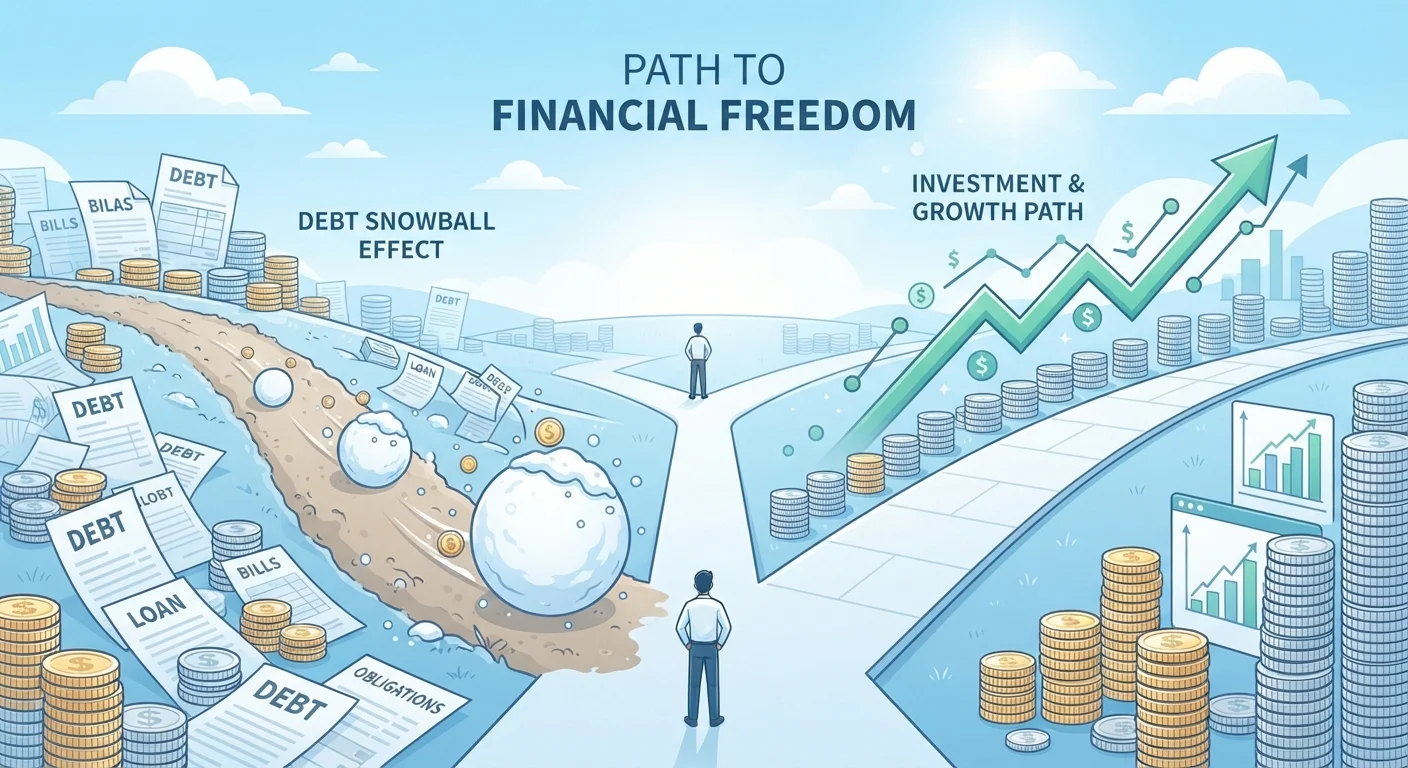
Photo credit: TheBlogZappier.com | Simple Search, Credible Results
In this article
See how the snowball and avalanche debt repayment methods differ, and which circumstances each tends to suit best.
Key Takeaways
- The debt snowball targets the smallest balance first, regardless of interest rate.
- The debt avalanche targets the highest interest rate first, minimizing total interest paid.
- The avalanche typically saves more money; the snowball tends to deliver faster early motivation.
- Both methods require consistent extra payments beyond the minimum each month.
- Choosing the strategy you'll actually stick with matters more than which is mathematically superior.
- Neither method is personalized advice — consult a financial professional for your specific situation.
How Each Method Works
Both the debt snowball and the debt avalanche share the same core mechanic: you continue making minimum payments on all your debts, then direct any extra money each month toward one targeted account. What separates them is how you choose that target.
Debt Snowball
With the snowball method, you list all your debts from smallest balance to largest, ignoring interest rates. You attack the smallest balance first. Once it's paid off, you roll that freed-up payment amount into the next smallest debt — just like a snowball picking up mass as it rolls. Each paid-off account removes a monthly obligation and grows the payment directed at the next one.
Debt Avalanche
The avalanche method lists debts from highest interest rate to lowest, regardless of balance size. You attack the highest-rate account first. Once it's eliminated, that payment redirects to the next highest-rate debt. Because interest compounds continuously, reducing high-rate balances quickly limits how much extra you owe over time.
| Criterion | Debt Snowball | Debt Avalanche |
|---|---|---|
| Payoff order | Smallest balance first | Highest interest rate first |
| Total interest paid | Typically higher | Typically lower |
| Early motivation | High — accounts close quickly | Lower — high-rate debts may be large |
| Mathematical efficiency | Less optimal | More optimal |
| Behavioral staying power | Strong for many people | Better for disciplined savers |
| Best debt type | Mixed small balances | High-rate credit card debt |
Neither approach requires a minimum income level or a specific type of debt — both can apply to credit cards, personal loans, medical bills, or other unsecured obligations. For secured debts like mortgages or auto loans, the structure is the same, but consult a licensed financial professional before altering those payment plans.
The Math: Interest Savings vs. Speed
When comparing the two strategies mathematically, the avalanche almost always wins on total interest paid. By eliminating high-rate balances first, you shrink the principal that accrues the most interest. Over time — particularly with credit card debt carrying rates above 20% — this difference can be meaningful.
20%+
Average credit card APR in recent years
The Federal Reserve tracks average credit card interest rates, which have risen significantly since 2022, underscoring why rate-targeting can matter.
~$1,000s
Potential interest savings with avalanche method
Financial educators commonly illustrate that on a $10,000 mixed-debt portfolio, avalanche ordering can save hundreds to thousands of dollars versus snowball, depending on rate spread.
40%
U.S. adults carrying credit card balances month-to-month
According to Federal Reserve consumer finance surveys, a significant share of American households carry revolving credit card balances, making repayment strategy a relevant choice for millions.
The snowball, however, can close out individual accounts faster in the early months, especially if your smallest debts are also relatively small in absolute dollar terms. That speed has a real behavioral value: research in consumer psychology has repeatedly found that small, visible wins increase persistence on long-term goals. For debt repayment, finishing an account feels different from merely reducing it.
There is no universal answer about which saves more time overall — that depends on the specific mix of balances and rates you carry. What is consistent: the avalanche saves more in interest; the snowball may keep more people engaged long enough to finish.
If you're evaluating your broader debt situation, you may also want to understand how debt consolidation fits in — our overview of debt consolidation explains what that approach does and doesn't address.
Choosing the Right Strategy for Your Situation
Personal finance research consistently points to one finding: the best debt payoff strategy is the one you follow through on. A mathematically optimal plan abandoned after three months produces worse outcomes than a less efficient plan maintained for three years.
Consider the snowball if:
- You have several small accounts cluttering your financial picture
- You've struggled to stay motivated on debt plans previously
- The emotional relief of eliminating a bill matters to your sense of progress
Consider the avalanche if:
- You carry high-interest-rate balances — particularly credit cards above 18–20% APR
- You have a steady income and strong financial discipline
- Your primary goal is minimizing the total amount you pay back
Some people use a hybrid: they knock out one or two very small accounts for the motivational boost, then switch to targeting by interest rate. That flexibility is fine — consistency of extra payments matters far more than methodological purity.
Whichever approach you choose, it's worth pairing it with a solid budgeting framework. The Budgeting Basics hub covers core strategies for tracking spending and freeing up the extra funds that power either method. And for those rebuilding financial health alongside paying off debt, responsible credit-building habits can run in parallel with a payoff plan.
This article is for general informational and educational purposes only, and does not constitute personalized financial, tax, or legal advice. Consult a qualified, licensed financial professional before making decisions about your specific debt situation.

Author
Money & Finance Editorial Team
Money & Finance Editorial Team is the collective byline for our editorial team and contributor network. Articles published under this byline or an editorial pen name are researched, written, and reviewed according to our editorial standards for clarity, consistency, and independence before publication.
View all articles →