
Why Your Car's Braking System Is More Complex Than a Single Pedal
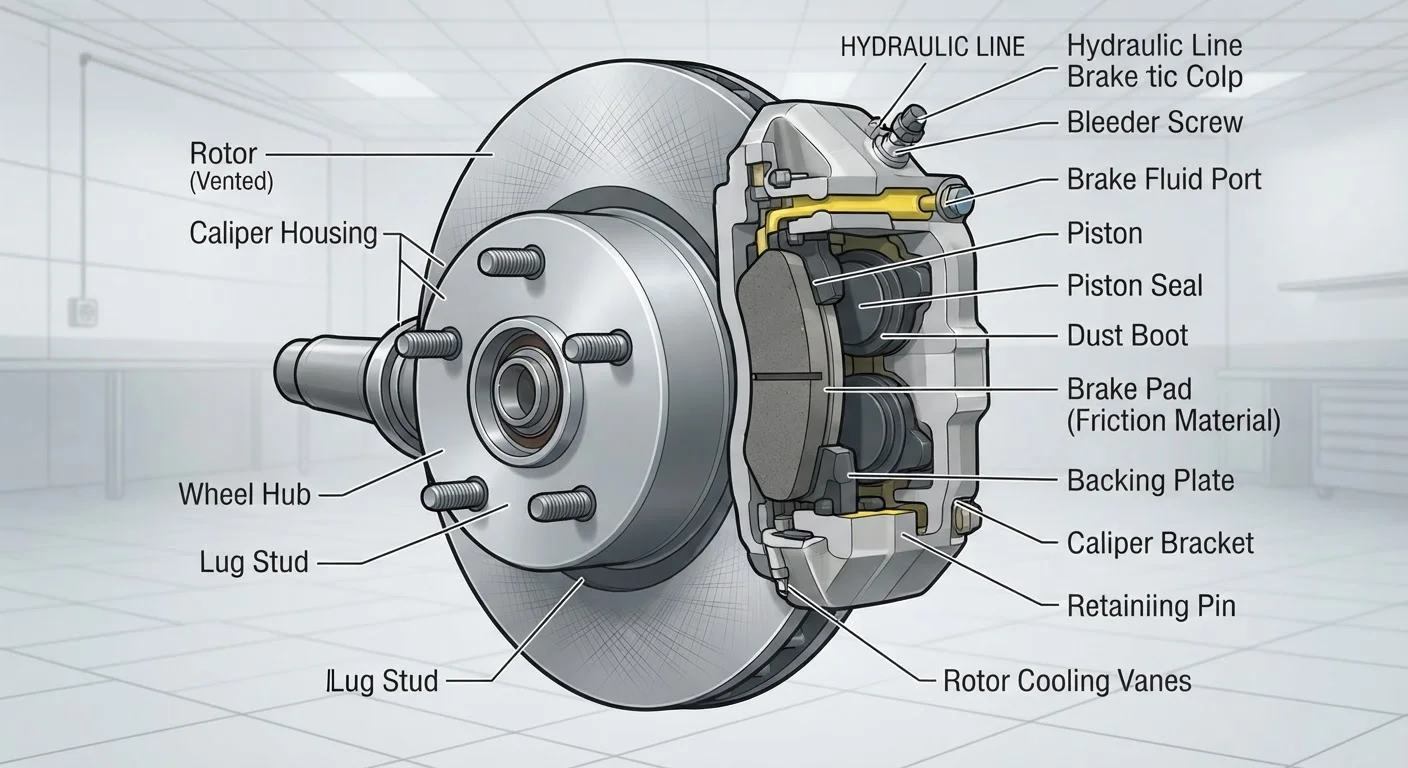
Photo credit: TheBlogZappier.com | Simple Search, Credible Results
In this article
From disc brakes to ABS to brake fade — a clear explanation of how modern vehicle braking systems actually work.
Key Takeaways
- Pressing the brake pedal triggers a hydraulic chain reaction, not a direct mechanical pull.
- Disc brakes and drum brakes use different friction mechanisms and are often used together on the same vehicle.
- Anti-lock Braking System (ABS) prevents wheel lockup to maintain steering control during hard stops.
- Brake fade - reduced braking power from heat buildup - is a real risk during prolonged or aggressive braking.
- Regular inspection of brake pads, rotors, and fluid is essential for safe braking performance.
From Pedal to Pavement: The Hydraulic Chain
Most drivers know that pressing the brake pedal slows the car. Far fewer understand what physically happens between foot and wheel. The short answer: hydraulics. When you press the pedal, it actuates a master cylinder - a pump filled with brake fluid. That fluid is pushed under pressure through steel and rubber lines to a caliper (on disc brake systems) or a wheel cylinder (on drum systems) at each wheel. The resulting pressure forces friction material against a spinning surface, converting the vehicle's kinetic energy into heat.
This hydraulic design gives braking systems a significant advantage over purely mechanical linkages: pressure transmits evenly and instantly to all four corners of the vehicle regardless of the pedal's physical distance from the wheels. The master cylinder typically uses two separate circuits - front and rear - so a leak in one circuit doesn't eliminate braking entirely.
Why Brake Fluid Is Safety-Critical
Unlike engine oil or coolant, brake fluid transmits the physical force that stops your vehicle. Even a small amount of air or moisture contamination in the hydraulic lines can significantly reduce braking effectiveness. Never open the brake fluid reservoir unnecessarily, and always use the fluid specification listed in your owner's manual.
Disc Brakes vs. Drum Brakes: Two Different Approaches to Friction
Disc brakes are the more familiar design on modern vehicles. A flat metal rotor spins with the wheel, and a caliper mounted beside it squeezes brake pads against both rotor faces when pressure is applied. The exposed rotor design dissipates heat efficiently, making disc brakes well-suited to the front axle, where most braking load falls.
Drum brakes work differently: curved brake shoes press outward against the inner surface of a rotating drum. The enclosed design retains more heat but is simpler, lighter, and cheaper to produce - which is why drum brakes remain common on the rear axle of many economy vehicles. Understanding both types matters when you review service records or discuss repairs; see the brake system basics guide for a closer look at wear patterns and inspection criteria.
Use Engine Braking on Long Descents
On steep or extended downhill grades, shift to a lower gear (or use the engine brake mode on automatics) to help manage speed. This reduces how hard the friction brakes must work and lowers the risk of heat-induced brake fade. Reserve firm pedal braking for speed corrections rather than continuous application.
ABS, Brake Assist, and the Electronics Layer
Modern braking systems are as much electronic as mechanical. The Anti-lock Braking System (ABS) monitors each wheel's rotational speed via sensors. If one wheel decelerates significantly faster than the others during braking - signaling an impending lockup - the ABS control unit pulses brake pressure on that wheel up to 15 times per second. This keeps the tire rotating and the driver in steering control, which is critical for avoiding obstacles during emergency stops.
Closely related systems include Electronic Brakeforce Distribution (EBD), which adjusts how much braking force reaches each axle based on load, and Brake Assist, which detects a rapid, panic-style pedal input and automatically applies maximum hydraulic pressure even if the driver's foot pressure is insufficient. These systems work silently in the background on most late-model vehicles - they're part of why what happens under your hood is far more sophisticated than it appears.
15×/sec
ABS brake pressure pulses during lockup prevention
Modern ABS units can modulate hydraulic pressure up to 15 times per second per wheel to maintain tire rotation during hard stops.
25,000-65,000 mi
Typical brake pad service life range
Pad longevity varies significantly based on driving style, vehicle weight, and pad compound - making regular inspection more reliable than mileage alone.
2-3 years
Recommended brake fluid replacement interval
Most vehicle manufacturers recommend flushing brake fluid every two to three years due to its moisture-absorbing properties; check your owner's manual for model-specific guidance.
Brake Fade, Fluid Health, and What to Watch For
Brake fade is a reduction in stopping power caused by heat saturation. Two types exist: pad fade, where friction material loses grip at extreme temperatures, and fluid fade (also called vapor lock), where heat boils brake fluid, creating compressible gas bubbles in the lines. A pedal that feels spongy or sinks toward the floor under sustained braking is a warning sign worth taking seriously - a qualified mechanic should inspect the system before further driving.
Brake fluid is hygroscopic, meaning it absorbs moisture from the air over time. Moisture lowers the fluid's boiling point and promotes corrosion inside the hydraulic system. Most manufacturers recommend flushing and replacing brake fluid every two to three years, though your owner's manual is the authoritative source. Staying on top of this - along with pad and rotor condition - is part of the broader maintenance schedule every driver should follow. Driving habits also play a role: late braking and riding the brakes accelerate wear faster than most drivers realize.
This article provides general educational information about vehicle braking systems and is not a substitute for professional mechanical inspection or advice. Always consult a qualified mechanic regarding the condition and maintenance of your vehicle's brakes.
Frequently Asked Questions

Author
Autos & Driving Editorial Team
Autos & Driving Editorial Team is the collective byline for our editorial team and contributor network. Articles published under this byline or an editorial pen name are researched, written, and reviewed according to our editorial standards for clarity, consistency, and independence before publication.
View all articles →