
Understanding Your Car's Electrical System Without an Engineering Degree
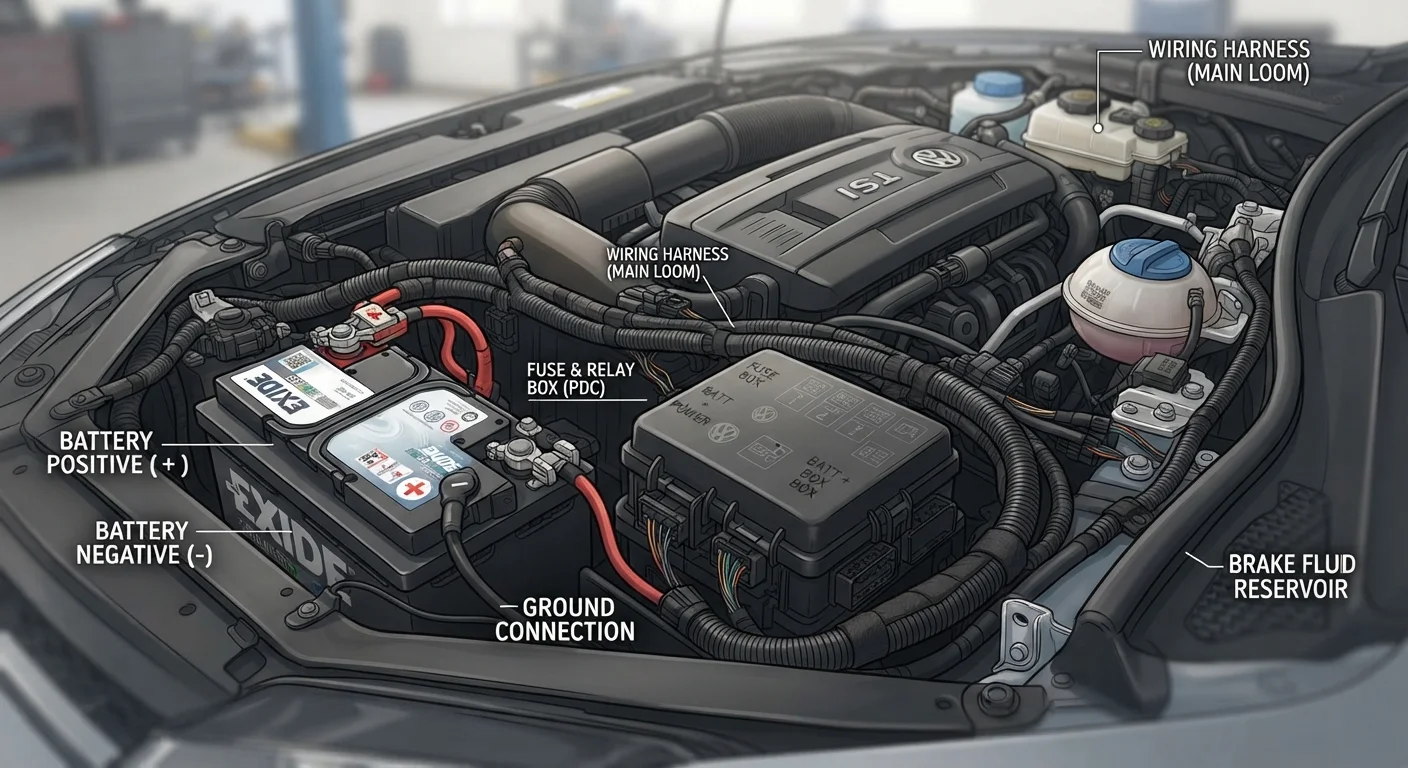
Photo credit: TheBlogZappier.com | Simple Search, Credible Results
In this article
Battery, alternator, fuses, and sensors — how the electrical architecture of a modern car fits together, explained simply.
Key Takeaways
- The battery, alternator, and starter motor form the foundation of your car's electrical system.
- Fuses protect circuits from overloads and are one of the simplest electrical components a driver can inspect.
- Modern vehicles use sensors and an onboard computer to continuously monitor engine and system health.
- A warning light on your dashboard is a signal from the car's computer that something needs attention.
- Many electrical issues are best diagnosed by a qualified mechanic using specialized scan tools.
Why Your Car's Electrical System Matters
A generation ago, a car's electrical system handled a handful of tasks: start the engine, power the lights, run the radio. Today's vehicles are rolling networks of computers, sensors, and circuits managing everything from fuel injection timing to collision avoidance. Understanding the fundamentals won't make you an electrician, but it will help you interpret warning lights, hold an informed conversation with a mechanic, and recognize when something genuinely needs attention.
If you're newer to automotive concepts generally, our guide to automotive jargon is a useful companion reference as you work through this material.
Battery
A rechargeable device that stores electrical energy and delivers the initial power surge needed to start the engine.
Alternator
A generator driven by the running engine that produces electricity to power vehicle systems and recharge the battery.
Fuse
A protective device in an electrical circuit that melts and breaks the circuit if current exceeds a safe level, preventing damage.
ECU (Engine Control Unit)
The car's primary onboard computer that processes sensor data and manages engine operation, fuel delivery, and emissions.
Diagnostic Trouble Code (DTC)
A standardized fault code stored by the ECU when a sensor or system operates outside normal parameters; readable with a scan tool.
Wiring Harness
A bundled assembly of insulated wires that routes electrical power and data signals throughout the vehicle.
The Core Components and What They Do
Three components sit at the heart of every conventional vehicle's electrical architecture:
- Battery: Stores electrical energy in chemical form and delivers the large burst of current needed to start the engine. It also stabilizes voltage across the system when demand spikes.
- Alternator: Once the engine is running, the alternator takes over as the primary power source. Belt-driven by the engine, it generates alternating current (AC), which an internal rectifier converts to the direct current (DC) your car's systems use. It simultaneously recharges the battery.
- Starter motor: A high-torque electric motor that cranks the engine on ignition. It draws its power directly from the battery - which is why a dead battery means a car that won't start.
These three work as a cycle: the battery starts the engine, the running engine drives the alternator, and the alternator replenishes the battery. A failure anywhere in that loop affects the others. For a broader look at how engine systems interconnect, see what's actually happening under your hood.
Check Battery Terminals First
Before assuming the worst about an electrical issue, inspect the battery terminals for corrosion - the white or blue-green buildup that can disrupt the connection. Cleaning corroded terminals with a wire brush and baking soda solution is a simple task that sometimes resolves starting problems entirely. If you're uncertain, have a mechanic inspect it.
Fuses, Relays, and the Wiring Harness
Electrical circuits need protection from overloads. That's the fuse's job. A fuse is a small, intentionally weak link in a circuit; if current exceeds a safe level, the fuse element melts and breaks the circuit, preventing damage to wiring or components. Your vehicle has a fuse box (sometimes two - one under the hood, one inside the cabin) that groups fuses by circuit. Your owner's manual maps which fuse protects which system.
A relay is an electrically operated switch. It allows a low-current signal - say, from a dashboard button - to control a high-current circuit like headlights or a fuel pump, protecting the switch from heavy loads.
All of this runs through the wiring harness, a bundled network of insulated wires that routes power and signals throughout the vehicle. Harness damage from rodents, heat, or moisture is a surprisingly common source of electrical gremlins. See our DIY vs. mechanic guide for guidance on which electrical tasks are appropriate to tackle yourself.
Never Substitute a Higher-Amperage Fuse
It might seem like a quick fix to replace a blown fuse with whatever's on hand, but installing a fuse rated for more current than the circuit requires defeats its protective purpose. Excess current can overheat wiring insulation and create a fire hazard. Always use the exact amperage rating shown in your owner's manual or printed on the fuse box cover.
Sensors and the Car's Computer
Modern vehicles contain dozens of sensors feeding data to one or more onboard computers. The central one is commonly called the ECU (Engine Control Unit), though many vehicles have separate modules for transmission, braking, airbags, and body systems as well.
Key sensors include:
- Oxygen (O2) sensors: Monitor exhaust gases to help the ECU fine-tune the air-fuel mixture for efficiency and emissions compliance.
- Mass airflow (MAF) sensor: Measures air entering the engine so the computer can calculate correct fuel delivery.
- Crankshaft position sensor: Tells the ECU the engine's rotational position, which is critical for ignition timing.
- Wheel speed sensors: Feed data to antilock braking (ABS) and stability control systems.
When a sensor reading falls outside expected parameters, the ECU stores a diagnostic trouble code (DTC) and illuminates a warning light. This system is why a mechanic can plug in a scan tool and quickly identify where a fault originated. For context on how electrical health fits into routine upkeep, our maintenance schedule explainer outlines what gets checked at service intervals.
Warning Signs Every Driver Should Recognize
Electrical problems can manifest subtly before they become serious. Watch for:
- Battery or charging warning light: May indicate alternator failure, a loose serpentine belt, or a battery nearing end of life.
- Dim or flickering lights: Often a sign of inadequate charging or a failing battery.
- Slow engine cranking: The starter is struggling to draw enough current - battery or starter motor issues are likely culprits.
- Frequent blown fuses: A fuse that blows repeatedly suggests an underlying short circuit, not just a weak fuse.
- Unexplained accessory failures: A single dead power window or non-functioning circuit often points to a blown fuse; multiple systems failing together can indicate a larger wiring or ground fault.
Electrical diagnosis often requires professional scan tools and wiring diagrams. If you're unsure, a qualified mechanic is the right call. For a broader understanding of how a vehicle ages and what systems tend to develop wear over time, the lifecycle of a car offers useful context.
Electric and Hybrid Vehicles Differ Significantly
This article focuses on conventional 12-volt electrical systems found in most internal-combustion-engine vehicles. Battery-electric and hybrid vehicles operate high-voltage systems (often 300-800 volts) that require specially trained technicians. Never attempt to service high-voltage components in an EV or hybrid without proper training and equipment.
Frequently Asked Questions

Author
Autos & Driving Editorial Team
Autos & Driving Editorial Team is the collective byline for our editorial team and contributor network. Articles published under this byline or an editorial pen name are researched, written, and reviewed according to our editorial standards for clarity, consistency, and independence before publication.
View all articles →