
The Lifecycle of a Car: From Factory to End of Road
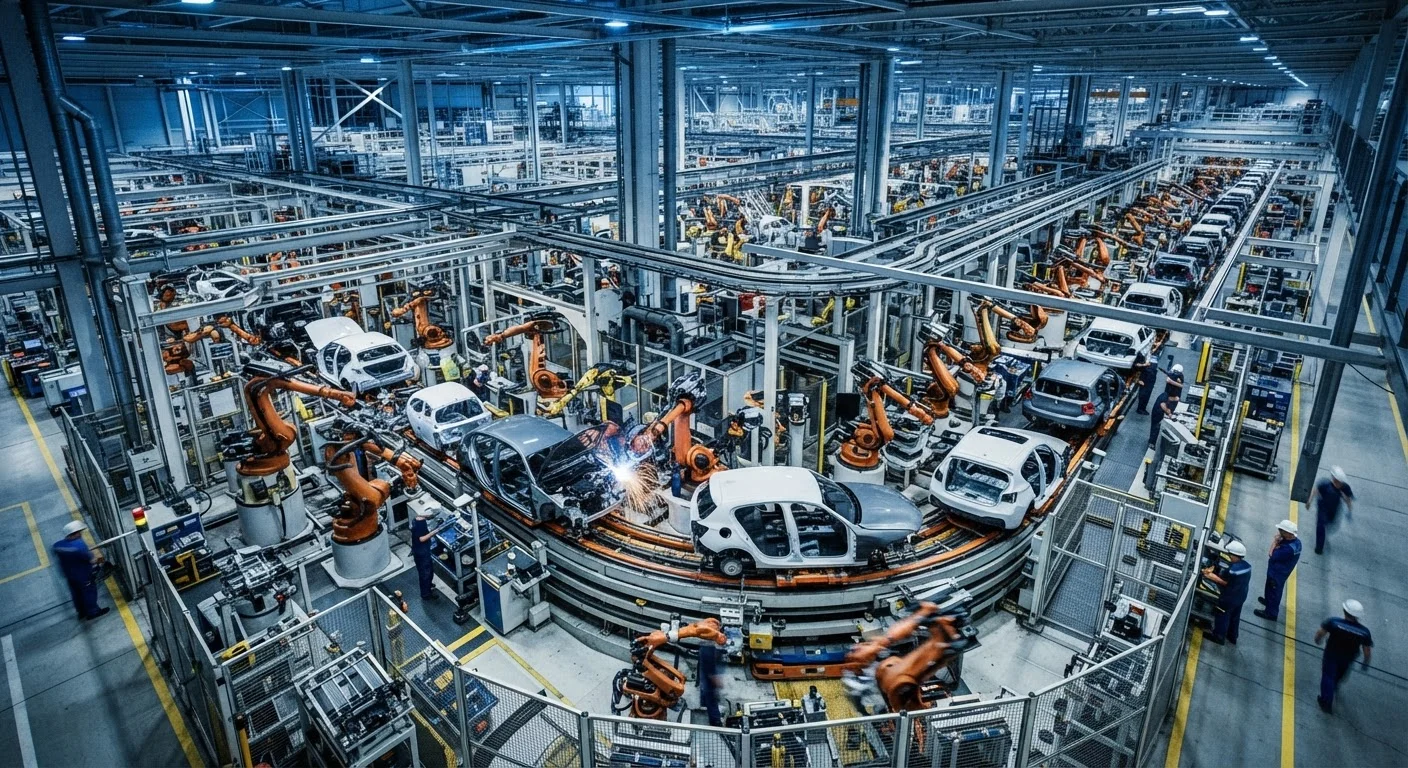
Photo credit: TheBlogZappier.com | Simple Search, Credible Results
In this article
Trace how a modern vehicle is designed, assembled, sold, maintained, and eventually retired or recycled.
Key Takeaways
- A modern vehicle typically takes three to five years to move from initial concept to dealership lot.
- Depreciation begins the moment a new car leaves the dealership, often losing significant value in the first year.
- Routine maintenance directly extends usable vehicle life and delays costly major repairs.
- Most materials in a scrapped vehicle - roughly 80% by weight - are recyclable, including steel and aluminum.
- Understanding each lifecycle stage helps drivers make smarter decisions about buying, maintaining, and selling.
Design and Engineering
A new vehicle rarely emerges in less than three to five years from first sketch to showroom floor. The process begins with market research - automakers study driver behavior, safety data, regulatory requirements, and emerging technology trends to define what a future model needs to achieve.
From those findings, designers produce early sketches and clay models before handing concepts to engineers, who translate them into computer-aided design (CAD) files. These digital blueprints govern everything from body panel geometry to how internal components fit together. Virtual crash simulations and aerodynamic tests run long before any physical prototype exists, reducing costly rework later in the process.
Regulatory compliance is baked in from the start. In the U.S., vehicles must meet standards set by bodies such as the National Highway Traffic Safety Administration (NHTSA) for crash safety and the Environmental Protection Agency (EPA) for emissions. Meeting these thresholds shapes core engineering decisions - not an afterthought.
Request the vehicle's build sheet or option code printout when shopping for a used car - it lists every factory-installed feature and is more reliable than a verbal description from a seller.
Build sheets are generated during manufacturing and provide an accurate, original record of what was included, helping buyers verify claims and identify missing equipment.
Keep every service record from first ownership, even for minor items like wiper blade replacements - a documented maintenance history meaningfully supports resale value.
Buyers and dealers use service records to assess how well a vehicle was maintained; gaps in documentation often lead to lower offers or increased buyer skepticism.
Manufacturing and Assembly
Once a design is finalized and tooling is prepared, mass production begins. A modern assembly plant operates as a tightly choreographed system: stamping facilities press raw steel into body panels, robotic welding cells join the body-in-white (the unpainted structural shell), and paint booths apply primer and finish coats in a controlled environment to prevent corrosion from the outset.
Final assembly brings together the powertrain (engine, transmission, and drivetrain), suspension components, electrical systems, and interior trim. Workers and robots collaborate at each station; even highly automated plants rely on skilled technicians for quality checks, fluid fills, and calibration of advanced driver-assistance systems (ADAS).
~30,000
Individual parts in a typical passenger vehicle
Industry estimates place the average parts count in a modern passenger car at roughly 30,000 components, spanning mechanical, electrical, and trim systems.
~80%
Share of vehicle materials that are recyclable by weight
The Automotive Recyclers Association and related industry sources estimate approximately 80% of a scrapped vehicle's weight - primarily steel and aluminum - is recovered and recycled.
Before any vehicle ships, it undergoes end-of-line testing - a final audit covering electrical function, alignment, fluid integrity, and sometimes a brief road test. Vehicles that pass move to a holding lot before being loaded onto car-carrying transport for distribution to regional dealers.
Sale and First Ownership
When a vehicle reaches a dealership, its clock starts ticking in a financial sense. The Monroney label - the window sticker required by federal law - displays the manufacturer's suggested retail price (MSRP), fuel economy ratings, standard features, and any installed options. Understanding this document helps buyers separate what a vehicle is worth from what a dealer may ask.
First ownership is the period of steepest depreciation. Industry data consistently shows that new vehicles can lose a meaningful share of their value within the first twelve months. That depreciation curve flattens over time but never fully stops - a reality that shapes both personal finance decisions and insurance valuations.
For a detailed look at how purchase price compares to the full financial picture of ownership, see the true cost of owning a car beyond the sticker price.
Depreciation Begins Immediately
A new vehicle typically loses a notable portion of its value in the first year of ownership, regardless of how carefully it is driven or maintained. This is a normal and expected feature of new-car purchasing, not a sign of a defective vehicle. Buyers should factor this into financing decisions and avoid over-extending on a loan relative to how quickly the asset loses value.
Active Ownership: Maintenance and Depreciation
The active ownership phase - spanning anywhere from a few years to well over a decade - is where drivers have the most direct influence over a vehicle's lifespan and retained value. Adhering to a manufacturer's recommended service schedule (oil changes, tire rotations, brake inspections, coolant flushes) is the single most effective way to prevent premature mechanical failure.
Neglect compounds quickly. A skipped oil change leads to accelerated engine wear; worn brake pads damage rotors; low tire pressure degrades fuel economy and handling. None of these failures announce themselves loudly until the damage is already done. Our complete guide to car maintenance covers every major service interval in practical detail.
Ownership strategy also matters financially. Drivers who keep vehicles long-term typically pay less per year in depreciation costs, while those who trade in frequently may enjoy newer technology but absorb repeated early-depreciation losses. Keeping a car long-term vs. trading in every few years walks through the real trade-offs of each approach.
End of Life: Retirement and Recycling
Every vehicle eventually reaches a point where repair costs exceed its remaining value - a threshold mechanics sometimes call being "totaled by attrition." At that stage, owners typically sell to a salvage yard or an auto recycler. This is not simply disposal; vehicle recycling is a large, structured industry.
Auto recyclers first drain all fluids (oil, coolant, brake fluid, refrigerants) for proper hazardous-waste handling. Usable components - engines, transmissions, body panels, electronics - are catalogued and resold as used parts, extending the life of other vehicles. What remains, primarily the steel body structure, is shredded and sent to steel mills for remelting. The U.S. automotive industry recycles millions of vehicles each year, and steel from scrapped cars regularly re-enters the supply chain as new sheet metal.
Catalytic converters, tires, batteries (including high-voltage packs from electric vehicles), and airbag inflators each require specialized end-of-life handling due to their chemical or physical hazards. As electric vehicles make up a growing share of the fleet, battery recycling and second-life repurposing (such as stationary energy storage) are becoming increasingly important segments of the recycling ecosystem.
Understanding the full arc - from design studio to shredder - gives drivers a richer picture of what car ownership actually entails. For a comprehensive look at managing every phase, visit our guide on comprehensive auto ownership.
Electric Vehicle End-of-Life Considerations
High-voltage battery packs in electric and plug-in hybrid vehicles require handling by certified technicians at end of life - they cannot simply be discarded with standard automotive waste. Recycling programs and second-life applications for these packs are evolving rapidly, and regulations vary by state. Check with your local recycler or the vehicle manufacturer for current guidance.

Author
Autos & Driving Editorial Team
Autos & Driving Editorial Team is the collective byline for our editorial team and contributor network. Articles published under this byline or an editorial pen name are researched, written, and reviewed according to our editorial standards for clarity, consistency, and independence before publication.
View all articles →