
Financing vs. Leasing a Car: What the Numbers Actually Mean
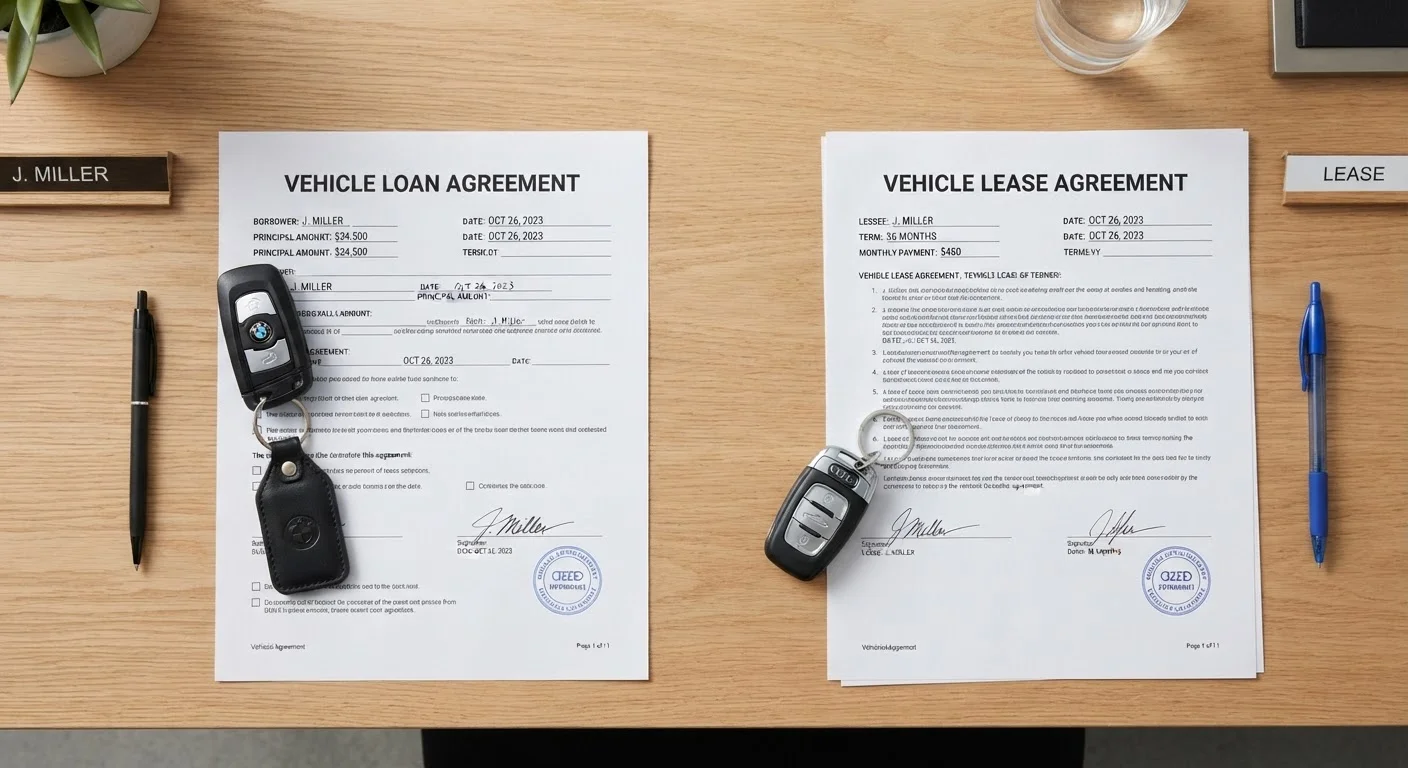
Photo credit: TheBlogZappier.com | Simple Search, Credible Results
In this article
Loans and leases look similar on paper but work very differently. Understand the financial mechanics before you sign anything.
Key Takeaways
- Financing builds equity; leasing means you return the vehicle when the term ends.
- Leases typically carry lower monthly payments but include mileage limits and wear penalties.
- Auto loans are a form of secured debt - the vehicle serves as collateral until paid off.
- Your credit score significantly affects the interest rate on a loan and the money factor on a lease.
- Total cost of financing often exceeds total lease cost in the short term but yields an owned asset.
- Early exit from a lease can be costly - always read the termination clause before signing.
How Each Structure Actually Works
An auto loan is a form of secured debt - the lender holds a lien on the title until you've made every payment. Each monthly installment pays down both principal (the amount borrowed) and interest. When the loan term ends, the lien is released and you hold clear title to the vehicle.
A vehicle lease works differently. The leasing company (usually the manufacturer's financial arm or a bank) buys the vehicle and then charges you for the portion you use during the lease term. Your monthly payment is calculated from three figures: the capitalized cost (negotiated vehicle price), the residual value (projected worth at lease end), and the money factor (the lease's version of an interest rate). You pay the depreciation gap plus finance charges - not the full vehicle price.
Understanding these mechanics matters before you focus on the monthly figure. See common terms in car ownership documents for definitions of capitalized cost, residual value, and other paperwork language you'll encounter.
| Criterion | Auto Loan | Vehicle Lease |
|---|---|---|
| Ownership at term end | You own the vehicle outright | Vehicle returned (or purchased at residual) |
| Monthly payment level | Higher (paying full price + interest) | Lower (paying depreciation + fees) |
| Mileage limits | None | Typically 10,000-15,000 miles/year |
| Vehicle modifications | Permitted (you own it) | Generally prohibited |
| Early exit cost | Loan payoff (may involve gap) | Can be very expensive |
| Equity building | Yes - each payment adds equity | No equity accumulated |
| Credit impact | APR tied to credit score | Money factor tied to credit tier |
| Typical term length | 48-72 months | 24-36 months |
The True Cost Comparison
Monthly payment comparisons can be misleading. A lease payment is nearly always lower than a loan payment on the same vehicle - but that doesn't mean leasing is less expensive overall. Consider what each arrangement leaves you with at the end of the term.
With financing, your payments accumulate into ownership of an asset. That asset depreciates, but it retains some resale or trade-in value. With a lease, your payments cover consumption of the vehicle's value during the term. At the end, you hand back the keys with nothing to show in equity - unless you exercise a purchase option, which comes at the residual value price.
~$150-$200
Typical monthly payment difference (lease vs. loan)
Industry observers commonly note lease payments run $150-$200 lower per month than loan payments on equivalent vehicles, though this varies by model and market conditions.
70%+
New vehicles financed or leased at dealership
According to Experian's State of the Automotive Finance Market reports, the majority of new vehicle transactions involve some form of financing or leasing rather than outright cash purchase.
15-25 cents
Per-mile overage fee in typical lease contracts
Most US lease agreements charge between $0.15 and $0.25 per mile over the contracted annual limit, which can add up significantly for higher-mileage drivers.
Your credit score affects both products meaningfully. For loans, it determines your APR. For leases, it influences the money factor - a higher credit tier generally yields a lower money factor and cheaper monthly payments. Borrowers with weaker credit profiles may find loan terms more flexible to negotiate than lease terms, which are often set by the manufacturer's captive finance arm.
Restrictions, Risks, and Exit Costs
Leases carry contractual restrictions that loans do not. Most leases include:
- Annual mileage limits - commonly 10,000 to 15,000 miles, with per-mile fees (often $0.15-$0.25) for every mile over.
- Wear and use standards - the vehicle must be returned in acceptable condition; excessive wear is charged to the lessee.
- Early termination penalties - breaking a lease mid-term can be expensive, sometimes approaching the total remaining payments.
Financing carries different risks. Because the loan is secured by the vehicle, missing payments can result in repossession. If you owe more than the car is worth - known as being underwater or having negative equity - selling or trading in the vehicle before payoff means covering the gap out of pocket. This is a common scenario explored in private sale vs. dealership trade-in comparisons.
Gap Coverage: A Detail Worth Knowing
If a financed or leased vehicle is totaled or stolen, standard auto insurance typically pays only the vehicle's current market value - which may be less than what you owe. Gap coverage (Guaranteed Asset Protection) bridges that difference. Many leases include gap coverage automatically; loan borrowers usually need to add it separately. Always confirm what your policy and contract include before assuming you're covered.
Both options intersect with the broader picture of auto ownership costs. The full vehicle lifecycle guide covers how financing or leasing decisions ripple into insurance, maintenance, and eventual disposal planning.
This article provides general financial information for educational purposes only and does not constitute personalised financial or legal advice. Consult a licensed financial adviser or attorney for guidance specific to your situation.

Author
Autos & Driving Editorial Team
Autos & Driving Editorial Team is the collective byline for our editorial team and contributor network. Articles published under this byline or an editorial pen name are researched, written, and reviewed according to our editorial standards for clarity, consistency, and independence before publication.
View all articles →