
Private Sale vs. Dealership Trade-In: What to Expect from Each
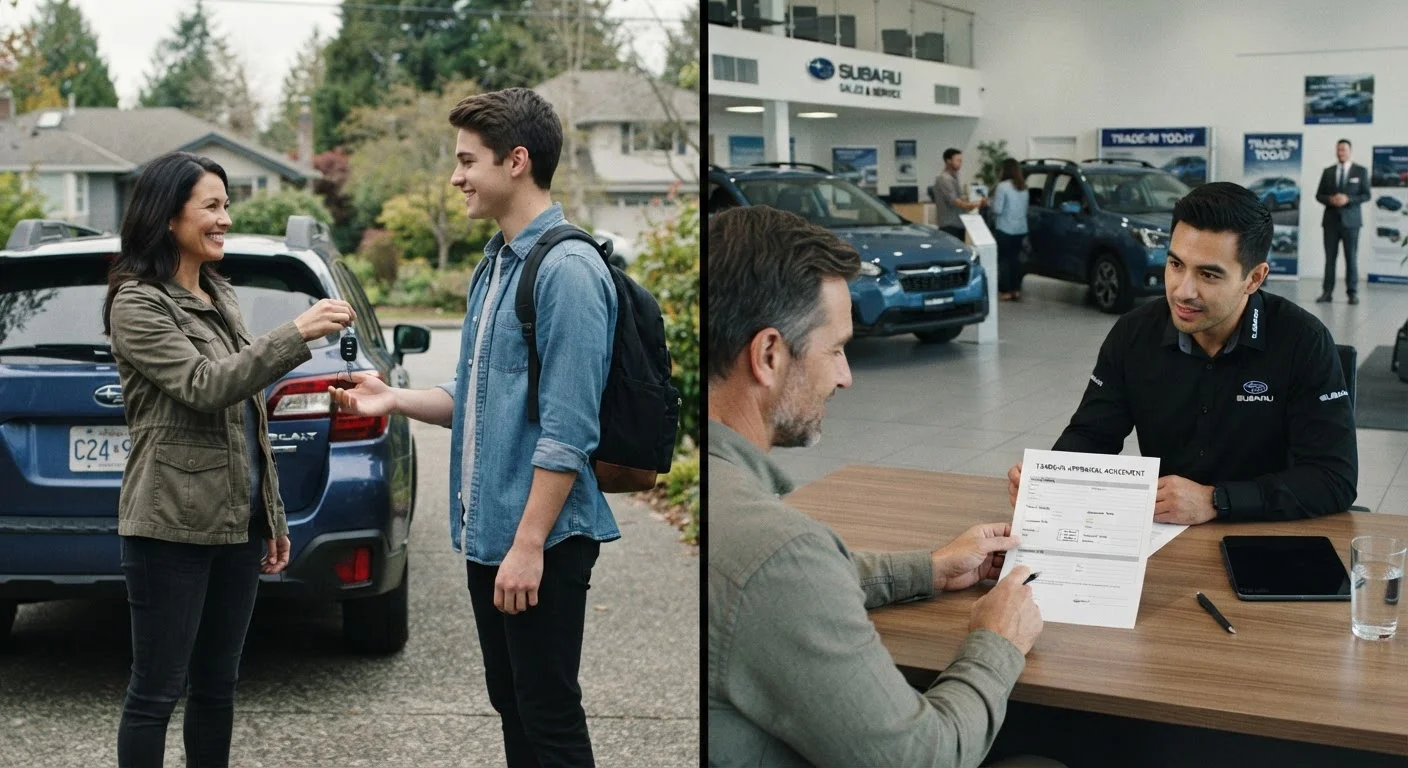
Photo credit: TheBlogZappier.com | Simple Search, Credible Results
In this article
Selling privately and trading in at a dealership involve very different processes, timelines, and outcomes. Here's what to weigh up.
Key Takeaways
- Private sales typically yield a higher sale price but require more time and effort from the seller.
- Dealership trade-ins offer convenience and speed, often completing in a single visit.
- Trade-in value can reduce taxable purchase price in many US states, a financial benefit worth calculating.
- Private sales carry more legal and logistical responsibilities, including title transfer and payment verification.
- Neither route suits every seller - the right choice depends on your timeline, vehicle condition, and financial priorities.
The Core Difference: What You're Actually Trading Off
When you're ready to move on from a vehicle, two primary routes exist: selling it privately to another individual, or trading it in at a dealership - often as part of purchasing your next car. On the surface, both accomplish the same goal. In practice, they involve different levels of effort, different financial outcomes, and different risks.
Understanding those differences upfront helps you choose the path that aligns with your priorities rather than defaulting to whichever feels most familiar. For a broader view of how vehicle ownership evolves over time, see our full guide to managing every stage of car ownership.
| Private Sale | Dealership Trade-In | |
|---|---|---|
| Typical sale price | Closer to retail market value | Wholesale or near-wholesale value |
| Time to complete | Days to several weeks | Same day, usually |
| Paperwork responsibility | Seller handles title, DMV filing | Dealer manages title and payoff |
| Loan payoff complexity | Requires lender coordination | Dealer typically handles directly |
| Sales tax benefit | None | Offsets taxable purchase price in most states |
| Effort required | High - listing, vetting, negotiating | Low - single appraisal visit |
| Payment risk | Moderate - fraud and check risk exists | None - dealer pays directly |
Private Sale: Higher Returns, Higher Effort
Selling your vehicle privately - through online listings, classified ads, or word of mouth - typically produces a higher sale price than a trade-in. Dealers need margin to resell your car at a profit, so their offers reflect wholesale or near-wholesale values. A private buyer, by contrast, is paying closer to retail market value.
The gap can be meaningful. Depending on the vehicle's age, condition, and local demand, private sale prices can exceed trade-in offers by several hundred to a few thousand dollars. However, that difference comes with real costs attached.
- Time investment: Creating listings, fielding inquiries, scheduling test drives, and negotiating takes hours - sometimes weeks.
- Safety and vetting: Meeting strangers for test drives requires care. Always meet in public, bring a companion if possible, and verify identity before handing over keys.
- Payment risk: Accepting payment safely matters. Cashier's checks can be fraudulent; bank wire transfers or in-person cash exchanges at a bank branch are more secure.
- Title and legal paperwork: You're responsible for completing the title transfer correctly, filing a release of liability with your state DMV, and ensuring the buyer handles registration. Requirements vary by state - check your local DMV's process before listing.
Get Multiple Valuations Before Listing
Before setting your private sale asking price, check several independent valuation sources to understand what comparable vehicles are actually selling for in your market - not just listed at. Pricing too high delays your sale; pricing too low leaves money on the table. Factor in your vehicle's mileage, condition, service history, and any known issues when anchoring your price.
Private sales also require that your vehicle is in a condition buyers will accept. Mechanical issues, cosmetic damage, or a salvage title can significantly limit your buyer pool and price ceiling.
Dealership Trade-In: Convenience With a Cost
A trade-in allows you to hand your vehicle directly to a dealership - typically when buying another car from them - and have its value applied toward your new purchase. The process can be completed in a single visit, and the dealer handles title work, payoff of any existing loan balance, and registration logistics.
The convenience is real, but it's not free. Dealers must account for reconditioning costs, auction fees, and resale margin, so their offers typically sit below private-market value. Still, trade-ins carry a financial advantage that many sellers overlook: in most US states, trade-in value is deducted from the taxable purchase price of the vehicle you're buying. On a significant trade-in, that sales tax offset can narrow the gap between trade-in and private sale returns considerably.
45 states
States offering trade-in sales tax credit
The majority of US states reduce the taxable purchase price of a new vehicle by the trade-in value, according to general state tax policy tracking. Confirm your state's rules with your DMV or a tax professional.
~10-15%
Typical gap between trade-in and private sale value
Industry appraisal data generally suggests private sale prices can exceed dealer trade-in offers by roughly 10-15%, though the actual difference varies widely by vehicle, condition, and local market.
If you're financing your next vehicle, understanding how trade-in equity interacts with your loan is important. Our article on financing vs. leasing a car walks through the mechanics in detail.
One practical note: dealers may adjust their trade-in offer based on what you're buying and how the overall deal is structured. It's reasonable to get an independent appraisal - from an online valuation tool or a competing dealer - before accepting any offer, so you have a benchmark to negotiate from.
Don't Negotiate Trade-In and Purchase Price Together
Dealers may bundle trade-in value and new vehicle price into a single monthly payment discussion, which can obscure whether you're getting fair value on either transaction. Negotiate the purchase price of your new vehicle first, then address the trade-in as a separate line item. This makes it easier to evaluate each component of the deal independently.
Which Route Fits Your Situation?
There's no universally correct answer - both routes serve different seller profiles. Consider these factors when deciding:
- Timeline: If you need to sell quickly - relocating, covering an expense, or overlapping with a new vehicle delivery - a trade-in delivers certainty and speed. Private sales can stall for weeks in a slow market.
- Vehicle condition: Newer, lower-mileage vehicles in strong condition attract private buyers readily. High-mileage, older, or mechanically compromised vehicles may see little private-sale interest, making a trade-in more practical even if the offer is lower.
- Outstanding loan balance: If you still owe money on the vehicle, a dealership can often handle the payoff directly as part of the transaction, simplifying the process. Private sales with loan payoffs require coordination with your lender and can complicate title transfer.
- Your financial picture: If maximizing your proceeds matters - perhaps to reduce reliance on credit for your next purchase - the extra effort of a private sale may pay off. For context on how credit and borrowing factor into large purchases, our credit and debt resource hub covers the fundamentals.
Whichever path you choose, arrive prepared: know your vehicle's market value, have your documentation in order, and understand your state's title transfer requirements before committing to either route.

Author
Autos & Driving Editorial Team
Autos & Driving Editorial Team is the collective byline for our editorial team and contributor network. Articles published under this byline or an editorial pen name are researched, written, and reviewed according to our editorial standards for clarity, consistency, and independence before publication.
View all articles →