
Mobile Cameras Demystified: Megapixels, Aperture, and Sensor Size
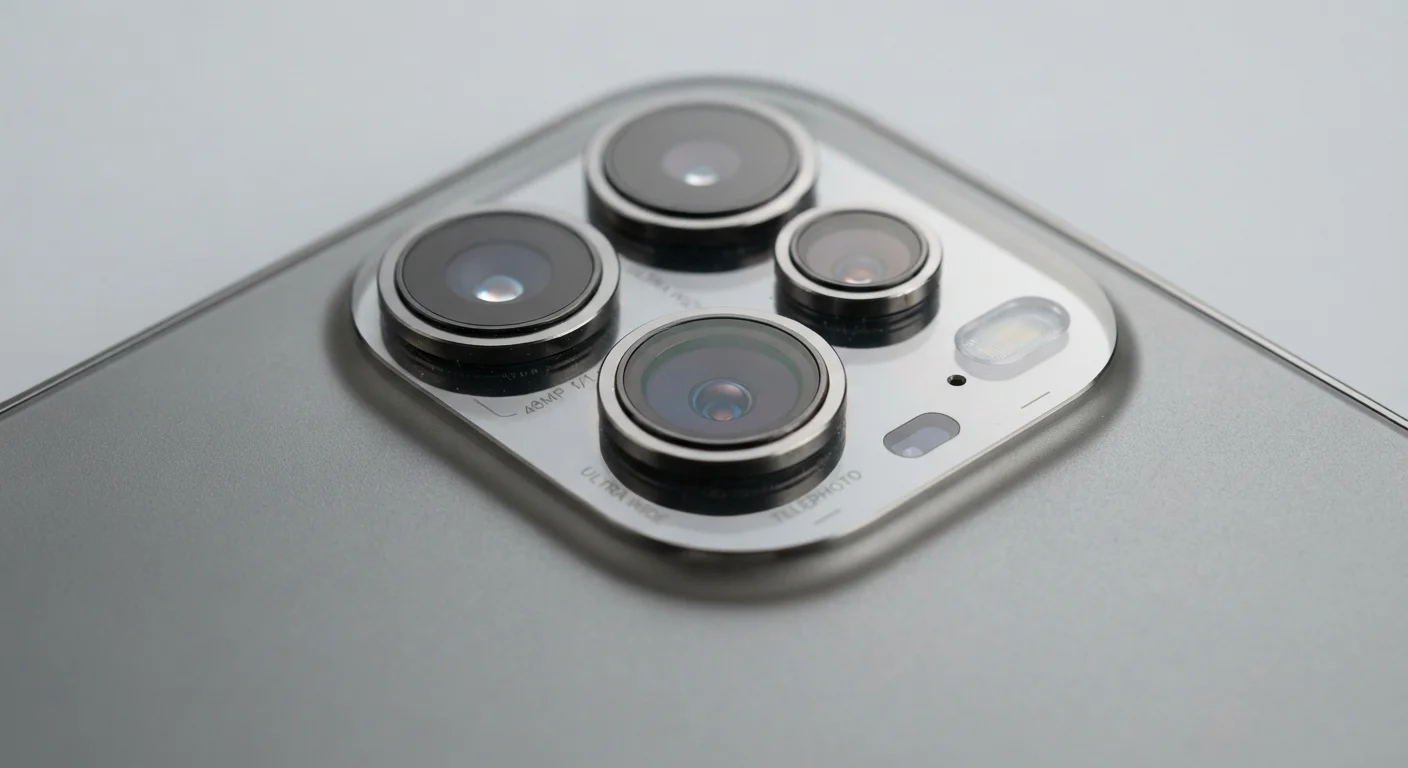
Photo credit: TheBlogZappier.com | Simple Search, Credible Results
In this article
More megapixels doesn't always mean better photos. Learn how sensor size, aperture, and software shape image quality.
Key Takeaways
- Sensor size has more impact on low-light photo quality than megapixel count.
- A lower aperture number (e.g., f/1.6) means the lens lets in more light.
- More megapixels help with cropping and large prints, but not necessarily with everyday shots.
- Computational photography — software processing — can offset hardware limitations significantly.
- Multiple rear cameras serve different purposes: wide, ultrawide, and telephoto are not interchangeable.
Why Megapixels Aren't the Whole Story
Megapixels measure how many millions of individual light-capturing pixels sit on an image sensor. A 48MP camera produces images with 48 million pixels — enough to crop heavily or print very large without losing detail. That sounds impressive, and it can be useful in the right context.
The problem is that packing more pixels into the same tiny sensor means each individual pixel gets smaller. Smaller pixels capture less light, which shows up as noise (that grainy, speckled look) in anything other than perfect lighting. This is why phones with high megapixel counts often use a technique called pixel binning — they combine four or more small pixels into one larger effective pixel to improve light sensitivity at the cost of resolution. The headline number and the actual output resolution can be very different things.
For most people shooting everyday photos that end up on a phone screen or shared online, anything above 12MP is rarely a meaningful upgrade on its own. What matters more is how efficiently the sensor uses those pixels — and that comes down to sensor size and aperture. See our guide for first-time smartphone buyers for a broader look at which specs are worth prioritizing.
12MP
Resolution used by many top-performing phone cameras
Several devices widely regarded as strong camera performers use 12MP main sensors, illustrating that pixel count is not the primary driver of output quality.
1/1.28"
Among the largest sensors in current flagship phones
Larger sensors in this range are associated with improved low-light performance and dynamic range, according to camera hardware reviews and manufacturer spec sheets.
f/1.6–f/1.8
Typical aperture range on wide main camera lenses
Most modern flagship phone main cameras fall in this aperture range, designed to maximize light intake for everyday and low-light shooting.
Sensor Size: The Spec That Actually Drives Low-Light Performance
The image sensor is the physical component that converts light into digital information. Its size — measured in fractions of an inch or millimeters — directly determines how much light it can gather. A larger sensor captures more photons per pixel, which translates to richer colors, more dynamic range (the difference between bright highlights and dark shadows), and less noise when the lights go dim.
Sensor sizes on phones are typically listed as something like 1/1.28" or 1/2.55". The fraction is counterintuitive: a smaller denominator means a larger sensor. So 1/1.28" is significantly larger than 1/2.55" — and that larger sensor will outperform the smaller one in most real-world conditions.
When reviewing a phone's camera specs, sensor size is often buried or omitted entirely from marketing materials that prefer to lead with megapixel counts. If you can find it, it's one of the most useful single numbers for predicting low-light and dynamic range performance.
Reading Sensor Size Specs Can Be Confusing
Sensor sizes written as fractions of an inch follow an older industrial convention that doesn't map intuitively to actual physical dimensions. The numbers are best used for relative comparison rather than literal measurement. When comparing two phones, just remember: the larger the sensor area, the better the low-light capability — regardless of what the fraction looks like numerically.
Aperture: How Much Light the Lens Actually Lets In
Aperture describes the size of the opening in the camera lens through which light passes, written as an f-number (or f-stop). The relationship is inverse: a smaller f-number means a wider opening and more light. An f/1.6 aperture lets in significantly more light than an f/2.4 aperture, which matters most when shooting indoors or at night.
On dedicated cameras, aperture is adjustable. On most smartphones, the aperture is fixed — it doesn't change. Some flagship phones have introduced variable apertures, but the majority lock you into a single setting. This makes the listed aperture a permanent characteristic of that lens, not a range.
Aperture also affects depth of field — the range of distance that appears in sharp focus. A wide aperture (low f-number) physically creates a shallower depth of field, which blurs the background behind a subject. On phones, this effect is partly optical and heavily supplemented by software. The "portrait mode" blur on most phones is largely a computational estimate, not pure optics, which is why it sometimes misfires around hair or complex edges.
For a fuller picture of how display quality and other specs interact with your overall experience, our explainer on screen resolution and display tech covers the viewing side of the equation.
Check the Secondary Cameras Too
Phone manufacturers often put their best sensor and widest aperture on the main camera, while the ultrawide and telephoto lenses use smaller sensors and narrower apertures. If you frequently shoot ultrawide or use zoom heavily, check the specs for those individual lenses — they can vary significantly from the main camera's performance.
Software and Computational Photography
Hardware sets the ceiling, but software increasingly determines how close you get to it. Modern phone cameras run through multiple layers of image processing before saving a photo: noise reduction, sharpening, color tuning, HDR merging, and more. The result is that two phones with nearly identical sensor specs can produce noticeably different photos based on how their image processing pipelines are tuned.
Night Mode is a clear example. It works by taking a rapid burst of frames at different exposures and combining them to recover detail in shadows while controlling blown-out highlights. Done well, it produces images that would have been impossible with the same hardware just a few years ago. Done poorly, it creates motion blur and over-processed colors.
AI scene detection, which automatically adjusts contrast, saturation, and sharpening based on what the camera thinks it's looking at, is another widespread feature. Some implementations improve everyday shots; others over-process images in ways that look artificial. This is one reason hands-on sample photos from independent reviewers remain more informative than spec sheets alone.
If you want to understand how other phone specs — like the processor handling all that image computation — affect performance, our breakdown of RAM, storage, and processors explains what's happening under the hood.
Frequently Asked Questions

Author
Tech & Electronics Editorial Team
Tech & Electronics Editorial Team is the collective byline for our editorial team and contributor network. Articles published under this byline or an editorial pen name are researched, written, and reviewed according to our editorial standards for clarity, consistency, and independence before publication.
View all articles →