
Reading a Runway Show: A First-Timer's Guide to Understanding Fashion Week
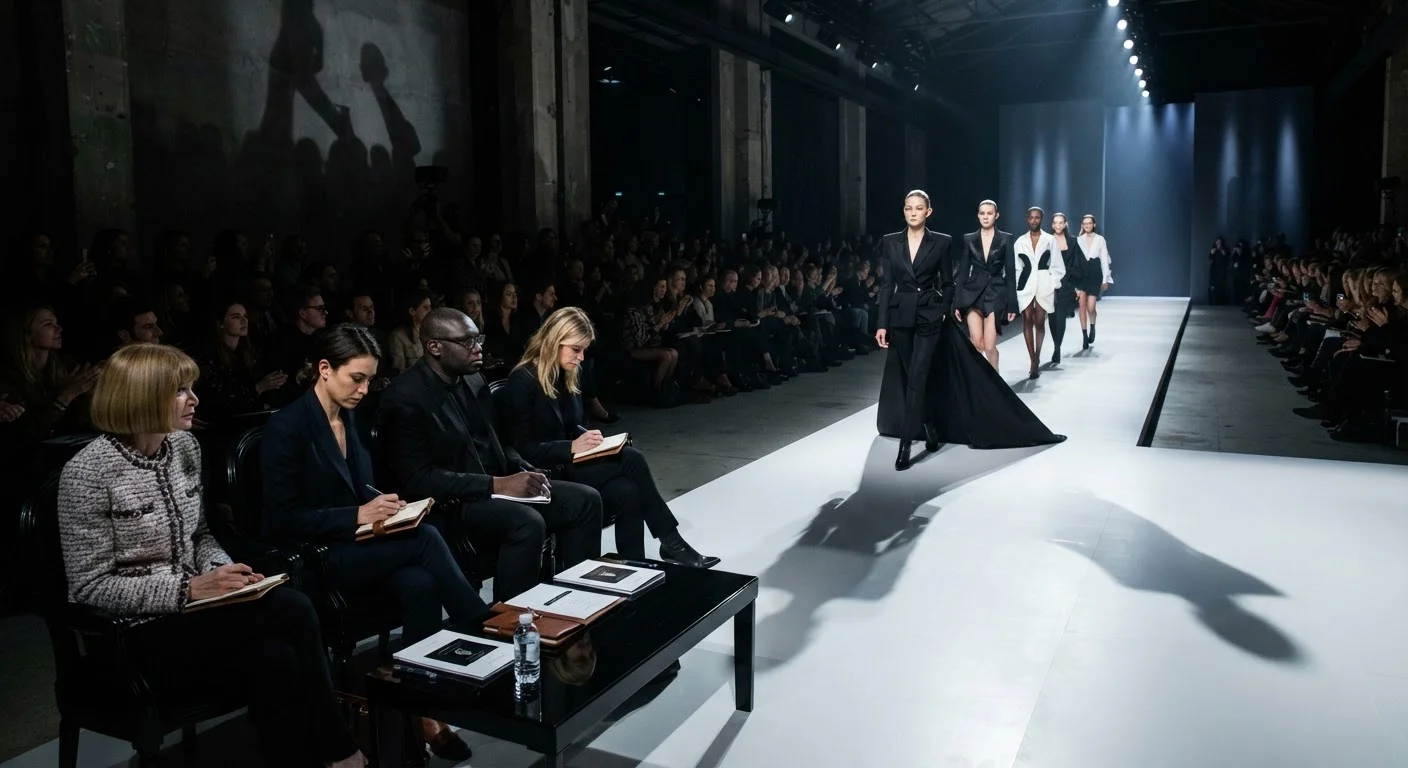
Photo credit: TheBlogZappier.com | Simple Search, Credible Results
In this article
Confused by fashion week coverage? This introduction explains what collections signal, what's editorial, and what reaches stores.
Key Takeaways
- Runway shows are industry presentations first — consumer shopping experiences second.
- Most pieces shown are not sold as-is; retail versions are often simplified versions of runway looks.
- A collection communicates a designer's directional vision, not a literal shopping list.
- Trend reporting translates runway signals — but those signals are always filtered and interpreted.
- Understanding the gap between editorial and wearable helps you engage with fashion coverage more critically.
What a Fashion Week Show Actually Is
Fashion week — held across New York, London, Milan, and Paris each season — is fundamentally an industry trade event. Designers present collections to press, retail buyers, and stylists, not directly to consumers. The shows serve two simultaneous functions: they are creative statements and commercial pitches.
A show's staging, music, casting, and set design are all deliberate communication. When a designer sends models down a flooded catwalk or an entirely white set, those choices reinforce the collection's narrative. Understanding this dual purpose — artistic expression and sales tool — is the first step toward reading runway coverage with more clarity.
Ready-to-wear
Clothing produced in standard sizes and intended for retail sale, as opposed to custom or couture garments. Most fashion week shows present ready-to-wear collections.
Haute couture
Custom-made, hand-sewn garments produced in very limited quantities by select fashion houses. Couture shows are primarily image-driven rather than commercially focused.
Collection
A cohesive group of garments a designer presents for a single season, unified by a shared theme, palette, or silhouette direction.
Silhouette
The overall shape or outline created by a garment on the body — such as a fitted hourglass or a boxy, oversized form. Silhouette shifts are one of the primary signals trend reporters track.
Editorial
Describes clothing, styling, or photography created for creative or press purposes rather than direct retail sale. Editorial looks prioritize visual impact over everyday wearability.
Retail buyer
A professional who attends fashion shows on behalf of stores to select which items to stock. Their choices are a major filter between the runway and what consumers actually see in stores.
For broader context on how the industry calendar organizes these events, see how the fashion calendar works for a full breakdown of seasons and retail timing.
Decoding What You See on the Runway
A collection typically consists of 30–60 looks presented in a deliberate sequence. The opening and closing looks carry the most weight editorially — they signal the collection's thesis and its most statement-making direction. Middle looks often represent the commercially viable core that will actually reach stores.
Pay attention to recurring elements across multiple looks: a specific silhouette (oversized shoulders, dropped waists), a material (sheer fabrics, raw denim), or a styling detail (exaggerated sleeves, sculptural collars). These repetitions indicate what the designer considers central to the collection's identity, and they're the patterns trend reporters will extract and amplify.
Focus on Repetition, Not Standout Pieces
When watching runway coverage, resist fixating on the single most theatrical look. Instead, track what repeats across five or more looks in a collection — those repeated elements are what the designer is actually committing to, and what's most likely to have commercial follow-through.
Runway shows are also coded by audience. An editorial collection aimed at press and cultural influence will look noticeably different from a commercially oriented ready-to-wear show designed primarily to generate orders from buyers.
Editorial vs. Wearable: The Gap Between Runway and Retail
One of the most persistent misunderstandings about fashion week is that what appears on the runway is what you'll be able to buy. In reality, runway looks exist on a spectrum from purely editorial — created for press photography and brand image — to commercial, meaning they're designed with retail production in mind.
A heavily constructed sculptural coat may appear in runway photos and generate significant media coverage, but never enter production. A simpler jacket from the same show might quietly become the season's strong seller. Retail buyers attend shows specifically to identify those commercial pieces and place orders accordingly.
Trend Headlines Are Not Shopping Instructions
Fashion week trend reports are directional, not prescriptive. A single designer's strong color or silhouette does not make a universal trend. Look for patterns across multiple collections before drawing conclusions about what will genuinely reach stores or influence mainstream style.
This gap matters when reading trend coverage. If a report declares "structured metallics are the look of the season" based on one editorial show, that signal should be interpreted as directional, not prescriptive. For a grounded look at where seasonal advice can mislead, see where trend-following goes wrong.
How Runway Trends Actually Reach Consumers
The path from runway to retail involves multiple layers of interpretation and filtering. After shows, trend forecasters and editors identify recurring signals across collections. These signals inform retail buyers, who select pieces for stores. Fast-fashion manufacturers interpret runway aesthetics into production-ready versions at accessible price points, often within weeks of a show.
By the time a "runway trend" reaches a mainstream retailer, it has passed through editorial reporting, buyer selection, production adaptation, and marketing framing. What you encounter on a store floor or in a product description is the end of a long chain — not a direct transmission from the catwalk.
This also means trends cluster. When multiple designers send similar silhouettes down the runway in the same season, that convergence gets amplified by coverage, accelerating adoption across price points. Understanding this process helps you build a personal style that responds thoughtfully to trends rather than reacts automatically to them.
Reading Coverage Critically as a Consumer
Fashion week generates an enormous volume of coverage — show reviews, trend roundups, and editor picks — in the days following each presentation. Reading that coverage critically means asking a few consistent questions: Is this look from an editorial-only collection or a commercial one? Is the trend being reported appearing across multiple designers or just one? Is the coverage describing what was shown or what will actually be sold?
Runway coverage is interpretive journalism, not a consumer catalog. A show review reflects the writer's read of a designer's intent, filtered through their editorial perspective. That's valuable context, but it's not a directive about what to wear.
For a deeper look at how historical cycles shape what you see on runways today, style and beauty trends through the decades offers useful reference. And if you're navigating the broader world of fashion terminology, the Fashion Basics hub is a practical starting point for foundational concepts.
Fashion Calendar Overview
A structured explanation of when runway seasons take place, how pre-collections fit in, and when trends actually reach retail. Useful for anyone trying to contextualize fashion week timing.
Personal Style Starting Point
A practical walkthrough for identifying your own style preferences and wardrobe priorities — helpful for filtering runway coverage through a personal lens rather than reacting to trends wholesale.
Frequently Asked Questions

Author
Style & Beauty Editorial Team
Style & Beauty Editorial Team is the collective byline for our editorial team and contributor network. Articles published under this byline or an editorial pen name are researched, written, and reviewed according to our editorial standards for clarity, consistency, and independence before publication.
View all articles →