
Why Portion Size Is the Most Overlooked Part of Pet Feeding
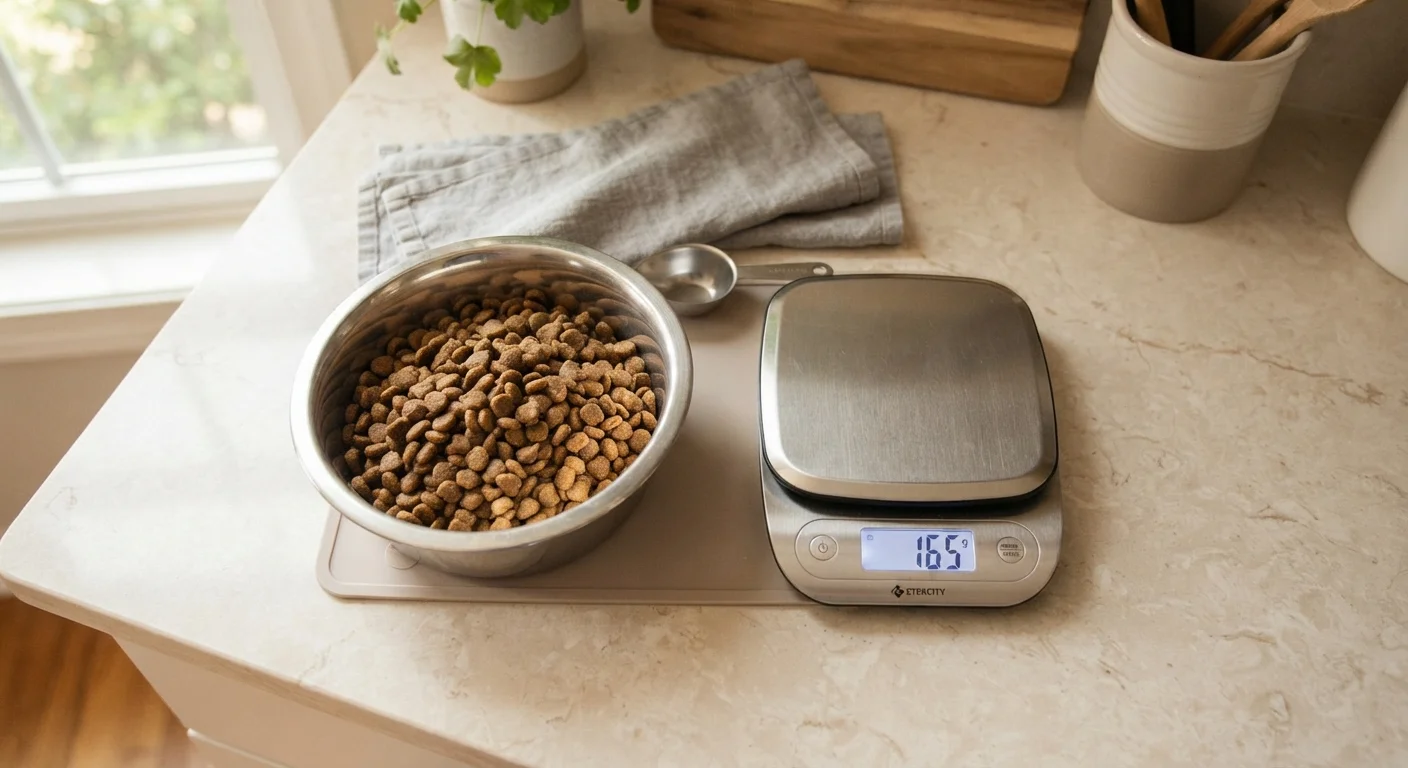
Photo credit: TheBlogZappier.com | Simple Search, Credible Results
In this article
Explore why feeding guides on packaging are starting points, not prescriptions, and what actually determines how much your pet needs.
Key Takeaways
- Feeding guide amounts on pet food packaging are population averages, not individual prescriptions.
- A pet's actual calorie needs depend on age, breed, activity level, reproductive status, and health conditions.
- Treats, toppers, and table scraps contribute significant calories that most owners fail to track.
- Regular body condition scoring is a more reliable tool than scale weight alone for adjusting portions.
- Consulting a veterinarian for portion guidance is especially important for puppies, seniors, and pets with health issues.
Why Feeding Guides Are a Starting Point, Not a Rule
Flip any bag or can of pet food over and you'll find a feeding chart — something like "feed 1–1.5 cups per day for dogs 20–30 lbs." These guidelines exist to give owners a reasonable baseline, but they're calculated for the average, healthy, moderately active adult animal. Your pet may fit that description loosely, but the range of individual variation is wide enough that the "right" amount for your dog or cat could fall well outside what the label suggests.
Manufacturers base these charts on caloric density testing and broad population averages. They have no way of accounting for whether your dog is a couch-loving senior or a high-energy working breed, or whether your cat was recently spayed and now has a slower metabolism. For a deeper look at how to read and evaluate what else is on that packaging, see our guide on reading the AAFCO statement on pet food packaging.
59%
U.S. dogs classified as overweight or obese
According to the Association for Pet Obesity Prevention's clinical surveys, more than half of U.S. dogs are assessed as overweight or obese by veterinary professionals.
61%
U.S. cats classified as overweight or obese
The same Association for Pet Obesity Prevention data indicates that a majority of domestic cats in the U.S. are carrying excess body weight, often linked to free-choice feeding and low activity.
Common Portion Mistakes Pet Owners Make
Understanding where feeding goes wrong is the first step toward getting it right. These are the errors that veterinary professionals see most often.
Treating the feeding guide as a precise prescription rather than a starting estimate.
Why it happens: The label is the most visible piece of guidance available, and owners naturally trust it as authoritative. Most labels don't explain that the figures assume a specific profile of pet.
Failing to count treats, food toppers, and scraps as part of the daily caloric total.
Why it happens: Treats feel like extras rather than meals, so many owners mentally separate them from the "real" food. In households where multiple people feed the pet, overlap is common and often unnoticed.
Using volume-based measuring cups inconsistently, leading to unintentional overfeeding.
Why it happens: Most pet food bags come with a scoop, and scooping feels accurate enough. In practice, a loosely filled cup and a packed cup of the same kibble can differ by 20% or more in actual weight.
Not adjusting portions after a major life change such as spaying, neutering, or reduced exercise.
Why it happens: Owners establish a feeding routine and stick with it for years, even when the pet's physiology or lifestyle changes meaningfully. Spaying and neutering, for instance, can reduce a pet's resting metabolic rate.
Applying the same portion size to all pets in a multi-pet household.
Why it happens: Convenience drives this habit. When multiple pets eat from communal bowls or in the same space, individual monitoring becomes difficult.
If you're new to feeding a dog and want a practical framework for setting up a routine from the start, our article on feeding a dog for the first time covers portion sizing, meal timing, and food transitions in one place.
How to Calibrate Portions More Accurately
The most practical tool available to any pet owner is the body condition score (BCS) — a hands-on assessment that evaluates fat cover over your pet's ribs, waist definition, and abdominal tuck. Most veterinary organizations publish 5-point or 9-point BCS charts for both dogs and cats. A pet at an ideal score should have ribs that are easily felt but not visually prominent, a visible waist from above, and a slight abdominal tuck when viewed from the side.
Rather than relying on the scale alone, use BCS as ongoing feedback. If your pet's score drifts above ideal, reduce daily intake by 10–15% and reassess in two to three weeks. If it drops below ideal, increase modestly and monitor. Changes should be gradual — rapid weight loss or gain carries its own health risks. For context on how nutritional needs shift over a dog's lifespan, our feeding schedules across life stages reference covers how portions and timing should evolve from puppy to senior.
When to Involve a Veterinarian
Puppies, kittens, pregnant or nursing animals, seniors, and pets managing a chronic condition all have nutritional requirements that go beyond what a general feeding guide can address. If your pet falls into any of these categories, portion decisions should be made in partnership with a veterinarian — ideally one with access to your pet's full health history. Do not make significant dietary changes for medically complex pets without professional guidance.
Measuring food by weight (grams) rather than volume (cups) also improves consistency. Cup measurements vary significantly depending on how the food is scooped and how densely it settles. A digital kitchen scale removes that variability. Understanding why overfeeding is so easy — and so consequential — is also worth reviewing in our companion piece on why overfeeding is one of the easiest ways to harm a healthy pet.
This article provides general educational information about pet feeding. It is not a substitute for individualized veterinary advice. Always consult your veterinarian for guidance specific to your pet's health, weight, and nutritional needs.

Author
Pets & Animals Editorial Team
Pets & Animals Editorial Team is the collective byline for our editorial team and contributor network. Articles published under this byline or an editorial pen name are researched, written, and reviewed according to our editorial standards for clarity, consistency, and independence before publication.
View all articles →