
Reading the AAFCO Statement on Pet Food Packaging
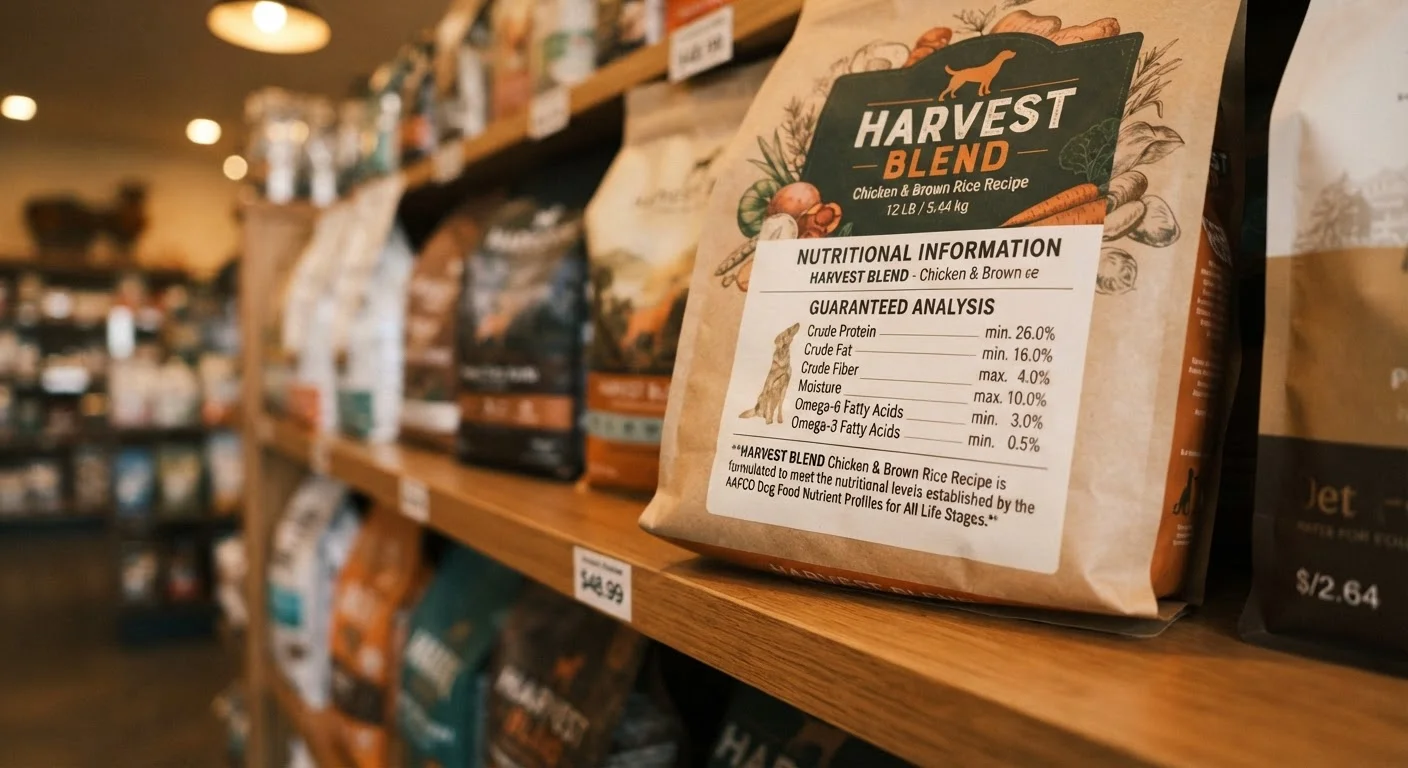
Photo credit: TheBlogZappier.com | Simple Search, Credible Results
In this article
Learn what 'complete and balanced' and AAFCO feeding trials mean, and why that small label line matters for your pet.
Key Takeaways
- The AAFCO statement tells you whether a pet food is complete and balanced for a specific life stage.
- Two methods verify nutritional adequacy: formulation against AAFCO nutrient profiles, or actual animal feeding trials.
- Foods without an AAFCO statement are not intended to serve as a pet's sole diet.
- Life stage matters — a food formulated for adult maintenance may not meet a puppy or kitten's higher nutrient demands.
- Always consult your veterinarian before making major changes to your pet's diet.
Where to Find the Statement and What It Says
Flip to the back or side of nearly any pet food bag or can and look for a sentence that reads something like: " is formulated to meet the nutritional levels established by the AAFCO Food Nutrient Profiles for ." That single sentence — often printed in small type — is the AAFCO nutritional adequacy statement, and it carries more practical information than most other lines on the label.
The statement does three things simultaneously. It tells you whether the food is complete and balanced (or not), which species it is formulated for, and which life stage it targets. For a broader look at everything else the label communicates, see our guide to what pet food labels actually tell you.
AAFCO Is Not a Government Agency
AAFCO is a voluntary membership organization made up of state and federal feed control officials. It publishes model regulations and nutrient standards that states may adopt into law, but it does not itself test, inspect, or approve commercial pet foods. Regulatory oversight is carried out at the state level and, for certain claims, by the FDA.
The Two Ways a Food Can Earn the Statement
Manufacturers can substantiate a "complete and balanced" claim through one of two recognized methods, and the statement on the label will tell you which one was used.
Formulated to Meet Nutrient Profiles
The more common approach: the recipe is designed so that its calculated nutrient levels meet or exceed AAFCO's published minimum (and sometimes maximum) values for a given life stage. This is a paperwork and chemistry verification — it confirms the formula as written, but it does not confirm how well nutrients are actually absorbed by an animal eating the food.
Animal Feeding Trials
The higher evidentiary bar: the finished product is fed to dogs or cats in a structured protocol following AAFCO guidelines. Animals are monitored over a set period, and key health parameters must remain within acceptable ranges. A statement referencing feeding trials looks like: "Animal feeding tests using AAFCO procedures substantiate that provides complete and balanced nutrition." This method provides real-world palatability and digestibility data that formulation alone cannot offer.
Look for the Feeding Trial Phrase
When two foods appear similar, check whether one uses the phrase 'animal feeding tests substantiate.' This indicates the finished product was actually fed to animals and passed health benchmarks — a stronger real-world verification than formulation alone. It's worth noting when evaluating foods for pets with specific health considerations.
Life Stage Categories and Why They Matter
AAFCO recognizes distinct life stage categories, each with different nutrient minimums:
- Growth and Reproduction — covers puppies, kittens, pregnant animals, and nursing mothers; requires higher levels of protein, calcium, phosphorus, and certain vitamins.
- Adult Maintenance — formulated for healthy, fully grown animals not in a reproductive state; lower minimums than growth formulas.
- All Life Stages — must meet the most demanding minimums across all categories, making it suitable from weaning through adulthood.
- Senior or Mature — not a formal AAFCO category; foods marketed this way typically carry an adult maintenance statement. Check the label rather than relying on marketing language.
Feeding a maintenance-only food to a growing kitten or puppy means the animal may not receive adequate calcium, protein, or DHA for healthy development. Conversely, some adult animals may not need the higher mineral levels in a growth formula. Understanding this distinction helps you match the food to your pet's actual needs. For terms like taurine, crude protein, and DHA that appear alongside these requirements, our nutrient glossary offers quick-reference definitions.
2
AAFCO-recognized methods to verify nutritional adequacy
AAFCO recognizes formulation against nutrient profiles and live-animal feeding trials as the two pathways for substantiating a 'complete and balanced' claim.
3
Formal AAFCO life stage categories for dogs and cats
AAFCO establishes nutrient profiles for growth/reproduction, adult maintenance, and all life stages — 'senior' is a marketing term, not a defined AAFCO category.
When There Is No AAFCO Statement — and What to Do
Some products carry no nutritional adequacy statement at all, or they include the phrase "for intermittent or supplemental feeding only." These foods have not been substantiated as complete and balanced and are appropriate only as treats, food toppers, or additions to an otherwise complete diet.
Home-prepared diets are another context where no commercial AAFCO statement exists. If you're cooking for your pet, nutritional completeness must be achieved through a carefully designed recipe. Our article on what nutritionally sound home-cooked pet meals require walks through the standards those recipes must meet.
The AAFCO statement is a practical baseline, not a ceiling. It confirms minimum nutrient adequacy, not ingredient sourcing, digestibility, or long-term health outcomes. Use it as the starting point it is, then layer in your veterinarian's guidance for your individual pet's age, health status, and body condition. For a side-by-side look at how different commercial formulas approach nutritional completeness, see how commercial pet foods compare across diet categories.
This article is for general informational and educational purposes only and is not a substitute for professional veterinary nutrition advice. Always consult your veterinarian before making significant changes to your pet's diet.
Frequently Asked Questions

Author
Pets & Animals Editorial Team
Pets & Animals Editorial Team is the collective byline for our editorial team and contributor network. Articles published under this byline or an editorial pen name are researched, written, and reviewed according to our editorial standards for clarity, consistency, and independence before publication.
View all articles →