
Nutrient Glossary: Key Ingredients Found on Pet Food Packaging
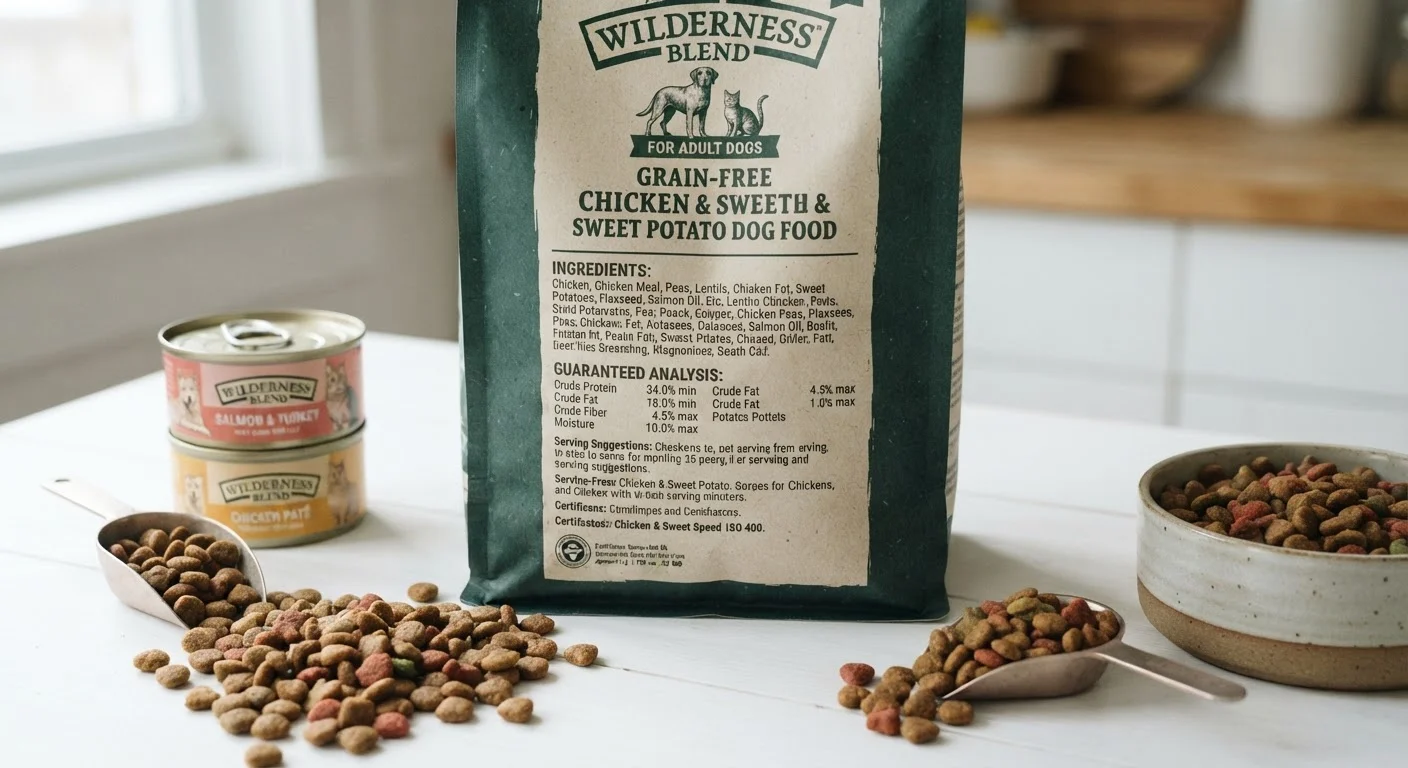
Photo credit: TheBlogZappier.com | Simple Search, Credible Results
In this article
Quick-reference definitions for taurine, crude protein, omega fatty acids, and other terms you'll find on pet food labels.
Why Label Terminology Matters
Flip over any bag of kibble and you'll encounter a dense block of terms — crude protein, guaranteed analysis, taurine, chelated minerals — that can feel like a different language. Yet these labels carry real, regulated meaning. Knowing how to read them helps you assess whether a food actually meets your pet's needs.
This glossary focuses on the nutrient and ingredient terms you're most likely to encounter on U.S. pet food packaging. For a deeper look at how the label as a whole is structured, see our guide to what pet food labels actually tell you. And to understand the regulatory claim that ties it all together, check out our article on reading the AAFCO statement on pet food packaging.
Crude Protein
A measure of total nitrogen content in a food, used to estimate protein levels. It includes protein from both digestible and indigestible sources, so it reflects quantity rather than quality or digestibility.
Crude Fat
The total fat content extracted from a food sample using a solvent. It includes all lipids — both beneficial fatty acids and saturated fats — and is listed as a minimum percentage on the guaranteed analysis panel.
Crude Fiber
A measurement of indigestible plant material remaining after chemical processing. It underestimates total dietary fiber, which includes fermentable fibers that support gut health.
Taurine
An amino acid essential for cats, who cannot synthesize it in adequate amounts and must obtain it from food. Dogs can produce taurine but may benefit from dietary sources, particularly on grain-free or legume-heavy diets.
Omega-3 Fatty Acids
Polyunsaturated fats that support skin, coat, joint, and cardiovascular health. In pet food, they commonly come from fish oil (EPA and DHA) or flaxseed (ALA). EPA and DHA are more readily usable by pets than ALA.
Omega-6 Fatty Acids
Fatty acids that support skin barrier function and immune response. Commonly sourced from poultry fat and vegetable oils. A balanced omega-6 to omega-3 ratio is considered important for managing inflammation.
Amino Acids
The building blocks of protein. Essential amino acids cannot be made by the body and must come from food. For cats, taurine and arginine are critical examples; for dogs, methionine and lysine are among the most important.
Chelated Minerals
Minerals that have been chemically bonded to organic molecules (such as amino acids) to enhance absorption in the digestive tract. Examples include zinc proteinate and copper gluconate.
Dry Matter Basis (DMB)
A calculation that removes moisture from nutrient percentages, allowing direct comparison between wet and dry foods. It reveals the true nutrient density of a food regardless of its water content.
AAFCO Nutrient Profiles
Standards set by the Association of American Feed Control Officials that define minimum (and sometimes maximum) nutrient levels required for pet foods to be labeled 'complete and balanced' for a given life stage.
By-Products
Secondary products from animal processing that are not skeletal muscle meat. Named by-products (e.g., chicken liver) can be nutritious organ meats; generic 'meat by-products' are less defined and considered lower quality by many nutritionists.
Ash
The mineral residue remaining after food is incinerated at high heat. On a pet food label, ash content reflects total mineral load — including calcium, phosphorus, and magnesium — and is relevant for pets with kidney or urinary concerns.
Key Nutrient Terms Defined
The following definitions cover the terms most commonly found in the guaranteed analysis panel and ingredient lists of commercial pet foods. Use this as a quick reference when comparing products or researching your pet's dietary needs.
| Taurine: Required for Cats? | Yes — dietary taurine is an absolute requirement for cats (AAFCO Cat Food Nutrient Profiles) |
| Crude Protein Listed As | Minimum percentage on guaranteed analysis (AAFCO Model Regulations) |
| Moisture Listed As | Maximum percentage (up to 78% in wet food) (AAFCO Model Regulations) |
| EPA & DHA Sources | Fish oil, salmon, sardines, anchovy (National Research Council, Nutrient Requirements of Dogs and Cats) |
| Chelated vs. Inorganic Minerals | Chelated minerals generally show higher bioavailability (Journal of Animal Science, multiple reviews) |
| Ash Content Relevance | Particularly monitored for cats prone to urinary crystals (Veterinary nutrition guidelines) |
Macronutrients and the Guaranteed Analysis Panel
The guaranteed analysis lists minimums and maximums — not exact amounts — for key nutrients. Crude protein and crude fat are minimums, meaning actual levels may be higher. Crude fiber and moisture are listed as maximums. To compare foods on a true nutrient-to-nutrient basis, nutritionists use dry matter basis (DMB) calculations, which remove moisture from the equation. This is especially important when comparing wet and dry foods.
Additives, Preservatives, and Processing Terms
Some ingredients on pet food labels refer not to whole foods but to processing aids or preservation methods. Mixed tocopherols (a natural form of vitamin E) and rosemary extract are common natural preservatives. Synthetic preservatives such as BHA and BHT are legally permitted but increasingly uncommon in premium formulas. Chelated minerals — such as zinc proteinate or copper gluconate — are minerals bonded to amino acids or organic molecules to improve absorption in the digestive tract.
If you're thinking about preparing food at home, these definitions become even more relevant — our article on home-cooked pet meals and nutritional completeness explains the standards such recipes must meet.
Labels Describe Nutrients, Not Health Outcomes
Nutrient percentages on packaging describe what's in the food under standardized testing — they don't guarantee how well an individual pet will digest or absorb those nutrients. Factors like ingredient source, processing method, and your pet's health status all affect actual nutrition. If your pet has a specific health condition, always consult a veterinarian or board-certified veterinary nutritionist before making dietary changes.
For a broader comparison of how these nutrients appear across different diet formats, see how commercial pet foods compare across diet categories.

Author
Pets & Animals Editorial Team
Pets & Animals Editorial Team is the collective byline for our editorial team and contributor network. Articles published under this byline or an editorial pen name are researched, written, and reviewed according to our editorial standards for clarity, consistency, and independence before publication.
View all articles →