
Dry Kibble and Wet Food: How Each One Affects Your Pet's Health
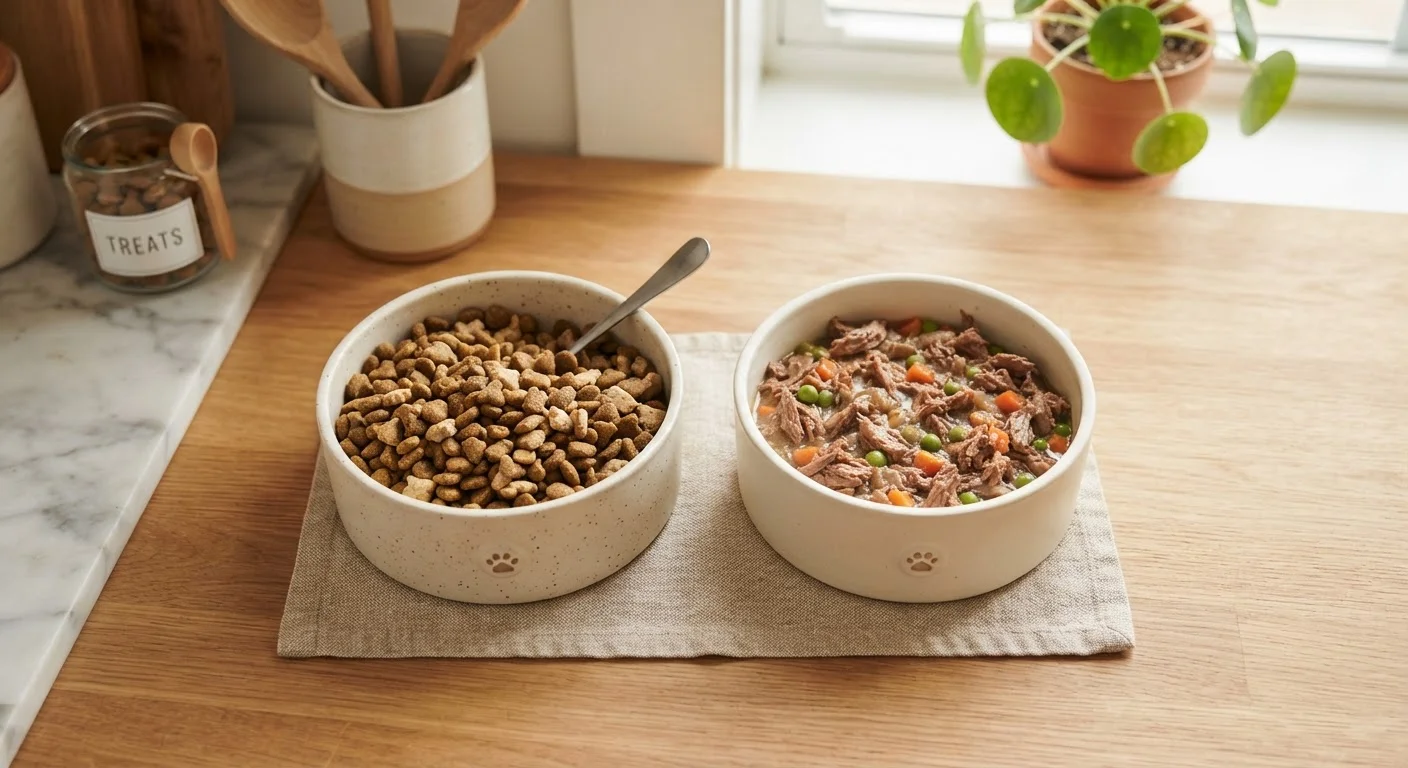
Photo credit: TheBlogZappier.com | Simple Search, Credible Results
In this article
A side-by-side look at how kibble and wet food differ in moisture, nutrition, cost, and suitability for different pets.
Key Takeaways
- Dry kibble typically contains 6–10% moisture; wet food contains 70–80%, significantly increasing daily fluid intake.
- Neither format is universally superior — the right choice depends on your pet's health status, age, and palatability needs.
- Wet food generally costs more per calorie served compared to dry kibble of similar nutritional quality.
- Kibble's mechanical chewing action may reduce plaque, but it is not a substitute for dedicated dental care.
- Mixing both formats can balance hydration, cost, and palatability for many dogs and cats.
- Always consult a veterinarian before making major dietary changes, especially for pets with health conditions.
Moisture Content: The Biggest Nutritional Divide
The most fundamental difference between dry kibble and wet food is water content. Kibble is processed to contain roughly 6–10% moisture, while wet food — sold in cans or pouches — typically contains 70–80% moisture. This gap has real consequences for your pet's health, particularly hydration.
Cats evolved as desert animals and instinctively drink little water. A cat fed exclusively dry food may consume far less total fluid than its kidneys require, potentially increasing the risk of urinary crystals or chronic kidney stress over time. Veterinary nutritionists frequently recommend that cats prone to urinary issues get a significant portion of their moisture through food rather than the water bowl. Dogs are generally more willing drinkers, but pets with certain health conditions — including kidney disease — often benefit from the added fluid that wet food provides.
For most healthy pets, this distinction alone does not make one format superior. A dog eating kibble and drinking freely from a clean water source may be perfectly well-hydrated. The key is monitoring your individual pet and discussing hydration needs with your veterinarian. For a deeper look at how hydration and diet interact across a cat's lifespan, see our guide on cat nutrition from kittenhood to senior years.
| Criterion | Dry Kibble | Wet Food |
|---|---|---|
| Moisture content | 6–10% | 70–80% |
| Typical cost per serving | Lower | Higher |
| Shelf life (opened) | Weeks (sealed container) | 24–48 hours (refrigerated) |
| Caloric density per gram | Higher | Lower |
| Dental abrasion benefit | Mild (chewing action) | Minimal |
| Palatability for picky eaters | Moderate | Generally higher |
| Ease of portion control | Easy to measure | Requires careful tracking |
| Suitable for senior/dental issues | Less ideal | Often preferred |
Nutrition, Cost, and Practical Everyday Feeding
Both dry and wet foods can be formulated to meet the AAFCO (Association of American Feed Control Officials) nutritional standards for complete and balanced diets. The label phrase "complete and balanced" means the food has been formulated or tested to meet established minimum nutrient profiles — look for this on any food you consider the primary diet for your pet.
Caloric density differs significantly between formats. Wet food is heavier and more filling per ounce due to water, but it delivers fewer calories per gram of food than kibble. Feeding an equivalent caloric amount of wet food typically costs considerably more than kibble, since you are partly paying for water weight. For multi-pet households or owners on a fixed budget, this cost difference is meaningful.
70–80%
Moisture in wet pet food
Compared to 6–10% in dry kibble, this difference substantially increases a pet's total daily fluid intake from food alone.
3–4x
Approximate cost premium of wet food per calorie
Feeding wet food as a sole diet typically costs significantly more per calorie than an equivalent dry formulation, reflecting water content and packaging.
~60%
US pet owners who feed dry food as primary diet
According to industry surveys, dry kibble remains the most commonly used primary food format for both dogs and cats in the United States.
Practically, kibble wins on convenience: it stores easily at room temperature for months (once sealed), can be left in an auto-feeder, and is simple to measure. Wet food, once opened, must be refrigerated and used within 24–48 hours. However, many veterinarians and owners use a combination feeding approach — dry food as the daily base with wet food offered as a topper or occasional meal — to balance cost, hydration, and palatability.
For context on how these two formats compare within the broader landscape of pet diet options, including prescription and limited-ingredient formulas, our article on how commercial pet foods compare across diet categories offers a useful overview.
Which Format Suits Which Pet?
There is no single correct answer — the right format depends on your pet's species, age, health history, and individual preferences. Here are the most evidence-informed guidelines:
- Cats with urinary or kidney concerns: Wet food is frequently recommended by veterinarians as a primary dietary strategy to increase fluid intake.
- Puppies and kittens: Both formats are available in life-stage-specific formulas. Wet food can be easier for very young animals transitioning off mother's milk.
- Senior pets: Those with dental disease, missing teeth, or reduced appetite often do better with wet food's softer texture and stronger scent.
- Dogs prone to weight gain: Kibble's caloric density makes precise portioning straightforward, though low-calorie wet options exist too.
- Pets with chronic illness: Your veterinarian may have specific format recommendations tied to their condition and medication protocol.
It is also worth knowing that cats and dogs have genuinely distinct nutritional needs — a topic covered in detail in our comparison of cats vs dogs and how their core care needs differ. If you are considering more alternative feeding approaches, our balanced overview of raw feeding for pets outlines what proponents claim and what veterinarians caution.
This article is for general informational purposes only and does not constitute veterinary or medical advice. Always consult a licensed veterinarian before making significant changes to your pet's diet, especially if your pet has a health condition.
Reading the "Complete and Balanced" Label
When evaluating any commercial pet food, look for a statement that the product meets AAFCO nutrient profiles for your pet's life stage — such as "growth," "maintenance," or "all life stages." This statement appears on compliant products and indicates the food has been formulated or feeding-trial tested to minimum nutritional standards. Foods labeled "for supplemental feeding only" or "treat" are not suitable as a sole diet. When in doubt, your veterinarian or a board-certified veterinary nutritionist can help you interpret ingredient lists and guaranteed analysis panels.

Author
Pets & Animals Editorial Team
Pets & Animals Editorial Team is the collective byline for our editorial team and contributor network. Articles published under this byline or an editorial pen name are researched, written, and reviewed according to our editorial standards for clarity, consistency, and independence before publication.
View all articles →