
Cat Nutrition from Kittenhood to Senior Years
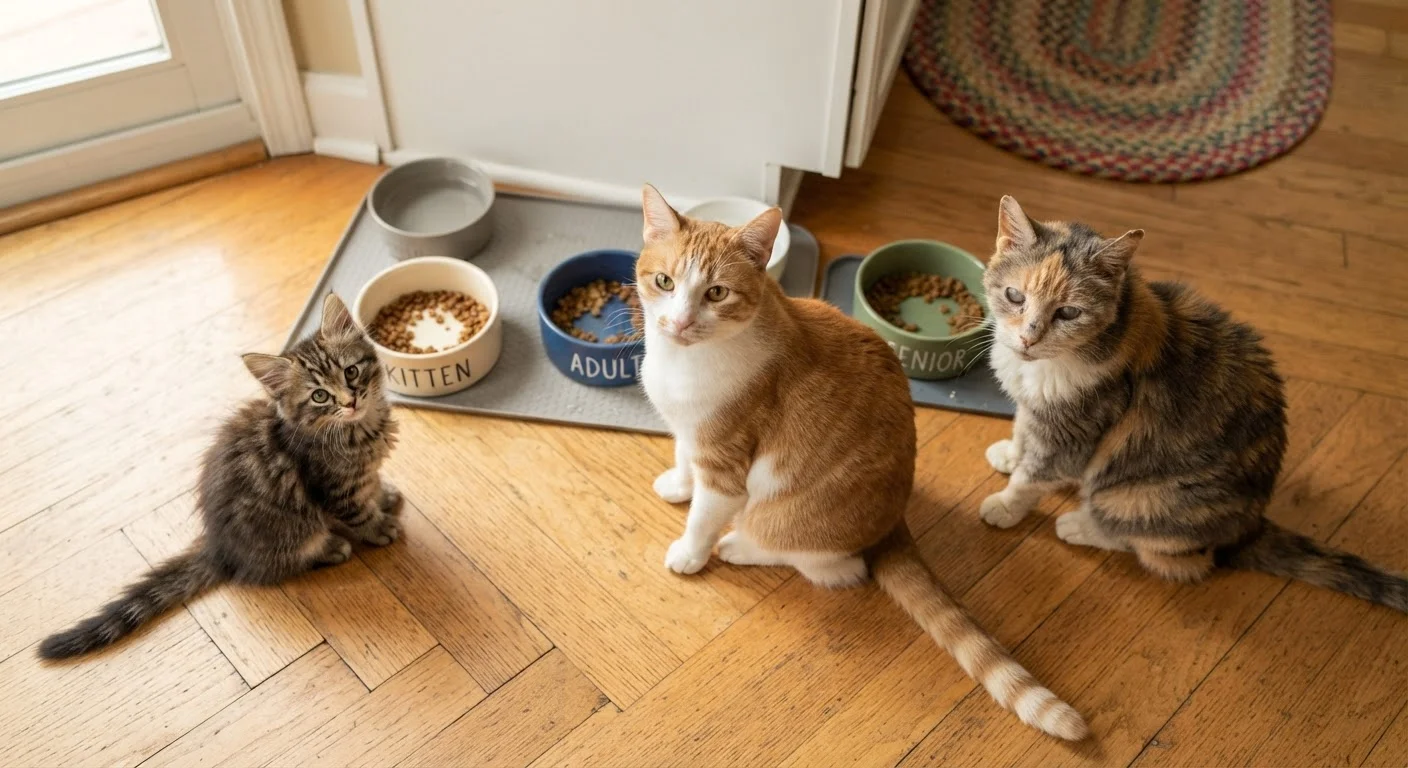
Photo credit: TheBlogZappier.com | Simple Search, Credible Results
In this article
How a cat's dietary needs shift across life stages, and what to look for in food formulas at each phase.
Key Takeaways
- Cats require different nutrient ratios at each life stage — kitten, adult, and senior formulas are not interchangeable.
- Kittens need higher protein and fat densities to support rapid growth and immune development.
- Senior cats often benefit from adjusted phosphorus and protein levels to support kidney health.
- The AAFCO nutritional adequacy statement on a label confirms a food meets minimum life-stage requirements.
- Hydration is a concern at every stage; moisture-rich food can help cats who drink little water.
- Always consult a veterinarian before making major dietary changes, especially for cats with health conditions.
Why Life Stage Nutrition Matters for Cats
Cats are obligate carnivores, meaning their bodies are designed to derive nearly all essential nutrients from animal-based proteins. But beyond that shared biology, a cat's specific dietary requirements shift substantially as it ages. Feeding a kitten formula to a senior cat — or vice versa — can create nutritional imbalances over time.
The Association of American Feed Control Officials (AAFCO) establishes nutrient profiles for two primary life stages in cats: growth and reproduction (covering kittens and pregnant or nursing queens) and adult maintenance. Some manufacturers go further, formulating products specifically for senior cats. Understanding these distinctions helps owners move past marketing language and focus on what the food actually delivers.
For a broader look at how pet food categories are structured, see how commercial pet foods compare across diet categories.
~60%
Prevalence of obesity in US cats
According to the Association for Pet Obesity Prevention's survey data, a majority of US cats are classified as overweight or obese.
30%+
Minimum protein (dry matter) for kittens
AAFCO establishes this as the minimum crude protein level for cat foods formulated for the growth life stage.
1 in 3
Senior cats affected by kidney disease
Research published in veterinary literature estimates that chronic kidney disease affects approximately one-third of cats over age 12.
Feeding Kittens: Growth-Stage Nutritional Priorities
From birth through approximately 12 months, kittens undergo rapid skeletal and muscular development. This phase demands a calorie-dense diet with elevated levels of protein, fat, and key micronutrients.
- Protein: AAFCO recommends a minimum of 30% protein on a dry matter basis for kittens, compared to 26% for adult maintenance. High-quality animal proteins — chicken, fish, turkey — should appear first on the ingredient list.
- Fat and DHA: Dietary fat supports energy needs and fat-soluble vitamin absorption. Docosahexaenoic acid (DHA), an omega-3 fatty acid, supports brain and vision development and is often added to kitten formulas.
- Calcium and phosphorus: Bone formation requires balanced calcium-to-phosphorus ratios. Kitten foods are formulated with this in mind; adult foods may not provide adequate amounts for growing bones.
- Taurine: An essential amino acid for cats that must come from diet. Deficiency can lead to dilated cardiomyopathy and vision problems. All life-stage-appropriate commercial foods must include sufficient taurine under AAFCO guidelines.
Transition kittens from free-choice feeding to two or three scheduled meals per day around six months of age. This builds habits that make weight monitoring easier in adulthood.
Structured meal timing gives owners a clearer baseline for appetite changes, which are often early indicators of health problems.
When assessing a senior cat's diet, ask your veterinarian to evaluate body condition score and muscle condition score separately — a cat can be overweight and still be losing muscle mass.
Sarcopenia (age-related muscle loss) can be masked by fat tissue, and addressing it requires adequate digestible protein rather than calorie restriction alone.
Kittens should eat kitten-specific or "all life stages" labeled food until around their first birthday, or up to 18 months for large-framed breeds. Free-choice feeding (leaving food available at all times) is common for young kittens, transitioning to scheduled meals as they approach adulthood.
Adult Cat Nutrition: Maintenance and Balance
Between roughly 1 and 7 years of age, most cats are considered adults. The nutritional goal shifts from fueling growth to sustaining a healthy weight, supporting organ function, and maintaining lean muscle mass.
Adult cats require fewer calories per pound of body weight than kittens. Overfeeding during this phase is one of the most common contributors to feline obesity, which is associated with diabetes, joint stress, and liver disease. Portion control becomes more important than it was during kittenhood.
Portion Guidance Starts on the Label
Feeding guidelines printed on packaging are starting points, not precise prescriptions. They are typically calculated for an average, unspayed or unneutered cat. Spayed or neutered cats often need 20–30% fewer calories. Use the guidelines as a baseline, then adjust based on body condition score over several weeks.
When evaluating adult formulas, look for named animal protein sources (e.g., "chicken" rather than "poultry by-product meal" as the first ingredient), and check that the AAFCO statement specifies "adult maintenance" or "all life stages." A food labeled only for "growth" provides excessive nutrients that an adult cat does not need. For guidance on how format affects nutritional delivery, see how dry kibble and wet food differ in nutrition and moisture.
Senior Cat Feeding: Adapting to an Aging Body
Cats are generally considered senior from around age 7, and geriatric from age 11 onward. Aging brings physiological changes that affect how cats digest and use nutrients.
- Kidney health: Chronic kidney disease (CKD) is prevalent in older cats. Many veterinary professionals recommend moderating dietary phosphorus for cats with confirmed kidney issues. However, phosphorus restriction is not appropriate for all seniors — consult a veterinarian before reducing it proactively.
- Protein needs: Older cats may actually need more digestible protein than middle-aged adults to prevent muscle wasting (sarcopenia), not less. Senior formulas that dramatically reduce protein may be counterproductive for healthy aging cats.
- Digestibility: Senior cats often show reduced digestive efficiency. Highly digestible protein sources and added digestive enzymes or prebiotics can help.
- Caloric density: Some seniors gain weight due to lower activity; others lose weight due to reduced appetite or absorption issues. Monitor body condition score regularly.
Weight Loss in Senior Cats Needs Veterinary Attention
Unexplained weight loss in a cat over 7 years old is a clinical sign, not a normal part of aging. Conditions including hyperthyroidism, diabetes, inflammatory bowel disease, and cancer can all present this way. Do not attempt to address it through dietary changes alone — schedule a veterinary exam as the first step.
If your senior cat is losing weight, becoming finicky about food, or showing changes in thirst or litter box habits, these may signal an underlying health condition rather than normal aging. A veterinary evaluation — including bloodwork — is the appropriate first step before changing the diet.
Reading Cat Food Labels Across Life Stages
Pet food labels carry specific regulated sections that reveal more than the front-panel marketing copy. Here is what to look for at any life stage:
- AAFCO Nutritional Adequacy Statement
- This sentence confirms whether the food was formulated to meet AAFCO nutrient profiles or tested via feeding trials. Look for language specifying the intended life stage: "growth," "adult maintenance," or "all life stages."
- Guaranteed Analysis
- Lists minimum percentages of crude protein and fat, and maximum percentages of fiber and moisture. To compare foods with different moisture levels, convert values to a dry matter basis by dividing the nutrient percentage by (100 minus the moisture percentage) and multiplying by 100.
- Ingredient List
- Ingredients are listed by pre-cooking weight. Named animal proteins near the top are a positive sign. Ingredient splitting — listing multiple forms of the same ingredient separately to push them lower on the list — is a known industry practice worth watching for.
If you are considering preparing food at home, home-cooked pet meals require meeting specific nutritional completeness standards that are difficult to achieve without veterinary nutritionist guidance.
"All Life Stages" Labels Explained
A food labeled "all life stages" is formulated to meet the higher nutrient demands of the growth stage, meaning it is appropriate for kittens, adults, and pregnant or nursing queens. It is generally safe for adult and senior cats, though calorie density may be higher than a strict adult maintenance formula. This is particularly worth noting for cats prone to weight gain.
Wet Food, Dry Food, and Hydration Across the Lifespan
Cats evolved as desert predators and have a naturally low thirst drive, obtaining much of their hydration from prey. This makes moisture content in food a meaningful health variable across all life stages.
Wet food typically contains 70–80% moisture, while dry kibble contains roughly 10%. For cats prone to urinary tract issues — a condition more common in males and often influenced by diet — increased hydration through wet food may be beneficial. Senior cats with early kidney disease are also frequently advised to increase fluid intake.
That said, dry food is not inherently inferior. It offers convenience, dental friction benefits, and often lower cost per feeding. A mixed approach — combining wet and dry food — is a practical middle ground many veterinarians support.
Before making any format switch across life stages, use a pre-switch checklist to prepare for the transition and plan a gradual changeover over 7–10 days to minimize digestive upset. Enrichment during mealtime — such as puzzle feeders — can also benefit indoor cats. See indoor cat enrichment ideas that engage feline instincts for practical options.
This article is for general informational purposes only and does not constitute veterinary or medical advice. Always consult a licensed veterinarian for guidance specific to your cat's health and nutritional needs.

Author
Pets & Animals Editorial Team
Pets & Animals Editorial Team is the collective byline for our editorial team and contributor network. Articles published under this byline or an editorial pen name are researched, written, and reviewed according to our editorial standards for clarity, consistency, and independence before publication.
View all articles →