
Indoor Cat Enrichment: Activities That Go Beyond the Toy Box
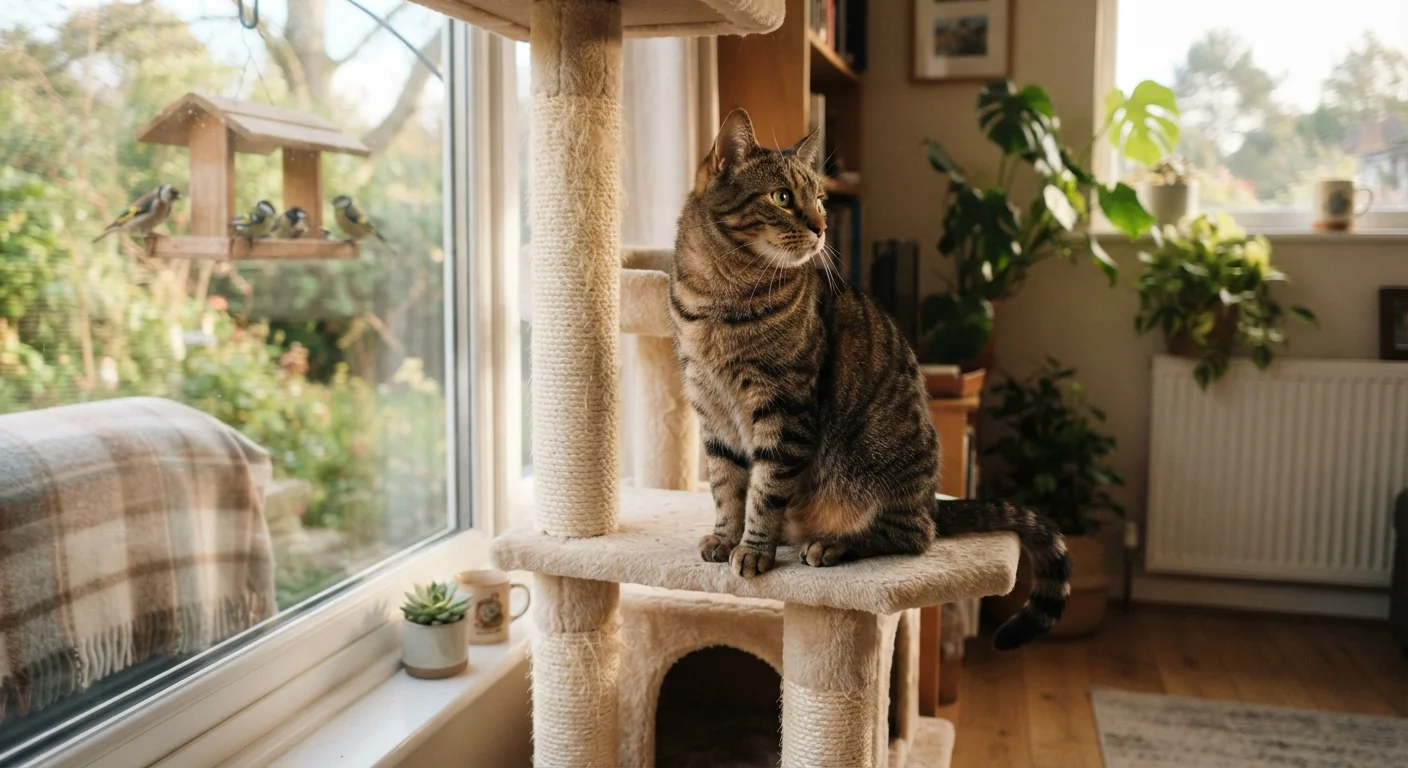
Photo credit: TheBlogZappier.com | Simple Search, Credible Results
In this article
Indoor cats need more than food and shelter. Discover feeding puzzles, vertical space, scent games, and other enrichment ideas that engage feline instincts.
Key Takeaways
- Indoor cats can develop stress and behavioral issues when their natural instincts go unmet.
- Enrichment goes far beyond toys — think vertical space, scent, foraging, and routine.
- Even small, consistent changes to the home environment can meaningfully improve a cat's wellbeing.
- Variety and rotation keep activities engaging and prevent habituation.
- Multi-cat households require tailored enrichment strategies to reduce competition and stress.
Why enrichment matters for indoor cats
Indoor cats live longer, safer lives on average — but the controlled home environment can leave core feline instincts chronically unmet. Hunting, climbing, exploring, and scent-marking are not optional behaviors; they are deeply wired drives. When those drives have nowhere to go, cats often express the frustration through destructive scratching, over-grooming, aggression, or lethargy.
Enrichment is the deliberate design of a cat's environment and daily routine to engage those instincts in constructive ways. It is not about buying more toys — it is about understanding what cats are built to do and giving them structured opportunities to do it. The activities below cover a range of sensory, cognitive, and physical approaches that go well beyond the standard toy box. For a broader look at how mental stimulation fits alongside physical activity, see our article on enrichment versus exercise for pets.
Every cat has individual preferences
Enrichment is not one-size-fits-all. Some cats are highly motivated by food puzzles; others prefer scent or play. Observe which activities your cat engages with most and build routines around those. A cat that walks away from a puzzle feeder may simply need a simpler starting point, or may respond better to interactive play instead.
Seven enrichment strategies that genuinely engage cats
Introduce puzzle feeders and foraging opportunities
In the wild, cats spend a large portion of their day hunting for food. Serving every meal from a stationary bowl removes that cognitive and physical effort entirely. Puzzle feeders — trays, balls, or mazes that require a cat to work for kibble or treats — reintroduce a degree of that challenge.
Start with simpler feeders and gradually increase difficulty as your cat gains confidence. Even scattering dry food across a snuffle mat or hiding small portions around the room counts as foraging enrichment. These activities slow eating, reduce boredom, and provide meaningful mental work.
Puzzle feeders restore the mental effort that meal-from-a-bowl routines silently remove.
Build vertical space into your home layout
Cats are instinctively drawn to height. Elevated positions give them a sense of security, a vantage point for observing their environment, and an escape route from perceived threats — particularly important in multi-pet households.
Cat trees, wall-mounted shelves, and window perches all serve this purpose. Position shelving in a pathway — cats enjoy traversing a route, not just sitting in one spot. Add a cozy bed or hammock at the top to reinforce the space as a safe, rewarding destination.
Height gives cats control over their environment — a fundamental feline psychological need.
Use scent as an enrichment tool
Cats rely heavily on their sense of smell — they have roughly 200 million odor-sensitive cells compared to a human's 5 million. Scent enrichment can be as simple as rotating new scents into the environment safely and thoughtfully.
Rubbing a cloth on outdoor surfaces and bringing it inside gives an indoor cat exposure to environmental smells without outdoor risks. Dried herbs like valerian and catnip (when appropriate to the individual cat) can trigger playful responses. Silver vine is an alternative that affects cats who don't respond to catnip. Always introduce new scents gradually and monitor your cat's reaction.
Cats experience the world largely through smell — engaging that sense is a low-cost, high-impact enrichment strategy.
Schedule interactive play sessions daily
Passive toys left on the floor often lose their appeal quickly. Interactive play — where you control a wand toy, feather teaser, or laser pointer — engages a cat's predatory sequence: stalk, chase, pounce, catch. This mirrors how cats would hunt and provides both physical exercise and mental focus.
Aim for two to three short sessions per day, around 10 to 15 minutes each. End sessions with a toy the cat can physically catch and "kill" — this satisfies the prey sequence and avoids frustration. Understanding the distinction between enrichment and exercise is useful here; our guide on enrichment versus exercise explains how both serve different purposes.
Interactive play that follows the full predatory sequence is more satisfying than passive toy access alone.
Create a window watching station
A well-positioned window is one of the most effective and underutilized enrichment tools available. Cats can spend hours observing birds, squirrels, insects, and passing activity outside — what behaviorists sometimes call "cat TV."
Install a perch or shelf at window height and consider placing a bird feeder or bath within viewing distance to increase activity outside. Ensure the window is safely screened so the cat cannot fall or escape. This passive but engaging activity supports mental stimulation even when you are not home. If you are weighing outdoor access, our article on letting cats outside offers a balanced view of the trade-offs involved.
A bird feeder placed outside a secure window transforms an ordinary pane of glass into hours of feline enrichment.
Rotate toys and environments regularly
Cats habituate quickly to familiar objects — a toy left out permanently becomes part of the furniture. Rotating toys in and out of circulation every few days restores novelty without requiring constant purchases. Store a portion of your cat's toys and reintroduce them on a cycle to maintain interest.
The same principle applies to the broader environment. Rearranging furniture occasionally, introducing a cardboard box, or temporarily moving a bed to a new room can all provide low-cost novelty. For small-space households especially, creative rotation goes a long way — see our indoor enrichment ideas for small spaces for practical approaches.
Rotating toys in and out of circulation costs nothing but dramatically extends their enrichment value.
Train simple behaviors using positive reinforcement
Many owners are surprised to learn that cats are highly trainable. Teaching simple behaviors — sit, target touch, come when called — using small food rewards builds cognitive engagement, deepens the human-cat bond, and gives cats a sense of agency and accomplishment.
Keep training sessions short (two to five minutes) and end on a success. Clicker training, where a click sound marks the desired behavior at the precise moment it occurs, is particularly effective with cats. This type of structured interaction also supports cats whose enrichment needs change across life stages — a concept explored in our guide to cat nutrition from kittenhood to senior years.
Training is enrichment: it gives cats agency, cognitive challenge, and strengthens the bond with their owner.
Start small and build gradually
Introducing too many new enrichment elements at once can overwhelm a shy or anxious cat. Add one new activity or structure at a time, allow your cat to investigate at their own pace, and reward confident exploration with calm praise or a small treat. Consistency matters more than quantity.
Building a sustainable enrichment routine
The most effective enrichment programs are those built into daily life rather than treated as occasional extras. Morning puzzle feeders, an evening play session, and a reliably clean, elevated resting spot combine into a routine that a cat can anticipate and rely on. Predictability itself reduces stress.
Review your cat's engagement regularly. A cat that stops using an enrichment item is telling you something — either the activity needs rotation, the difficulty level needs adjustment, or a different type of stimulation is needed. The goal is an environment that stays interesting as your cat ages. Visit our Pet Care Basics hub for more guidance on building healthy, sustainable daily routines for cats at every life stage.
This article is intended for general informational purposes only. If your cat shows signs of persistent anxiety, behavioral changes, or health concerns, consult a licensed veterinarian or a certified applied animal behaviorist.

Author
Pets & Animals Editorial Team
Pets & Animals Editorial Team is the collective byline for our editorial team and contributor network. Articles published under this byline or an editorial pen name are researched, written, and reviewed according to our editorial standards for clarity, consistency, and independence before publication.
View all articles →