
Multi-Pet Households: Managing Space, Feeding, and Territory
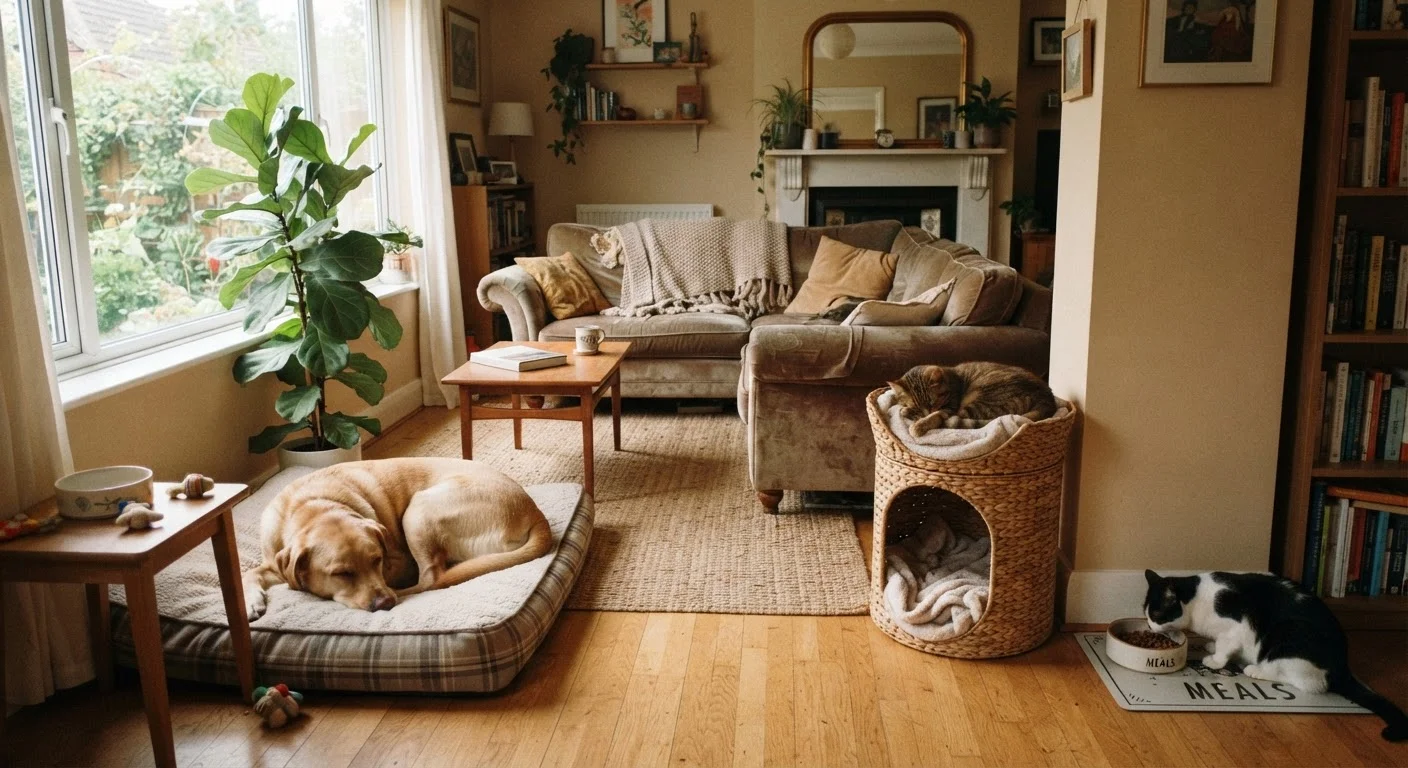
Photo credit: TheBlogZappier.com | Simple Search, Credible Results
In this article
Sharing a home between dogs, cats, or both requires thoughtful setup. Learn how to reduce conflict and give each animal what it needs to feel secure.
Key Takeaways
- Each pet needs its own space, feeding station, and resting area to feel secure.
- Separate feeding eliminates competition and helps monitor each animal's intake.
- Cats and dogs have fundamentally different territorial needs that require deliberate planning.
- Stress in multi-pet homes often shows up as subtle behavior changes before escalating.
- Gradual introductions and consistent routines are the most effective conflict-prevention tools.
Why Territory Matters in a Multi-Pet Home
Animals are territorial by instinct. Even pets that appear relaxed around each other are constantly reading spatial cues — who owns the couch corner, which animal gets the sunny window, where each one feels safest to eat. When those boundaries are unclear or constantly contested, chronic low-level stress builds up, often without owners noticing until it surfaces as aggression, hiding, or changes in appetite.
Understanding territory isn't about letting pets "sort it out." It's about designing an environment where each animal has predictable access to what it needs. For cats, this typically means vertical space and private retreat areas. For dogs, it often centers on proximity to their owner and a consistent resting spot. When those core needs are met separately, animals are far more likely to coexist calmly.
If you're still in the planning stage, the step-by-step introduction guide covers the gradual process of bringing a new animal home without disrupting your resident pet's sense of security.
When adding a second cat to a household, follow the "one per cat plus one" rule for litter boxes — two cats means three boxes, placed in different locations. This single step prevents the majority of inter-cat territorial disputes.
Litter box competition is a leading source of stress in multi-cat homes, and inadequate provision is routinely identified by feline behaviorists as a primary cause of house-soiling and inter-cat aggression.
Feed pets facing away from each other, not toward each other across a shared room. Eye contact during feeding triggers guarding instincts even in otherwise relaxed animals.
Direct eye contact is a challenge signal in both dogs and cats. Removing it from the feeding context reduces arousal and makes meals calmer for every animal in the home.
Setting Up Space That Works for Everyone
The goal isn't equal space — it's appropriate space. A cat doesn't need the same square footage as a dog; it needs different kinds of access. Shelving, cat trees, and wall-mounted perches give cats elevation, which is a primary stress-reduction tool for the species. Dogs benefit more from defined floor-level zones: a crate, a mat, or a gated area that belongs to them.
Practical steps for multi-pet space planning:
- One resting area per pet, minimum. Beds and crates should be positioned so animals aren't forced to pass through each other's zone to reach their own.
- Litter boxes away from dog access. For cat-dog households, litter boxes must be inaccessible to dogs — both for hygiene and to prevent the cat from feeling ambushed mid-use.
- Gates and barriers as tools, not punishments. Baby gates or room dividers let animals decompress separately without being isolated.
- Multiple water stations. Resource guarding around water is underreported; placing bowls in separate rooms removes the pressure point entirely.
For more on structuring a home around your animals' needs, see building a pet-friendly home.
Start With More Resources, Not Fewer
When in doubt, add rather than remove. Two pets sharing one water bowl, one sunny perch, or one exit from a room will experience more competition than two pets with duplicated access points. Abundance of resources is the simplest structural intervention available to multi-pet owners.
Feeding Multiple Pets Without Conflict
Food is the most common flashpoint in multi-pet households. Even animals that get along well can become tense around meals. The safest baseline: feed every pet separately, in different rooms or with physical barriers between them, and remove bowls when meals are finished.
~70%
U.S. households with more than one pet
According to the American Pet Products Association's National Pet Owners Survey, the majority of pet-owning households in the U.S. have multiple animals.
#1
Most common multi-pet conflict trigger
Veterinary behaviorists consistently identify feeding time as the most frequent flashpoint for tension and aggression between pets sharing a home.
Key feeding strategies that reduce tension:
- Scheduled meals over free-feeding. When food is available only at set times, owners can supervise and separate animals during the window that matters most.
- Species-appropriate food in the right location. Cat food is nutritionally unsuitable for dogs (and vice versa), and dogs will eat cat food opportunistically. Feeding cats on an elevated surface dogs cannot reach solves both problems at once.
- Monitor intake individually. In a multi-pet home, it's easy to miss that one animal is eating another's portion. Separate feeding helps you catch appetite changes — an early indicator of illness — before they're masked.
For cats with specific dietary considerations, the Pet Nutrition hub provides clear guidance on feeding requirements across life stages.
Managing Mixed-Species Households
Dogs and cats communicate differently. A dog's direct, bouncy approach is often read by a cat as a threat, even when the dog is being friendly. This mismatch in social signaling is the root of most cat-dog conflict — it's rarely about aggression and more often about miscommunication.
Never Force Proximity Between Animals
Holding a cat near a dog — or physically pushing two pets together to "let them work it out" — almost always backfires. Forced contact removes the animal's ability to retreat, which is the primary tool they use to de-escalate tension. Always allow each animal to choose the distance they're comfortable with, especially during early cohabitation.
Building calm coexistence in a cat-dog home requires:
- Cat-only escape routes. Every room a cat occupies should have a high surface or exit the dog cannot access. This gives the cat genuine agency — the ability to leave — which dramatically reduces defensive behavior.
- Controlled initial interactions. Keep the dog on a leash during early shared time, and allow the cat to approach on its own terms. A cat that chooses proximity is far less stressed than one that feels cornered.
- Separate enrichment schedules. Walk or exercise the dog before shared free time in the house. A calmer dog is a less intimidating presence for a cat. See enrichment vs. exercise for a practical breakdown of what each animal type actually needs.
Multi-dog households have their own dynamics, particularly around social hierarchy and play intensity. Owners should watch for resource guarding between dogs and intervene calmly and consistently rather than waiting for disputes to resolve on their own.
“The biggest mistake people make in multi-pet homes is assuming that animals will naturally sort out their own social structure. In reality, it's the environment the owner creates — the space, the resources, the routines — that determines whether animals can coexist comfortably.”
— Dr. Karen Overall, Veterinary Behaviorist and Applied Animal Behavior researcher
Signs of Stress and When to Seek Help
Multi-pet stress often accumulates quietly. By the time an owner notices a problem, the animal may have been uncomfortable for weeks. Knowing what to look for early makes a real difference.
Common stress signals by species:
- Cats
- Hiding more than usual, reduced grooming or over-grooming, changes in litter box use, decreased appetite, or increased vocalization.
- Dogs
- Excessive lip-licking, yawning out of context, avoiding eye contact, whale eye (showing the whites of the eyes), or resource guarding that wasn't previously present.
If these behaviors appear, start by auditing space and feeding arrangements before assuming the animals are fundamentally incompatible. In most cases, adding resources — more resting spots, an additional water station, separate feeding rooms — resolves the tension. If behavior escalates to sustained aggression or one animal is consistently preventing another from eating, resting, or using the litter box, consult a veterinary behaviorist or certified applied animal behaviorist. These are credentialed professionals who can assess the household dynamic and provide a structured management plan.
General information about daily routines that support pets' wellbeing is also covered in daily routines that keep pets healthy.
This article is for general informational and educational purposes only. It is not a substitute for professional veterinary or behavioral advice. If your pet is showing signs of significant distress or aggression, consult a qualified veterinarian or certified animal behaviorist.

Author
Pets & Animals Editorial Team
Pets & Animals Editorial Team is the collective byline for our editorial team and contributor network. Articles published under this byline or an editorial pen name are researched, written, and reviewed according to our editorial standards for clarity, consistency, and independence before publication.
View all articles →