
Indoor Enrichment: Keeping Pets Mentally Stimulated Without a Large Space
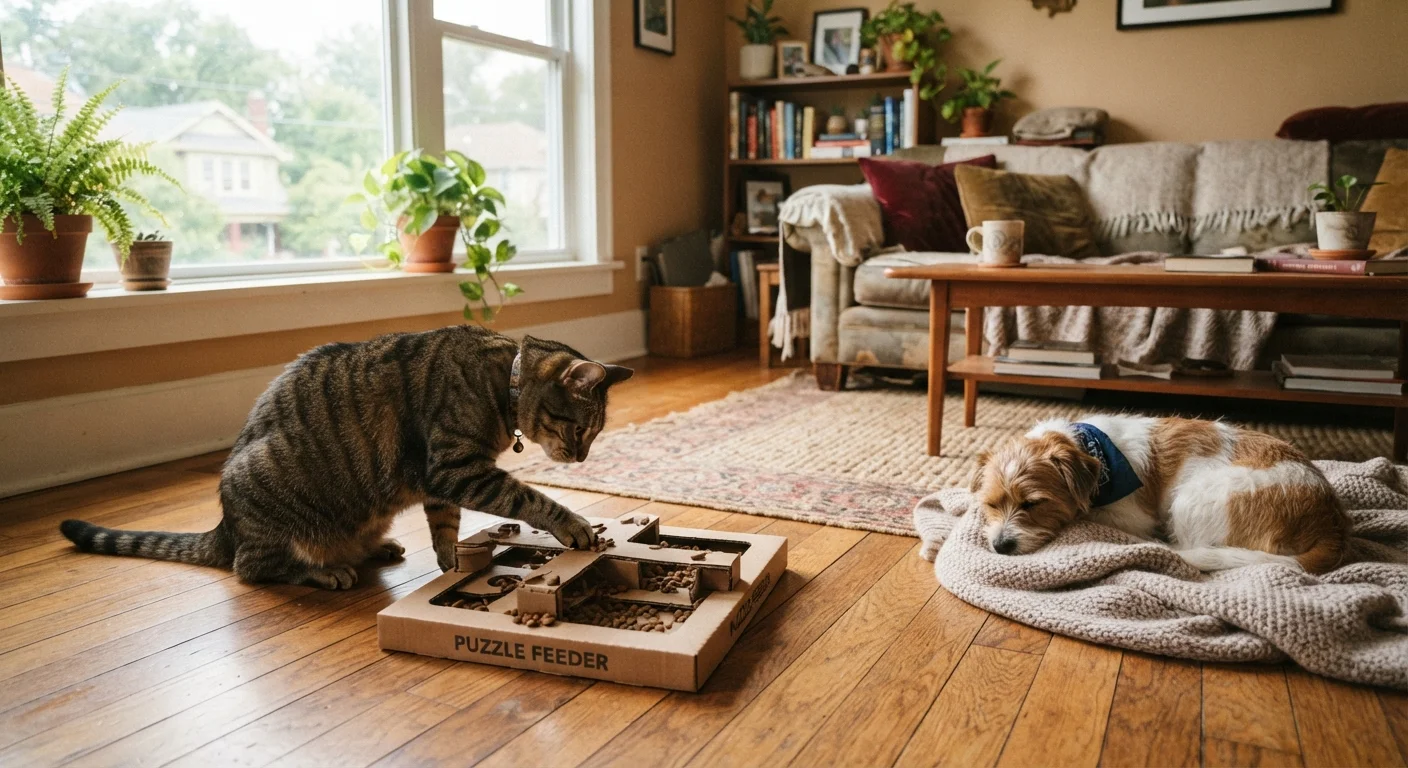
Photo credit: TheBlogZappier.com | Simple Search, Credible Results
In this article
Boredom and under-stimulation affect pets in small homes just as much as physical inactivity. Practical enrichment ideas for cats, dogs, and small animals.
Key Takeaways
- Mental under-stimulation can cause anxiety, destructive behavior, and health issues in pets of all sizes.
- Enrichment activities engage instincts like foraging, hunting, and problem-solving without requiring a large home.
- Puzzle feeders, scent work, and vertical space are effective tools for cats, dogs, and small animals alike.
- Short, frequent enrichment sessions are often more beneficial than one long daily activity.
- Rotating activities regularly prevents habituation and keeps pets engaged over the long term.
Why Indoor Enrichment Matters
A small apartment or compact home doesn't limit a pet's need for mental stimulation — it just changes how that stimulation is delivered. Behavioral research consistently shows that boredom and under-stimulation contribute to a range of problems in domestic animals: destructive chewing in dogs, excessive grooming or aggression in cats, and repetitive behaviors in small mammals like rabbits and guinea pigs.
Enrichment refers to any activity or environmental modification that allows a pet to engage in species-appropriate behaviors — foraging, hunting, exploring, or problem-solving. These activities are distinct from exercise, though both matter. For a deeper look at how they differ, see our article on enrichment versus exercise.
The good news: effective enrichment doesn't require a yard or a large floor plan. The strategies below work in studios, apartments, and smaller homes — and most cost little or nothing to implement.
Use Puzzle Feeders and Food-Dispensing Toys
Replacing a standard food bowl with a puzzle feeder is one of the most research-supported enrichment strategies available. Dogs, cats, and many small animals are natural foragers — eating from a stationary bowl eliminates the mental effort that feeding would naturally require.
Puzzle feeders range from simple rubber Kongs stuffed with food to multi-step sliding tile puzzles. Start with an easier difficulty level and increase complexity as your pet gains confidence. Even scattering dry kibble across a snuffle mat — a mat with fabric strips that hides food — engages a dog's nose and slows meal consumption. For cats, dividing daily portions into several small puzzle feeders placed around the home mimics the pattern of hunting multiple small prey throughout the day.
Replacing a food bowl with a puzzle feeder engages foraging instincts in minutes.
Introduce Scent Work and Nose Games
A dog's sense of smell is estimated to be tens of thousands of times more sensitive than a human's. Nose work — hiding treats or scented objects for your pet to find — tires a dog out mentally in ways that a short walk simply cannot replicate.
At home, begin by hiding small treats under cups or behind furniture and encouraging your dog to find them using scent. Over time, you can introduce specific scents paired with a reward, which forms the basis of formal nose work training used by detection dogs. Cats also respond well to scent enrichment: rotating novel smells such as dried herbs (catnip, valerian, silver vine) or rotating toys that carry outdoor scents can spark curiosity and investigation.
Nose work can tire a dog mentally more effectively than a short walk.
Add Vertical Space for Cats
Cats are vertical animals — they instinctively seek elevated positions for observation, safety, and territory. In a small home, vertical space is often more valuable than floor space. Cat trees, wall-mounted shelves arranged as climbing paths, and window perches can dramatically increase the usable territory your cat perceives.
Position elevated platforms near windows so cats can observe outdoor activity — birds, squirrels, and street movement all serve as passive environmental enrichment. This is sometimes called a "kitty TV" setup, and it costs nothing beyond initial installation. For a full range of feline-specific ideas, our article on indoor cat enrichment goes into considerable depth.
Vertical space matters more to cats than floor area — shelves cost less than square footage.
Rotate Toys to Prevent Habituation
Animals habituate to familiar objects quickly — a toy that captivates a cat on Monday may be ignored by Wednesday. Rather than buying new toys constantly, put half of your pet's current toys away and reintroduce them on a rotating basis. When a toy reappears after a week or two, it often registers as novel again and sparks renewed interest.
This principle applies across species. Rabbits, guinea pigs, and parrots all benefit from rotating enrichment items — cardboard tunnels, wooden chews, foraging baskets, and mirrors are inexpensive options. The goal is mild novelty: a predictable environment with occasional, manageable surprises.
Rotating toys costs nothing and consistently renews a pet's interest in familiar objects.
Try Short Training Sessions as Mental Exercise
Training is one of the most underused enrichment tools for indoor pets. Teaching a dog a new cue — even something simple like "spin" or "touch" — requires concentration and offers a reward, making it inherently stimulating. Five-minute training sessions two or three times a day can satisfy a dog's need for mental engagement even on days when outdoor exercise is limited.
Cats can also be trained using positive reinforcement. Many respond well to target training (following a stick or finger with their nose) and can learn behaviors including sit, high-five, and recall. Beyond novelty, training deepens the bond between owner and pet and provides a reliable, low-cost daily enrichment activity. If you're working within an apartment context specifically, our guide on apartment living with a dog includes additional strategies for dogs in compact homes.
Five minutes of training provides more cognitive challenge than most toys offer.
Create Safe DIY Enrichment From Household Items
Commercial enrichment products are useful but not necessary. Many effective activities can be built from cardboard boxes, paper bags, muffin tins, and egg cartons. For dogs, placing kibble in a muffin tin and covering each cup with a tennis ball creates a basic foraging puzzle. For cats, a paper bag with the handles removed and a treat hidden inside provides both scent and tactile exploration.
Rabbits and guinea pigs benefit from cardboard tunnels, hay stuffed into paper tubes, and simple mazes made from cardboard walls. The novelty of the object and the hidden reward are what matter — not the cost or complexity of the item. Rotating homemade enrichment items alongside commercial ones keeps the experience varied without significant expense.
A muffin tin and tennis balls make a foraging puzzle that costs nothing.
Building a Richer Daily Routine
The most effective enrichment programs are consistent rather than elaborate. Rotating through a handful of the strategies above — even for ten to fifteen minutes per session — can meaningfully reduce stress-related behaviors and support cognitive health, particularly in older pets.
Start Small and Build Gradually
If your pet is new to structured enrichment, introduce one activity at a time rather than several at once. Too much novelty simultaneously can cause stress rather than stimulation in anxious animals. Watch for signs of frustration — pawing repeatedly at a puzzle without success, for example — and simplify the task if needed. Success builds confidence, which makes future enrichment more effective.
If you share your home with multiple animals, enrichment planning becomes a little more complex. Our guide on managing multi-pet households covers how to give each animal its own stimulating space without creating territorial conflict. And if you're working with a compact floor plan more broadly, building a pet-friendly home offers practical layout and design ideas worth exploring.
This article is for general informational purposes only. For concerns about your pet's behavior, health, or specific enrichment needs, consult a licensed veterinarian or a certified animal behaviorist.

Author
Pets & Animals Editorial Team
Pets & Animals Editorial Team is the collective byline for our editorial team and contributor network. Articles published under this byline or an editorial pen name are researched, written, and reviewed according to our editorial standards for clarity, consistency, and independence before publication.
View all articles →