
What the MOT Test Actually Inspects (and What It Doesn't)
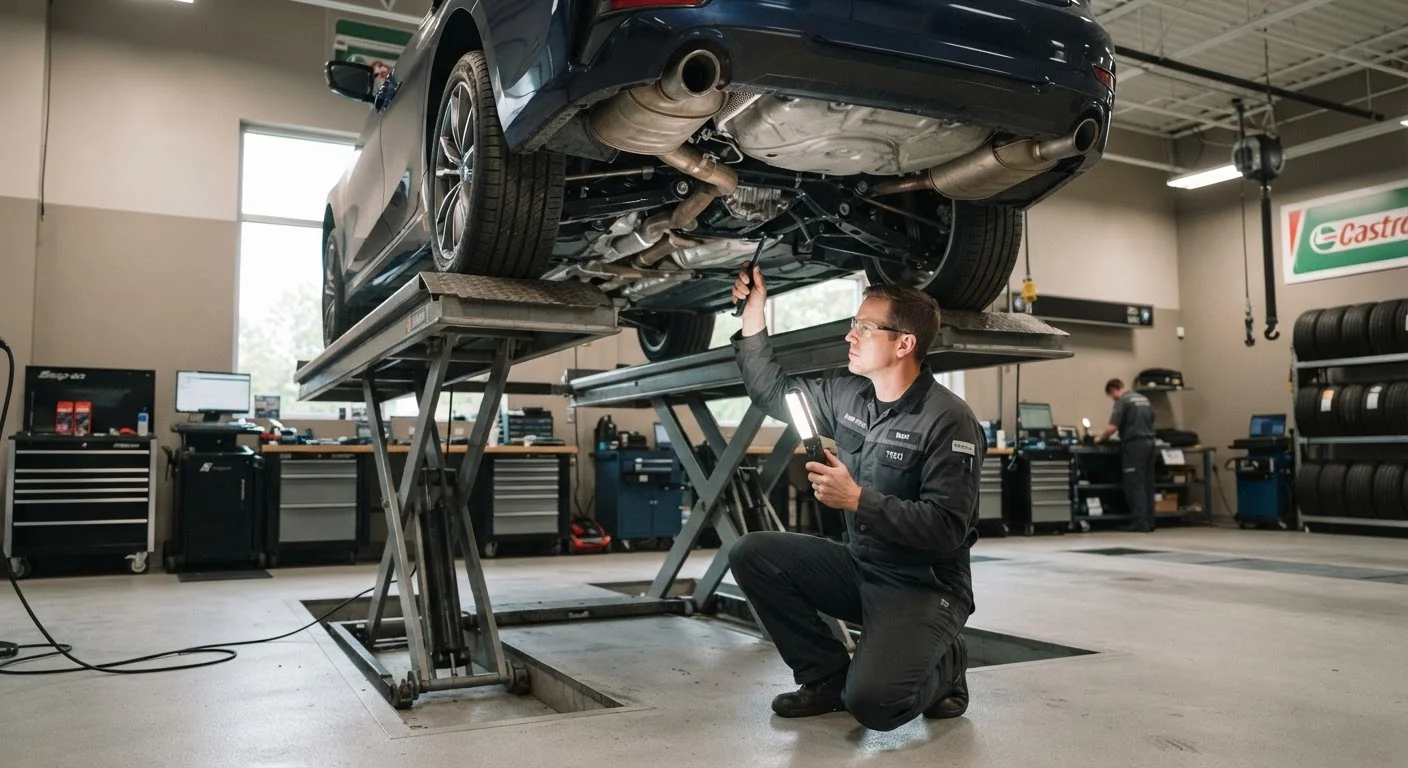
Photo credit: TheBlogZappier.com | Simple Search, Credible Results
In this article
A clear breakdown of every category the MOT covers, what counts as a failure, and what falls outside its scope entirely.
Key Takeaways
- The MOT checks safety and emissions, not the overall mechanical condition of your vehicle.
- Defects are classified as Dangerous, Major, or Minor - only the first two result in a failure.
- Items like engine condition, clutch wear, and general servicing are outside the MOT's scope.
- A valid MOT certificate does not replace regular maintenance or a pre-purchase inspection.
- Advisories on your MOT certificate flag issues to watch - they should not be ignored.
What the MOT Is Designed to Do
The MOT test exists to ensure every vehicle on UK roads clears a minimum safety and environmental threshold. It is not a service, not a mechanical health check, and not a guarantee of reliability - it is a snapshot assessment of specific, defined checkpoints on a specific day.
Understanding this distinction matters. Many drivers assume a freshly minted MOT certificate signals a car is in good shape overall. In reality, a vehicle can pass the MOT with worn shock absorbers, a deteriorating clutch, or an engine burning oil - because none of those are within the test's scope.
For a broader picture of keeping your vehicle in genuine good health, see your car's full maintenance schedule, which covers the service intervals and checks that sit outside the MOT's remit.
What the MOT Actually Inspects
MOT testers work through a standardised checklist set by the DVSA. The main inspection categories are:
- Lighting and signalling: Headlights, brake lights, indicators, hazard lights, and number plate illumination must all function correctly and point in the right direction.
- Steering and suspension: The steering mechanism is checked for excessive play, worn joints, or damaged components. Suspension is inspected visually and through a plate test that measures movement.
- Brakes: Brake performance is tested on a rolling road. Both braking efficiency and the balance between left and right wheels are measured against set thresholds.
- Tyres and wheels: Tread depth must meet the legal minimum of 1.6 mm across the central three-quarters of the tyre. Tyres are also checked for bulges, cuts, and mismatched types on the same axle.
- Seatbelts: All belts must retract, latch, and show no signs of fraying or damage.
- Bodywork and structure: Sharp edges, excessive corrosion near structural points, and insecure panels are assessed.
- Visibility: Windscreen condition, wiper function, horn, and mirrors are all checked.
- Emissions: Exhaust emissions are tested against standards that vary by fuel type and vehicle age.
1.6 mm
Legal minimum tyre tread depth in the UK
This threshold applies across the central three-quarters of the tyre's breadth and around the full circumference, per UK road traffic law.
3 years
Age at which most vehicles first require an MOT
After the first test, an annual MOT is required for the vehicle's lifetime under current UK regulations.
3 categories
MOT defect severity classifications
The DVSA classifies defects as Dangerous, Major, or Minor - only the first two cause an outright test failure.
Defects found during the test are classified as Dangerous (immediate road risk), Major (likely to cause danger), or Minor (low risk, recorded as advisory). Only Dangerous and Major defects result in a failure.
What Falls Outside the MOT's Scope
Knowing what the MOT does not check is just as important as knowing what it does. The following are explicitly excluded:
- Engine internals: Oil pressure, engine wear, timing chain condition, and similar mechanical factors are not assessed.
- Clutch and gearbox: Unless a component is visibly leaking onto braking systems, transmission condition is not evaluated.
- Air conditioning: The refrigerant level, compressor function, and cooling performance are outside the test.
- General servicing items: Cabin air filters, spark plugs, brake fluid quality, and coolant concentration are not checked.
- Wheel alignment: Tracking is not measured, even though poor alignment accelerates tyre wear and affects handling.
The MOT Is Not a Service Substitute
Some drivers delay or skip routine servicing on the assumption that a recent MOT pass signals a healthy vehicle. This is a misconception with real consequences. Fluid changes, filter replacements, and component inspections that fall outside the MOT's checklist are the responsibility of the owner's regular service schedule - not the test station.
This is why the MOT should be viewed alongside - not instead of - a regular service schedule. The car maintenance hub covers the full range of checks that keep vehicles running reliably between MOT dates.
How to Use Your MOT Results Wisely
When you collect your MOT certificate, review every entry - not just the pass or fail result. Advisories deserve serious attention. A tester who flags a tyre showing early sidewall cracking or a brake disc approaching its minimum thickness is giving you a meaningful heads-up. Addressing advisories promptly is generally less expensive than waiting for them to become failures.
Read Advisories as a Maintenance Checklist
Every advisory on your MOT certificate represents a component that is currently legal but showing wear. Rather than discarding the certificate once you have confirmed a pass, use the advisory list as a prioritised maintenance prompt. Sharing it with your mechanic at the next service gives them a clear starting point.
If you are buying a used vehicle, a clean MOT history is useful evidence, but it is not a substitute for an independent pre-purchase inspection. A professional mechanic can assess the components the MOT does not cover. For context on which tasks warrant professional input, see DIY car maintenance vs. taking it to a mechanic.
Finally, treat routine maintenance as the foundation that the MOT sits on top of - not the other way around. The routine car maintenance guide outlines the service tasks that protect your vehicle year-round, regardless of when your next test falls.
Frequently Asked Questions

Author
Autos & Driving Editorial Team
Autos & Driving Editorial Team is the collective byline for our editorial team and contributor network. Articles published under this byline or an editorial pen name are researched, written, and reviewed according to our editorial standards for clarity, consistency, and independence before publication.
View all articles →