
Tyre Markings Decoded: Reading the Numbers on Your Sidewall
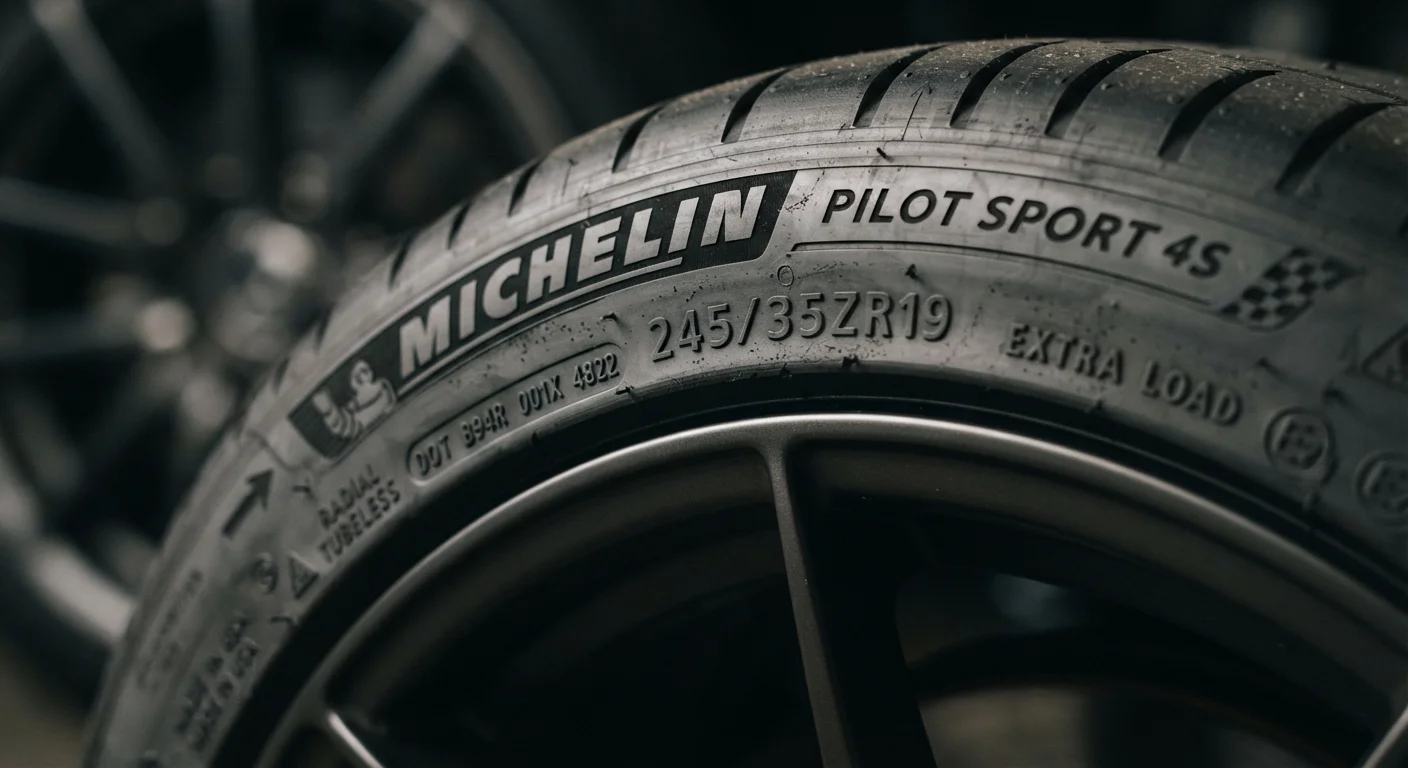
Photo credit: TheBlogZappier.com | Simple Search, Credible Results
In this article
Those numbers and letters on your tyre sidewall carry important information. Here's what each section means.
The Anatomy of a Tyre Code
That string of characters moulded into your tyre's sidewall - something like P215/65R17 98H - follows a standardized format used across the industry. Each segment communicates a specific physical characteristic. Reading it correctly means you'll always know whether a replacement tyre is truly compatible with your vehicle.
| Standard tyre code format | P215/65R17 98H |
| Section width unit | Millimeters (e.g., 215 mm) |
| Rim diameter unit | Inches (e.g., 17 in) |
| DOT manufacture date digits | Last 4 of DOT code (WWYY) (U.S. Department of Transportation) |
| Tyre replacement age guideline | 6-10 years from manufacture date (General industry guidance; consult your vehicle manufacturer) |
| Typical speed rating range | Q (99 mph) to Y (186 mph) |
The code typically begins with a type prefix. "P" stands for passenger vehicle; "LT" indicates light truck. Some tyres carry no prefix, which generally signals a European metric sizing standard. This distinction matters because LT-rated tyres have higher load requirements than P-rated ones.
Breaking Down Each Number and Letter
After the type prefix, the numbers follow in a predictable sequence:
- Section width - The first three digits (e.g., 215) give the tyre's width in millimeters, measured from sidewall to sidewall when properly mounted.
- Aspect ratio - The two digits after the slash (e.g., 65) express the sidewall height as a percentage of the section width. A 65 aspect ratio means the sidewall height is 65% of 215 mm, or about 140 mm.
- Construction type - The letter "R" means radial construction, which is by far the most common type on modern passenger vehicles.
- Rim diameter - The following number (e.g., 17) is the wheel diameter in inches. This must match your wheel exactly.
- Load index - The number after the space (e.g., 98) is a coded value. A load index of 98 corresponds to a maximum load capacity of 1,653 lbs per tyre - always reference a load index chart for the exact figure.
- Speed rating - The final letter (e.g., H) indicates the maximum sustained speed the tyre is engineered for. "H" corresponds to 130 mph. This is a design parameter, not an invitation to exceed legal speed limits.
The DOT Code and Manufacturing Date
Elsewhere on the sidewall, you'll find a string beginning with "DOT" - the U.S. Department of Transportation compliance identifier. The last four digits of this sequence are the most actionable piece of information for most drivers.
Those four digits represent the week and year of manufacture. For example, "2319" means the 23rd week of 2019. Tyres degrade from the inside out as rubber compounds oxidize over time, even when tread depth looks acceptable. Most vehicle and tyre manufacturers recommend replacing tyres that are 6 to 10 years old regardless of visual condition.
4 digits
DOT code section indicating manufacture date
The final four digits of the DOT code reveal the week and year of production - critical for assessing tyre age.
6-10 years
General tyre replacement age window
Most vehicle and tyre manufacturers recommend replacing tyres within 6 to 10 years of the manufacture date, regardless of tread depth.
If you're purchasing used tyres or a vehicle with unknown service history, locating the DOT date is one of the first checks worth making. See our tyre care guidance for more on how age affects tyre integrity.
Always Match Your Vehicle's Specifications
The tyre size stamped in your owner's manual or on the driver's door jamb placard is the manufacturer's recommended fitment. Deviating from those specifications - particularly in load index or rim diameter - can affect handling, fuel economy, and safety. If you're considering a different size, consult a qualified tyre professional first.
Putting It All Together
Once you can read a tyre sidewall fluently, you're in a much stronger position during any tyre-related conversation - whether at a service centre or when verifying that a replacement is correct before it's mounted. Cross-reference the size against your vehicle's door jamb placard, confirm the load index meets or exceeds the original specification, and check the DOT date if age is a concern.
For broader vehicle literacy, our dashboard warning lights reference covers the symbols that often appear alongside tyre-pressure alerts - useful reading for any driver building their automotive knowledge base. And if you enjoy decoding vehicle identifiers, reading a VIN follows a similar logic of structured, position-based information.
Tyre markings exist to protect you - they encode the engineering decisions made to keep a specific tyre safe within defined limits. Understanding them is one of the more practical steps any driver can take toward informed vehicle ownership.

Author
Autos & Driving Editorial Team
Autos & Driving Editorial Team is the collective byline for our editorial team and contributor network. Articles published under this byline or an editorial pen name are researched, written, and reviewed according to our editorial standards for clarity, consistency, and independence before publication.
View all articles →