
How Vehicle Registration and Title Transfers Actually Work
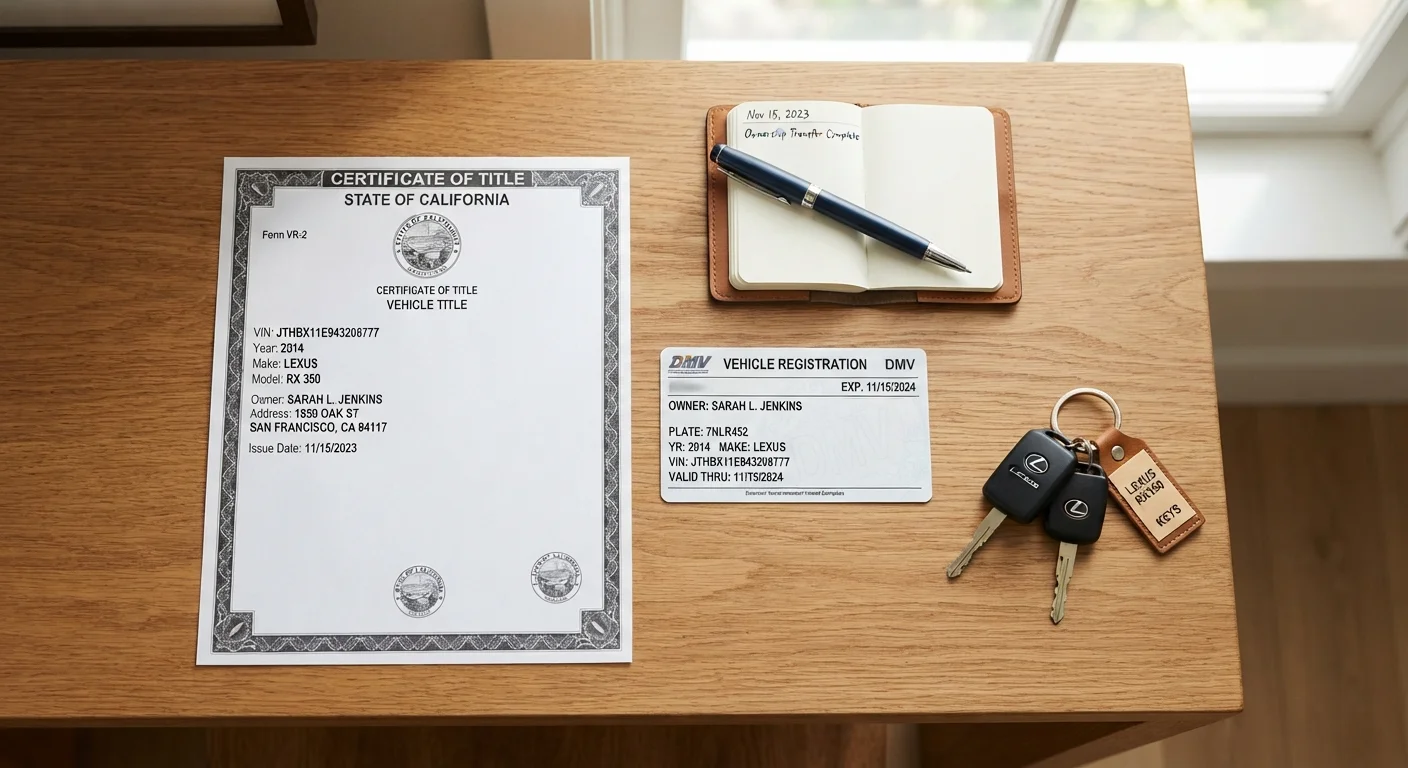
Photo credit: TheBlogZappier.com | Simple Search, Credible Results
In this article
Confused by title transfers and registration paperwork? This guide walks through the process in plain terms, from purchase to plate.
Key Takeaways
- A vehicle title proves legal ownership; registration is your authorization to drive it on public roads.
- Title transfers must be completed promptly after a sale - most states have a strict deadline.
- Both buyer and seller have legal obligations to fulfill during a private-party transaction.
- Fees vary by state, vehicle value, and whether a lien exists on the title.
- Errors on title paperwork can delay the process significantly and may require notarization to fix.
Title vs. Registration: What Each Document Actually Does
These two documents are often confused, but they serve distinct legal purposes. A vehicle title is a certificate of ownership - it establishes who legally owns the vehicle and tracks that ownership through every sale. A vehicle registration is a state-issued authorization to operate that vehicle on public roads, renewed periodically (usually annually) and tied to a specific owner and address.
Think of it this way: the title answers who owns it, and the registration answers is it legal to drive it right now. You need both in order. If you're new to navigating vehicle paperwork, the glossary of common car ownership document terms is a helpful reference for terminology you'll encounter along the way.
Vehicle Title Certificate
The primary legal document establishing ownership that must be signed over by the seller during any transfer.
Bill of Sale
Documents the agreed sale price, date, and parties involved - essential for tax calculation and dispute protection.
Odometer Disclosure Statement
Federally required form confirming the vehicle's mileage at the time of sale for vehicles under ten model years old.
Proof of Auto Insurance
Most states require proof of minimum liability coverage before issuing or transferring a registration.
Lien Release Letter
Confirms that any outstanding loan on the vehicle has been paid off and the lender no longer holds interest in the title.
What You Need Before You Start
The documents and information required for a title transfer and registration can vary by state, but a consistent core set applies nearly everywhere. Gather everything before your DMV visit to avoid multiple trips.
What you will need
Check Your State DMV Website First
Requirements, fees, and accepted forms vary significantly from state to state. Your state's Department of Motor Vehicles (DMV) or equivalent agency publishes current checklists, fee schedules, and appointment options online. Reviewing these before your visit can prevent a wasted trip and avoid re-scheduling delays.
Step-by-Step: Completing the Transfer
Whether you're buying from a dealership or through a private-party sale, the sequence below covers the essential steps. Dealerships often handle much of the paperwork on your behalf and charge a documentation fee for that service - but understanding the process means you can verify their work and avoid surprises. For a broader view of what ownership entails beyond paperwork, see everything first-time car owners need to know.
Confirm the Title Is Clean and Accurate
Before money changes hands, examine the title carefully. Check that the seller's name matches their ID, the VIN on the title matches the VIN on the vehicle's dashboard and door jamb, and there are no signs of alteration or erasure. A salvage or rebuilt brand on the title indicates the vehicle was previously declared a total loss - a significant factor for insurance and resale value.
Complete the Title Assignment Section
The seller must sign and date the title in the designated assignment section - typically on the back of the certificate. Both buyer and seller complete their respective fields, including printed names, addresses, sale price, and odometer reading. Use a ballpoint pen and print clearly; crossed-out corrections or white-out may render the title unacceptable and require a bonded or replacement title process.
Obtain a Bill of Sale
While not always legally required, a bill of sale protects both parties. It should record the vehicle's year, make, model, VIN, sale price, date of transaction, and the names and signatures of both buyer and seller. Many states use the declared sale price to calculate the sales tax owed at registration, so accuracy matters. Your state DMV may provide a standard bill-of-sale form.
Resolve Any Outstanding Lien
If the seller financed the vehicle, a lienholder - typically a bank or credit union - may be listed on the title. The seller must obtain a lien release letter from the lender confirming the loan is paid in full. In some states, the lender holds the physical title until payoff; the buyer should not complete the purchase until the release process is clearly mapped out.
Visit Your State DMV or Equivalent Agency
Bring all required documents: the signed title, bill of sale, odometer disclosure statement, proof of insurance, and your photo ID. You will submit an application for a new title in your name and, simultaneously, register the vehicle. Some states allow this process online or by mail for straightforward transfers; others require an in-person visit. Check your state's requirements before showing up.
Pay Applicable Fees and Taxes
Expect to pay a title transfer fee, a registration fee, and in most states, a use tax or sales tax calculated on the vehicle's sale price. Fee schedules vary widely by state and sometimes by county. The DMV clerk will calculate the total owed. Accepted payment methods vary - cash, check, money order, and debit cards are common, but not all offices accept credit cards.
Receive Your Registration and License Plates
Once processed, you'll receive a registration certificate and, if applicable, new license plates or a registration sticker (decal) to affix to your existing plates. Keep the registration certificate in the vehicle - law enforcement can request it during a traffic stop. Your new title certificate will typically arrive by mail within a few weeks.
Never Drive on an Untransferred Title
Operating a vehicle before completing a title transfer creates legal and insurance exposure for both buyer and seller. If the vehicle is involved in an accident or incurs a traffic violation before the title is transferred, liability questions become complicated. Complete the transfer within your state's required timeframe - typically 10 to 30 days from the date of sale.
When Things Get Complicated
Most transfers go smoothly, but a few situations add complexity. If you're dealing with an inherited vehicle, the process involves probate documents and varies significantly by state - some states have simplified small-estate affidavit procedures. For vehicles purchased out of state, you'll typically need to complete a title transfer in your home state within the transfer deadline, and your new state may require a VIN inspection.
If the title is lost or damaged, the seller must apply for a duplicate title before the transfer can proceed. This takes time, so factor it into your purchase timeline. Titles issued by other countries require additional steps and may involve federal customs documentation.
Lien on the Title? Handle It First
If the seller still owes money on the vehicle, a lender holds a lien on the title. The lien must be formally released before a clean title can be transferred to the buyer. Never hand over the full purchase price until you have confirmed how the lien will be resolved - often by paying the lender directly or through an escrow arrangement.
For a fuller picture of how ownership evolves across a vehicle's life - from the factory to resale - the lifecycle of a car guide provides useful context. And if you're still deciding how to finance your purchase, financing vs. leasing is worth reviewing before you sign.

Author
Autos & Driving Editorial Team
Autos & Driving Editorial Team is the collective byline for our editorial team and contributor network. Articles published under this byline or an editorial pen name are researched, written, and reviewed according to our editorial standards for clarity, consistency, and independence before publication.
View all articles →