
The Truth About Fast Charging and Battery Health
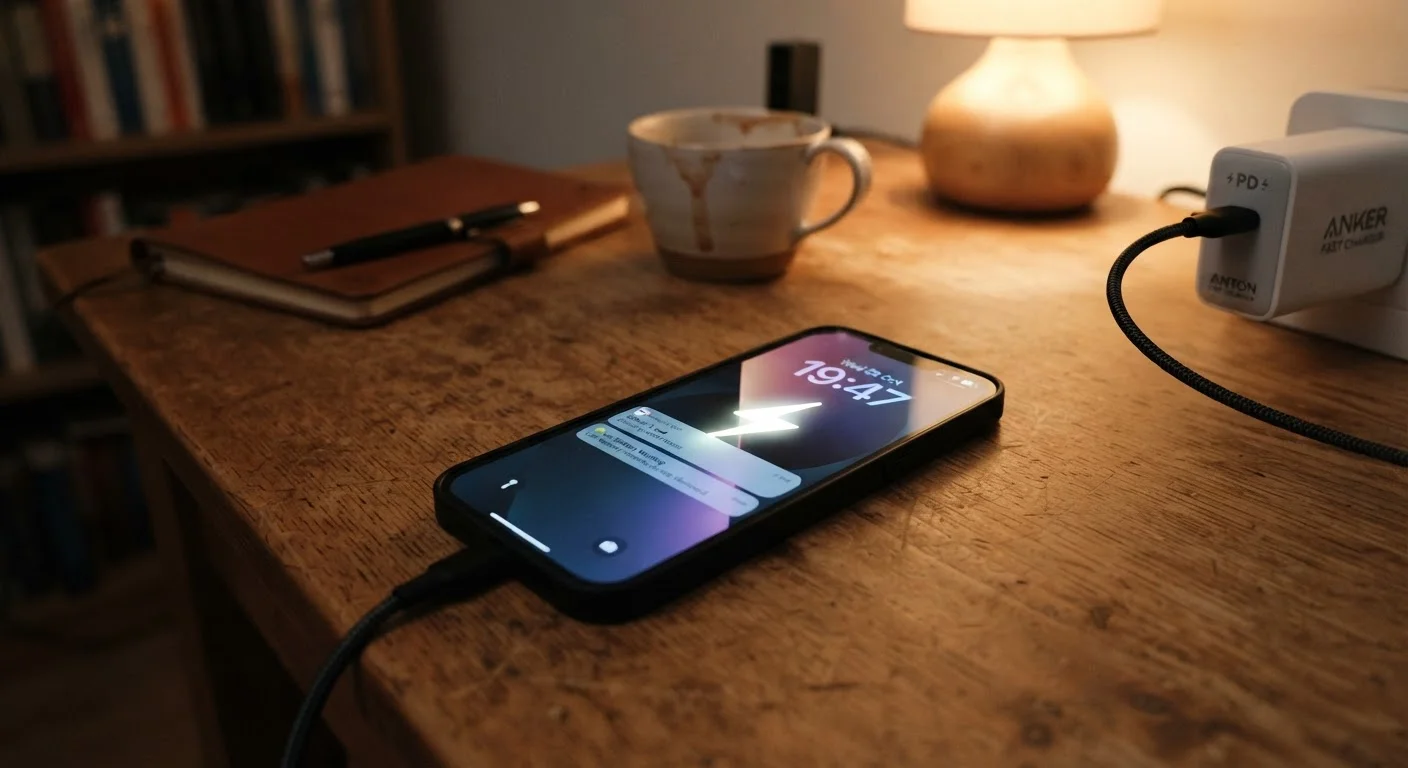
Photo credit: TheBlogZappier.com | Simple Search, Credible Results
Fast charging is convenient, but how does it affect your battery over time? Here's what the evidence actually shows.
Key Takeaways
- Fast charging does add more heat stress to batteries, but modern phones include thermal safeguards to limit damage.
- Battery capacity naturally declines over hundreds of charge cycles regardless of charging speed.
- Keeping your battery between 20% and 80% consistently can slow long-term degradation.
- Overnight charging on newer phones is generally safe due to trickle-charge and charge-limit features.
- Watt ratings alone don't tell the full story — charging protocols and thermal management matter more.
Why Fast Charging Sparks So Much Confusion
Fast charging has become one of the most marketed specs on smartphones. Manufacturers advertise 65W, 100W, even 240W charging speeds, and consumers reasonably wonder: what's the catch? The concern that speed comes at the cost of battery longevity is legitimate — but the reality is more nuanced than most headlines suggest.
Lithium-ion batteries degrade through a combination of heat, charge cycles, and voltage stress. Fast charging does introduce more heat than slow charging, which is a real factor. But modern phones don't simply dump maximum wattage into the battery from 0% to 100%. They use adaptive protocols that push harder when the battery is low and taper off as it fills — reducing heat buildup during the most vulnerable part of the charge cycle.
Understanding what actually drives battery wear helps cut through both the marketing hype and the overcautious myths. See also how charging habits fit into the bigger picture of phone performance over time.
Myth
Fast charging wrecks your battery much faster than slow charging.
Fact
Fast charging contributes to slightly faster degradation over time, but the difference is modest when thermal management is working properly.
The concern isn't unfounded — heat accelerates lithium-ion degradation, and fast charging generates more heat. But reputable phone manufacturers engineer multi-stage charging algorithms specifically to limit thermal stress. The bulk of the damage risk comes from sustained high temperatures, not from the peak wattage number on the spec sheet. Studies on lithium-ion aging consistently point to temperature as the primary degradation driver, with charging rate as a secondary factor.
Myth
Leaving your phone plugged in overnight destroys the battery.
Fact
On phones with modern charge management, overnight charging is generally safe because the device stops actively charging once full.
Older devices and older battery technology made this concern more valid. Today, most smartphones switch to a trickle charge or simply pause charging once they reach 100%, preventing the voltage stress of continuous overcharging. Some platforms also offer scheduled or optimized charging that learns your routine and delays reaching 100% until just before you typically unplug. That said, regularly keeping a battery at 100% for extended periods is not ideal — maintaining a charge range closer to 20–80% is a sound habit when convenient, though it's not worth losing sleep over.
Myth
A higher watt charger always means faster and more damaging charging.
Fact
Watt ratings describe maximum potential output — your phone only draws what its charging controller allows.
Charging speed is negotiated between the charger and the phone using a protocol (such as USB Power Delivery or a manufacturer-specific standard). Plugging a high-watt charger into a phone that supports lower wattage simply means the phone will draw at its own supported rate. You won't force-feed the battery by using a more powerful charger. This also means that using a charger rated above your phone's supported wattage is generally safe, though it won't charge faster than the phone's limit.
Myth
You should always let your battery drain to zero before recharging.
Fact
Fully draining a lithium-ion battery regularly accelerates wear — partial charges are better for longevity.
This advice made sense for older nickel-cadmium batteries, which suffered from a phenomenon called memory effect. Lithium-ion chemistry is different: deep discharges to 0% place more stress on the battery than topping up from 30% or 40%. Battery researchers generally recommend keeping lithium-ion cells in a moderate state of charge for longest life. Occasional full cycles are fine and sometimes useful for calibrating battery percentage displays, but making full discharges a daily habit works against longevity.
Myth
Third-party chargers always damage your battery.
Fact
Certified third-party chargers that support the correct protocol are generally safe; uncertified or counterfeit ones carry real risks.
The key distinction is certification. Chargers that carry legitimate USB-IF (USB Implementers Forum) certification or are certified for the specific fast-charge standard your phone uses are designed to meet safety standards. Counterfeit or very cheap uncertified chargers — often indistinguishable by appearance alone — may lack proper voltage regulation and protection circuits, which creates both battery and safety risks. Buying from established retailers and checking for certification markings is a practical safeguard.
What the Evidence Actually Shows
Battery health is measured in capacity retention — how much charge a battery holds compared to when it was new. Most lithium-ion batteries are designed to retain around 80% of their original capacity after 300 to 500 full charge cycles, though real-world results vary widely based on temperature exposure, charging habits, and usage patterns.
~80%
Typical capacity retention after 500 cycles
Lithium-ion batteries are generally engineered to retain around 80% of original capacity after 300–500 full charge cycles, though conditions vary by device and usage.
45°C+
Temperature threshold that accelerates battery wear
Battery research consistently identifies sustained exposure above approximately 45°C (113°F) as a significant driver of accelerated lithium-ion degradation.
Heat is consistently identified in battery research as the dominant factor in accelerated degradation — more so than charging speed itself. A phone that runs hot because of heavy gaming or poor ventilation while charging is harder on its battery than one that fast-charges in a cool environment with proper thermal management.
The practical implication: extreme heat (from direct sunlight, hot car interiors, or heavy load during charging) is a more actionable concern than the wattage on your charger. Charging your phone while it sits face-down on a soft surface that traps heat, for instance, is a habit worth reconsidering.
Heat Is the Real Enemy — Not Just Charging Speed
Charging your phone in direct sunlight, inside a hot car, or while it's inside a case that traps heat can push battery temperatures into ranges that cause meaningful long-term damage. If your phone feels uncomfortably hot during charging, removing the case or moving to a cooler surface is a simple step worth taking. Sustained high heat during charging is a more significant risk factor than the wattage of your charger.
For a related look at how battery specs translate to real-world use on laptops, the article on laptop battery life claims vs. reality covers similar ground across a different device category.

Author
Tech & Electronics Editorial Team
Tech & Electronics Editorial Team is the collective byline for our editorial team and contributor network. Articles published under this byline or an editorial pen name are researched, written, and reviewed according to our editorial standards for clarity, consistency, and independence before publication.
View all articles →