
Credit Utilisation: The Ratio That Quietly Shapes Your Score
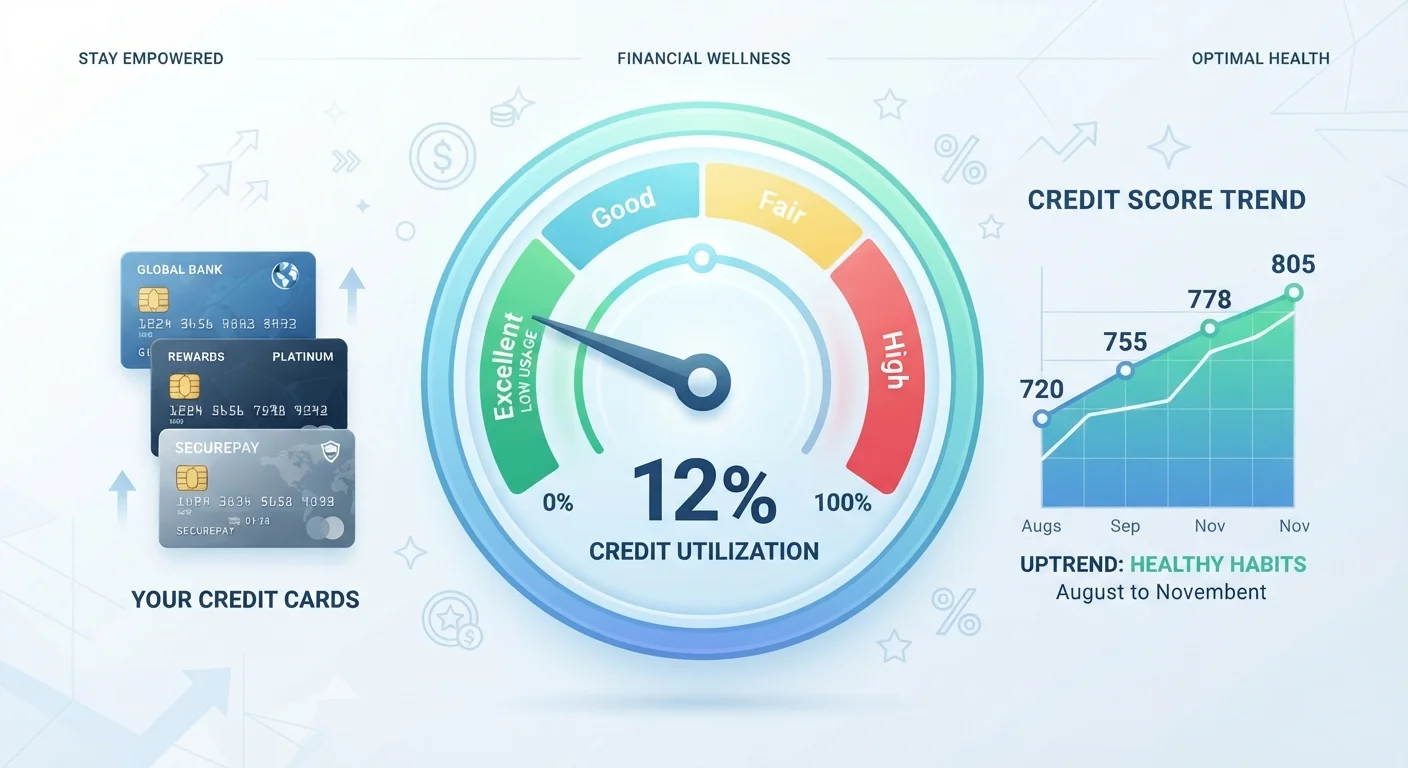
Photo credit: TheBlogZappier.com | Simple Search, Credible Results
In this article
Discover what credit utilisation is, how it's calculated, and practical ways to keep it at a level that supports a healthy score.
Key Takeaways
- Credit utilisation typically accounts for roughly 30% of a FICO score, making it the second most influential factor.
- Keeping utilisation below 30% is a widely cited guideline, but lower is generally better for your score.
- Utilisation is recalculated each billing cycle, so improvements can show up relatively quickly compared to other credit factors.
- Both your overall utilisation and per-card utilisation matter to scoring models.
- Paying balances in full each month is the most reliable way to keep utilisation low.
Why Utilisation Carries So Much Weight
Among the factors that shape a credit score, utilisation consistently ranks near the top in influence. Under the FICO model — the most widely used scoring system in the US — amounts owed, which includes utilisation, accounts for approximately 30% of your score. Only payment history, at 35%, carries more weight. For a full breakdown of all five scoring factors, see how each scoring factor is weighted.
The reason lenders care about this ratio is intuitive: a borrower using most of their available credit may be financially stretched, making them a higher risk. Conversely, someone using a small fraction signals they're not overly dependent on credit lines to cover everyday expenses.
~30%
Share of FICO score tied to amounts owed
According to FICO's publicly published score factor breakdown, 'amounts owed' — which includes credit utilisation — is the second largest component of a FICO score.
<10%
Utilisation common among high scorers
FICO data indicates that consumers in the highest score ranges typically carry utilisation ratios well below 10% across their revolving accounts.
1–2 cycles
Time for balance changes to appear in score
Because utilisation reflects current balances rather than long-term history, improvements from paying down debt can register in your score within one or two billing cycles.
It's worth understanding what utilisation does not capture. It doesn't reflect whether you pay on time, how long you've had accounts, or how many new applications you've made recently. Those are separate factors — each evaluated independently by scoring models, as explained in our guide to what a credit score actually measures.
How the Calculation Actually Works
The basic formula is straightforward: divide your total revolving balances by your total revolving credit limits, then multiply by 100 to get a percentage. If you carry $1,500 across two cards with a combined limit of $8,000, your aggregate utilisation is about 19%.
But the calculation doesn't stop at the aggregate level. Scoring models also look at each card individually. A single card at 80% capacity can drag your score down even if every other card has a zero balance. This is why spreading balances across cards — rather than concentrating debt on one — can sometimes be beneficial, all else being equal.
Pay Before the Statement Closes
If you want to lower the balance reported to the credit bureaus, make a payment before your statement closing date rather than waiting for the due date. The amount reported to bureaus is typically the balance on the statement close date. Even a partial early payment can reduce the utilisation figure that appears on your credit report.
One timing detail many people overlook: your balance is typically reported to the credit bureaus on your statement closing date, not after you pay your bill. So even if you pay in full every month, a large purchase made mid-cycle may still appear as a notable balance on your credit report. Making payments before the statement closes can lower the reported figure.
For clarity on related credit vocabulary, our glossary of key credit terms defines revolving credit, statement dates, and other concepts worth knowing.
Practical Ways to Manage Your Ratio
Improving credit utilisation doesn't require a dramatic financial overhaul. Several straightforward approaches can move the needle over time:
- Pay down balances strategically. Prioritise cards closest to their limit first, since per-card utilisation matters alongside your overall ratio.
- Request a credit limit increase. If your income and payment history support it, a higher limit on an existing card lowers your utilisation ratio without adding new debt — provided you don't increase your spending.
- Time large purchases carefully. If you know you'll carry a bigger balance after a major expense, consider making a mid-cycle payment to bring the balance down before the statement date.
- Avoid closing old accounts unnecessarily. Keeping older cards open maintains your total available credit. Common credit score myths often include the belief that closing unused cards is automatically good practice — it frequently isn't.
- Spread balances across cards when carrying a balance is unavoidable, rather than maxing out a single card.
These habits also reinforce broader credit-building practices covered in our guide to building credit responsibly over time. Good utilisation management works best alongside consistent on-time payments and a stable overall credit profile.
Utilisation Resets Each Month
Unlike payment history, which tracks a multi-year record, credit utilisation is based entirely on your current balances. This means both damage and improvement show up relatively quickly. A month of high utilisation won't follow you the way a missed payment can, but keeping it consistently low is what delivers lasting score benefits.
This article is for general informational and educational purposes only and does not constitute personalised financial or credit advice. Individual credit situations vary. Consider consulting a qualified financial professional for guidance specific to your circumstances.
Frequently Asked Questions

Author
Money & Finance Editorial Team
Money & Finance Editorial Team is the collective byline for our editorial team and contributor network. Articles published under this byline or an editorial pen name are researched, written, and reviewed according to our editorial standards for clarity, consistency, and independence before publication.
View all articles →