
Copay vs. Coinsurance: Two Ways Insurers Split the Bill With You
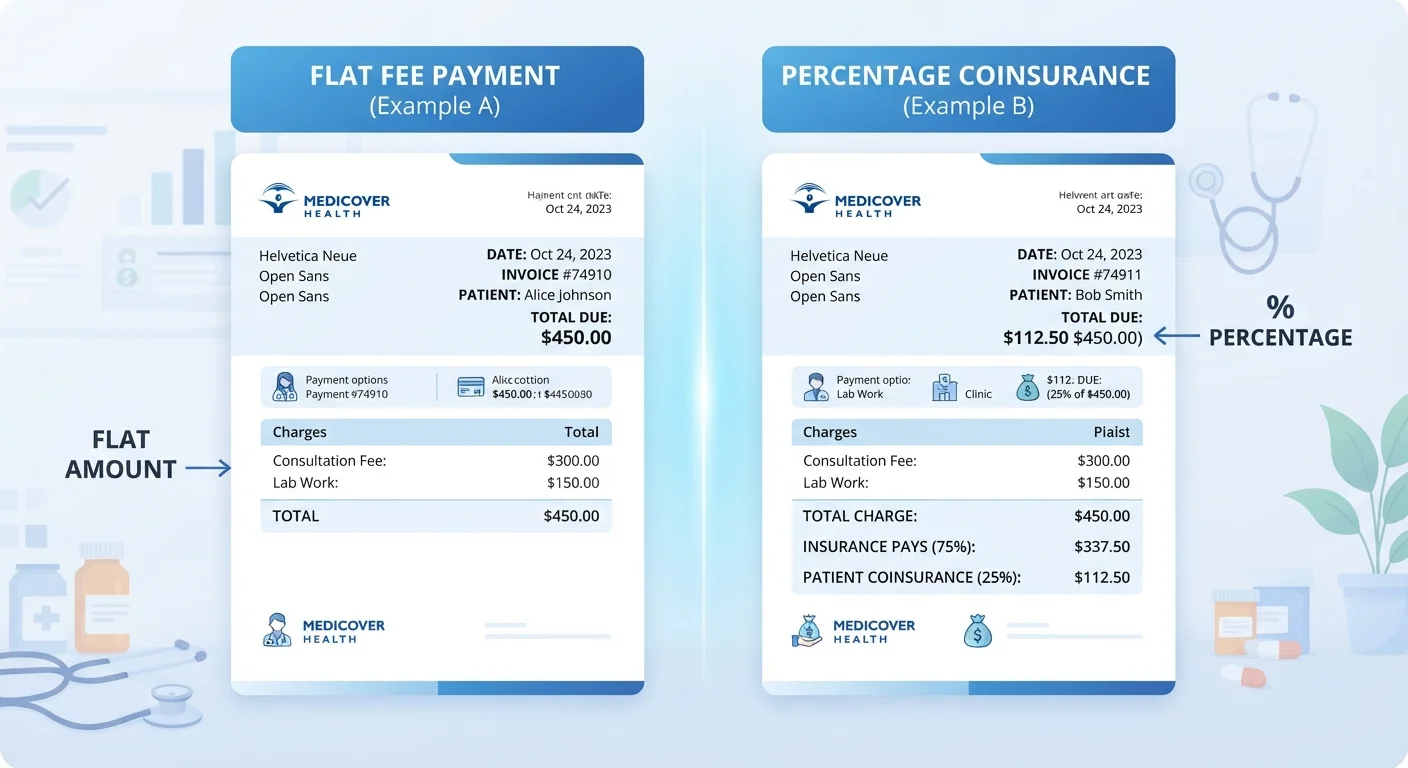
Photo credit: TheBlogZappier.com | Simple Search, Credible Results
In this article
Copays are fixed; coinsurance is a percentage. Understanding the difference can help you anticipate healthcare costs before you receive care.
Key Takeaways
- A copay is a fixed dollar amount you pay for a covered service, regardless of the total bill.
- Coinsurance is a percentage of the allowed cost you owe after your deductible is met.
- Copays offer cost predictability; coinsurance costs fluctuate with the price of the service.
- Both copays and coinsurance count toward your plan's out-of-pocket maximum.
- Some plans use one method, some use both — always check your Summary of Benefits.
What Each Term Actually Means
When you receive care under a health insurance plan, you're rarely on the hook for nothing — and rarely on the hook for everything. Instead, most plans use cost-sharing mechanisms that split the bill between you and your insurer. Two of the most common are the copay and coinsurance. Understanding how each works is foundational to reading any health plan correctly.
A copay (short for copayment) is a fixed, predetermined dollar amount you pay for a specific covered service. For example, your plan might require a $25 copay for a primary care visit and a $50 copay for a specialist appointment. That amount doesn't change based on what the provider charges — you pay $25 whether the visit is billed at $150 or $300.
Coinsurance works differently. It's a percentage of the allowed amount — meaning the rate your insurer has negotiated with the provider — that you're responsible for after your deductible has been met. A common split is 80/20: the insurer pays 80%, and you pay 20%. If the allowed amount for a procedure is $500, you'd owe $100. If it's $2,000, you'd owe $400.
For a broader look at how these terms fit into the full landscape of health coverage, see Deductibles, Copays, and Coinsurance: The Three Cost-Sharing Terms That Confuse Everyone.
| Criterion | Copay | Coinsurance |
|---|---|---|
| How it's calculated | Fixed dollar amount (e.g., $30) | Percentage of allowed cost (e.g., 20%) |
| Cost predictability | High — same amount every time | Variable — depends on the service cost |
| When it typically applies | Often before deductible is met | Usually after deductible is satisfied |
| Risk on expensive services | Lower — flat fee regardless of bill | Higher — percentage grows with the bill |
| Common plan types | HMOs, PPOs for routine care | HDHPs, PPOs for major services |
| Counts toward out-of-pocket max? | Yes (in most plans) | Yes |
How Each Interacts With Your Deductible and Out-of-Pocket Maximum
One source of confusion is how copays and coinsurance interact with other plan features — particularly the deductible and the out-of-pocket maximum.
With copays, many plans apply the copay immediately, even before your deductible is met. Your $25 copay for a primary care visit may be due on day one of your plan year, regardless of how much you've spent so far. Coinsurance, by contrast, typically kicks in after the deductible is satisfied. Until you've met that threshold — say, $1,500 — you may be paying the full allowed amount for services, not just your percentage share.
80/20
Typical coinsurance split in employer plans
An 80/20 split means the insurer covers 80% of the allowed amount and the enrollee pays the remaining 20% after their deductible is met.
$20–$50
Common copay range for primary care visits
Copay amounts vary widely by plan tier and service type; specialist and urgent care copays are typically higher than primary care copays.
Both mechanisms count toward your plan's out-of-pocket maximum. Once you hit that ceiling, your insurer generally covers 100% of allowed costs for the rest of the plan year. To understand where the deductible ends and the out-of-pocket maximum begins, see Deductible vs. Out-of-Pocket Maximum.
Your plan type also shapes which cost-sharing method you'll encounter. HMOs, PPOs, EPOs, and HDHPs each handle copays and coinsurance differently — HDHPs, for instance, lean heavily on coinsurance after a higher deductible. Always review your plan's Summary of Benefits and Coverage (SBC) document, which must clearly list your copays and coinsurance rates by service type.
Check Your Summary of Benefits and Coverage
Every health plan sold in the US must provide a standardized Summary of Benefits and Coverage (SBC) document. This two-page summary clearly lists your copays and coinsurance rates by service category — including primary care, specialists, emergency care, and prescription drugs. Reviewing the SBC before enrolling is one of the most reliable ways to compare cost-sharing structures across plans.
This article is for general informational purposes only and does not constitute personalized insurance, financial, or legal advice. Coverage terms, costs, and structures vary by insurer, plan, and state. Always read your actual policy documents and consult a licensed insurance agent or adviser regarding your specific situation.

Author
Insurance Basics Editorial Team
Insurance Basics Editorial Team is the collective byline for our editorial team and contributor network. Articles published under this byline or an editorial pen name are researched, written, and reviewed according to our editorial standards for clarity, consistency, and independence before publication.
View all articles →