
Health Insurance Plan Structures: HMO, PPO, EPO, and HDHP Compared
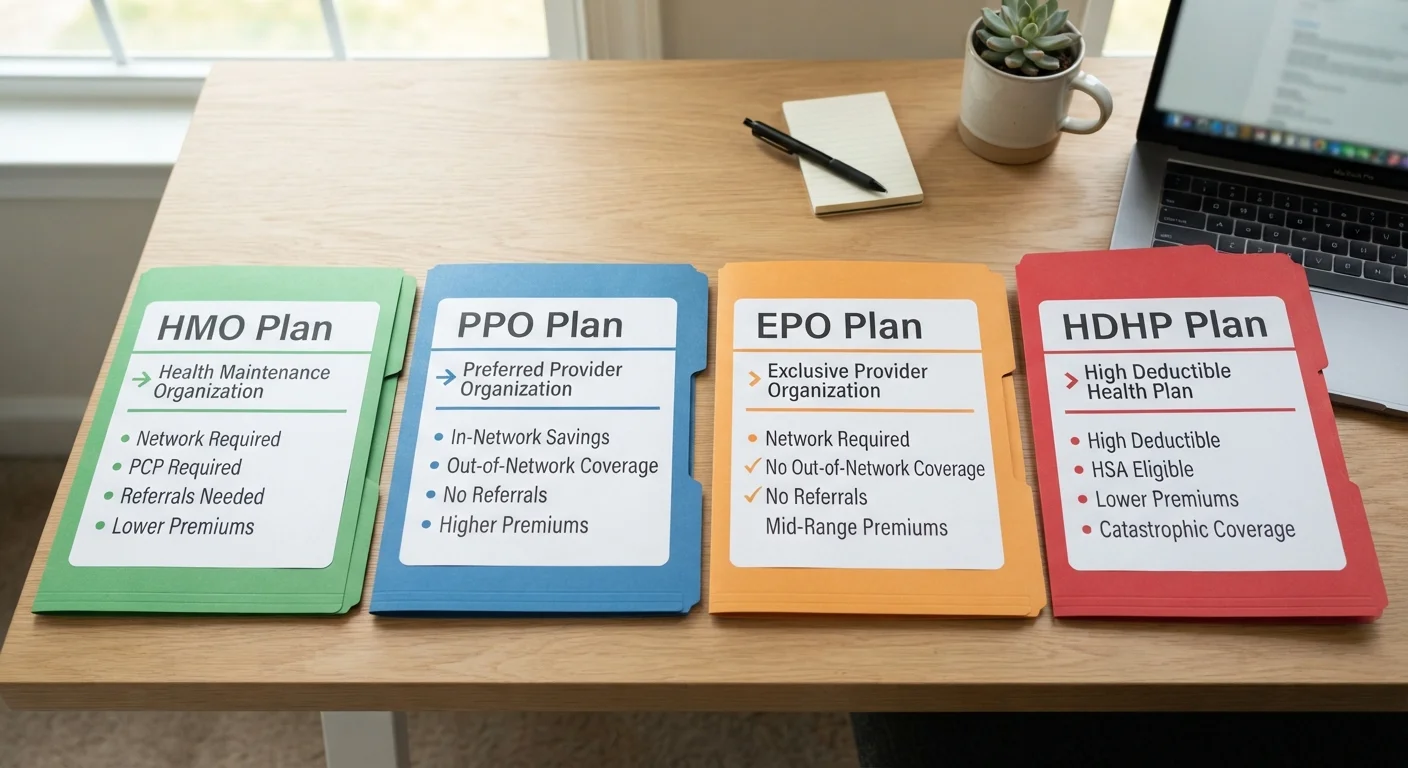
Photo credit: TheBlogZappier.com | Simple Search, Credible Results
In this article
HMOs restrict your network; PPOs offer flexibility. See how the four main health plan structures differ on cost, access, and choice.
Key Takeaways
- HMOs require a primary care physician and referrals, keeping costs low but restricting your network.
- PPOs offer the most flexibility - you can see any provider - but typically carry higher premiums.
- EPOs combine a restricted network with no referral requirement, splitting the difference between HMO and PPO.
- HDHPs have lower premiums and higher deductibles, and they pair with a Health Savings Account (HSA).
- Your healthcare usage patterns, preferred doctors, and budget should all influence which structure you choose.
Why Plan Structure Matters Before You Pick Coverage
When comparing health insurance options, most people focus immediately on monthly premiums. But the plan structure - the framework that governs which providers you can use, whether you need referrals, and how cost-sharing works - shapes your real-world experience just as much as the price tag.
The four dominant structures in the U.S. individual and employer-sponsored market are the Health Maintenance Organization (HMO), the Preferred Provider Organization (PPO), the Exclusive Provider Organization (EPO), and the High-Deductible Health Plan (HDHP). Each makes different trade-offs between cost, access, and administrative simplicity. Understanding those trade-offs is foundational - for a broader look at how health insurance fits into the overall insurance landscape, see the main insurance coverage categories explained.
The Four Plan Structures Side by Side
The table below summarizes the key structural differences. Specific premiums, deductibles, and network sizes vary by insurer and plan year, so treat these as general patterns rather than guarantees.
| HMO | PPO | EPO | HDHP | |
|---|---|---|---|---|
| Network restriction | In-network only | In- and out-of-network | In-network only | Varies (HMO or PPO base) |
| Primary care physician required | Yes | No | No | Depends on base structure |
| Referrals needed for specialists | Yes | No | No | Depends on base structure |
| Typical monthly premium | Lower | Higher | Moderate | Lower |
| Deductible level | Moderate | Moderate | Moderate | High (IRS-defined minimum) |
| HSA eligibility | No | No | No | Yes |
| Out-of-network emergency coverage | Generally covered | Covered at higher cost | Generally covered | Covered per plan terms |
Each criterion above maps directly to a decision point you'll face when using the plan. Network breadth determines whether your current doctor is covered. Referral requirements affect how quickly you can see a specialist. Cost-sharing structures - deductibles, copays, and coinsurance - determine what you actually pay at the point of care. For a deeper explanation of those terms, see deductibles, copays, and coinsurance explained.
HMO and EPO: Network-Restricted Plans
Both HMOs and EPOs require you to use a defined network of providers. Go outside that network for non-emergency care and the plan typically pays nothing - you bear the full cost. That restriction is the price of lower premiums.
The key difference is coordination: an HMO requires you to choose a primary care physician (PCP) who manages your care and issues referrals to specialists. An EPO removes that layer - you can book a specialist directly as long as they're in-network.
Check Your Doctors Before You Enroll
Network directories can change between plan years. Before enrolling in any network-restricted plan, call your preferred providers directly to confirm they are currently accepting new patients under that specific plan. Online directories are not always updated in real time and should be verified independently.
If you travel frequently or live part of the year in another region, a tightly restricted HMO network could leave you with limited in-network options away from home. Confirm the plan's network geography before enrolling.
PPO and HDHP: Flexibility and Cost Trade-Offs
A PPO lets you see any licensed provider - in-network for lower cost, out-of-network at a higher but still covered rate - without a referral. That flexibility commands a premium: PPOs typically carry the highest monthly costs among the four structures.
An HDHP is defined by its cost-sharing threshold. The IRS sets minimum deductible and out-of-pocket limits each year that a plan must meet to qualify as an HDHP. The payoff is a lower monthly premium and eligibility to contribute to a Health Savings Account (HSA) - a tax-advantaged account you own and can use for qualified medical expenses. Understanding how the deductible interacts with your out-of-pocket maximum is especially important with HDHPs; the article deductible vs. out-of-pocket maximum clarifies where one ends and the other begins.
HDHPs can also be structured as PPO or HMO networks - the "HDHP" label refers to the cost-sharing structure, not the provider network model. Always check both dimensions when evaluating a plan.
Choosing the Right Structure for Your Situation
No structure suits every consumer. Consider these factors when narrowing your options:
- Current providers: If you have established relationships with specific doctors or specialists, verify they participate in any plan's network before enrolling.
- Expected healthcare use: Frequent users of specialist care benefit from the access a PPO or EPO provides. Infrequent users may find an HDHP's lower premiums advantageous.
- Budget predictability: HMO and EPO copay structures can make costs more predictable visit-to-visit. HDHPs front-load cost exposure before the deductible is met - relevant if cash flow is a concern.
- HSA interest: Only an HDHP-qualifying plan unlocks HSA eligibility, which can be a meaningful long-term savings tool. For context on how this fits broader financial planning, see budgeting basics.
Always read a plan's Summary of Benefits and Coverage (SBC) document - insurers are required to provide one - and review the policy key terms that govern your cost-sharing obligations. Consulting a licensed insurance agent or broker for personalized guidance is strongly recommended before making a final decision.
This article is for general informational and educational purposes only and does not constitute personalized insurance, financial, or legal advice. Coverage terms, network rules, and cost-sharing details vary by insurer, plan, and state. Always read your actual policy documents and consult a licensed insurance professional for guidance tailored to your situation.

Author
Insurance Basics Editorial Team
Insurance Basics Editorial Team is the collective byline for our editorial team and contributor network. Articles published under this byline or an editorial pen name are researched, written, and reviewed according to our editorial standards for clarity, consistency, and independence before publication.
View all articles →