
Whole Foods vs. Processed Foods: What the Difference Actually Means for Your Diet
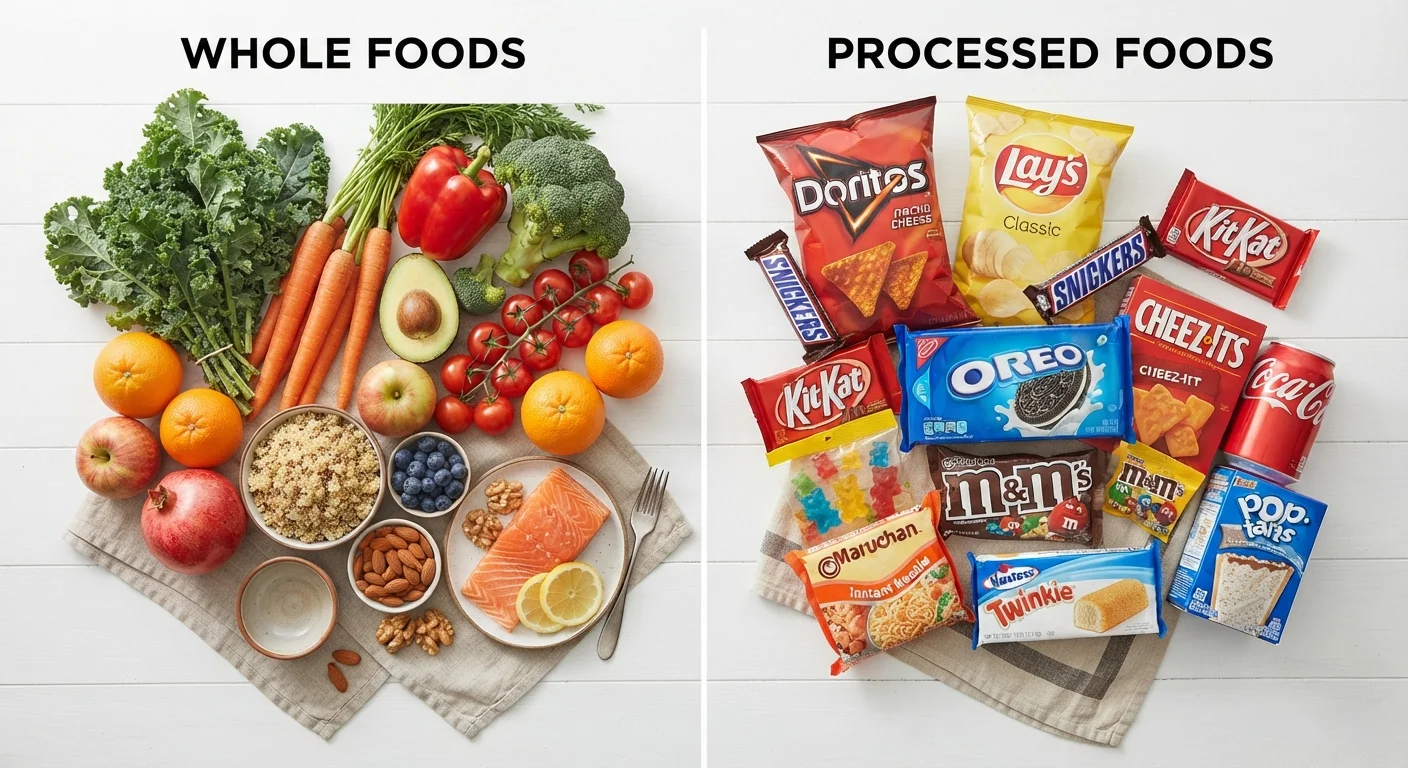
Photo credit: TheBlogZappier.com | Simple Search, Credible Results
In this article
Explore what distinguishes whole foods from processed ones, and what research says about how each category fits into a healthy diet.
Key Takeaways
- Processing exists on a spectrum - not all processed foods are nutritionally equivalent.
- Whole foods generally deliver more fiber, micronutrients, and fewer additives per calorie.
- Ultra-processed foods, as a specific category, are most consistently linked to poorer health outcomes in research.
- Practical diets often include both whole and some processed foods without compromising overall nutrition.
- Reading nutrition labels helps distinguish minimally processed staples from heavily engineered products.
Defining the Terms: What 'Whole' and 'Processed' Actually Mean
The phrase whole foods typically refers to foods that are eaten in or very close to their natural state - think fresh vegetables, fruits, legumes, whole grains, nuts, seeds, eggs, and unprocessed meats. No ingredient has been added, and nothing significant has been removed. These foods retain their naturally occurring fiber, vitamins, minerals, and beneficial compounds as they appear in nature.
Processing, by contrast, describes any deliberate change made to a food before it reaches your plate - washing, cutting, fermenting, canning, freezing, milling, or adding ingredients like salt, sugar, or preservatives. Researchers at the University of São Paulo developed the widely cited NOVA system, which groups foods into four categories ranging from unprocessed or minimally processed foods (fresh produce, plain frozen vegetables) all the way to ultra-processed products, which are industrially formulated from multiple substances and typically contain additives not found in a home kitchen.
The practical takeaway: processing is a spectrum. A can of plain chickpeas and a brightly colored cheese puff are both technically "processed," but they occupy opposite ends of that spectrum in terms of nutritional value and ingredient complexity. Understanding where a food falls on that continuum is more useful than applying a simple binary label. Reading a nutrition label is one of the most reliable tools for making that distinction at the grocery store.
What the Research Says About Each Category
Nutritional science has accumulated substantial evidence linking dietary patterns heavy in ultra-processed foods with higher risks of obesity, type 2 diabetes, cardiovascular disease, and certain digestive issues. A frequently cited 2019 study published in Cell Metabolism found that participants assigned to an ultra-processed diet consumed significantly more calories and gained weight compared to those eating a minimally processed diet, even when both diets were matched for presented nutrients - suggesting that food matrix and processing level influence eating behavior beyond just macronutrient content.
| Criterion | Whole Foods | Processed Foods |
|---|---|---|
| Definition | Unaltered or minimally altered natural state | Any degree of industrial transformation applied |
| Fiber content | Generally high and intact | Often reduced, especially in ultra-processed products |
| Micronutrient density | High; vitamins and minerals naturally present | Variable; some fortified, many depleted |
| Added sugars & sodium | Absent or naturally occurring only | Often added; high in ultra-processed category |
| Shelf life & convenience | Often shorter; requires more preparation | Extended shelf life; usually ready to eat |
| Cost & accessibility | Can be higher cost; seasonally variable | Often lower cost; widely available year-round |
| Research health association | Linked to lower chronic disease risk | Ultra-processed linked to higher chronic disease risk |
Whole foods consistently score higher on measures of fiber intake, micronutrient density, and satiety. Diets built around them - such as the Mediterranean and DASH patterns - are among the most well-researched for long-term health outcomes. See eating patterns that science supports for a detailed breakdown of how these approaches are structured.
It is also worth noting that not all processed foods are nutritionally poor. Plain yogurt, canned tomatoes, frozen spinach, and whole-grain bread all undergo processing but retain meaningful nutritional value. The concern in the research literature is concentrated most heavily on ultra-processed products that are calorie-dense, low in fiber, and high in added sugars and sodium. For more on how sugars factor in, see added sugar vs. natural sugar.
57%
Share of US calories from ultra-processed foods
Research published in BMJ Open estimated that ultra-processed foods account for roughly 57% of total energy intake in the average American diet.
~500 kcal/day
Extra calories consumed on ultra-processed diet
A 2019 NIH randomized controlled trial found participants on an ultra-processed diet consumed approximately 500 more calories per day than those on an unprocessed diet.
Building a Realistic, Evidence-Informed Approach
A diet built entirely around whole foods is nutritionally ideal in theory, but for many households it is neither affordable nor practical at every meal. The more actionable goal, supported by mainstream dietary guidance, is to shift the overall balance - increasing whole and minimally processed foods while reducing ultra-processed items specifically.
Practical steps include anchoring meals around vegetables, legumes, and whole grains; choosing minimally processed proteins; and reserving heavily processed items for occasional rather than daily consumption. Understanding what macronutrients actually do can help you evaluate whether a processed food is contributing meaningfully to your nutritional needs or mostly adding empty calories. For a structured approach to navigating these decisions at the store, grocery shopping with nutrition in mind offers a practical checklist.
Processing Is Not Always a Nutritional Negative
Some processing methods actually preserve or even enhance nutritional value. Freezing vegetables shortly after harvest can lock in vitamins that degrade in fresh produce over time. Fermentation produces beneficial compounds and supports gut health. Pasteurization removes harmful pathogens. The key is distinguishing these functional transformations from heavy industrial formulation that adds sugar, sodium, and additives while stripping fiber and micronutrients.
This article is for general informational and educational purposes only and does not constitute medical or dietary advice. Individual nutritional needs vary. Consult a qualified healthcare professional or registered dietitian before making significant changes to your diet, especially if you have an existing health condition.

Author
Health & Wellness Editorial Team
Health & Wellness Editorial Team is the collective byline for our editorial team and contributor network. Articles published under this byline or an editorial pen name are researched, written, and reviewed according to our editorial standards for clarity, consistency, and independence before publication.
View all articles →